

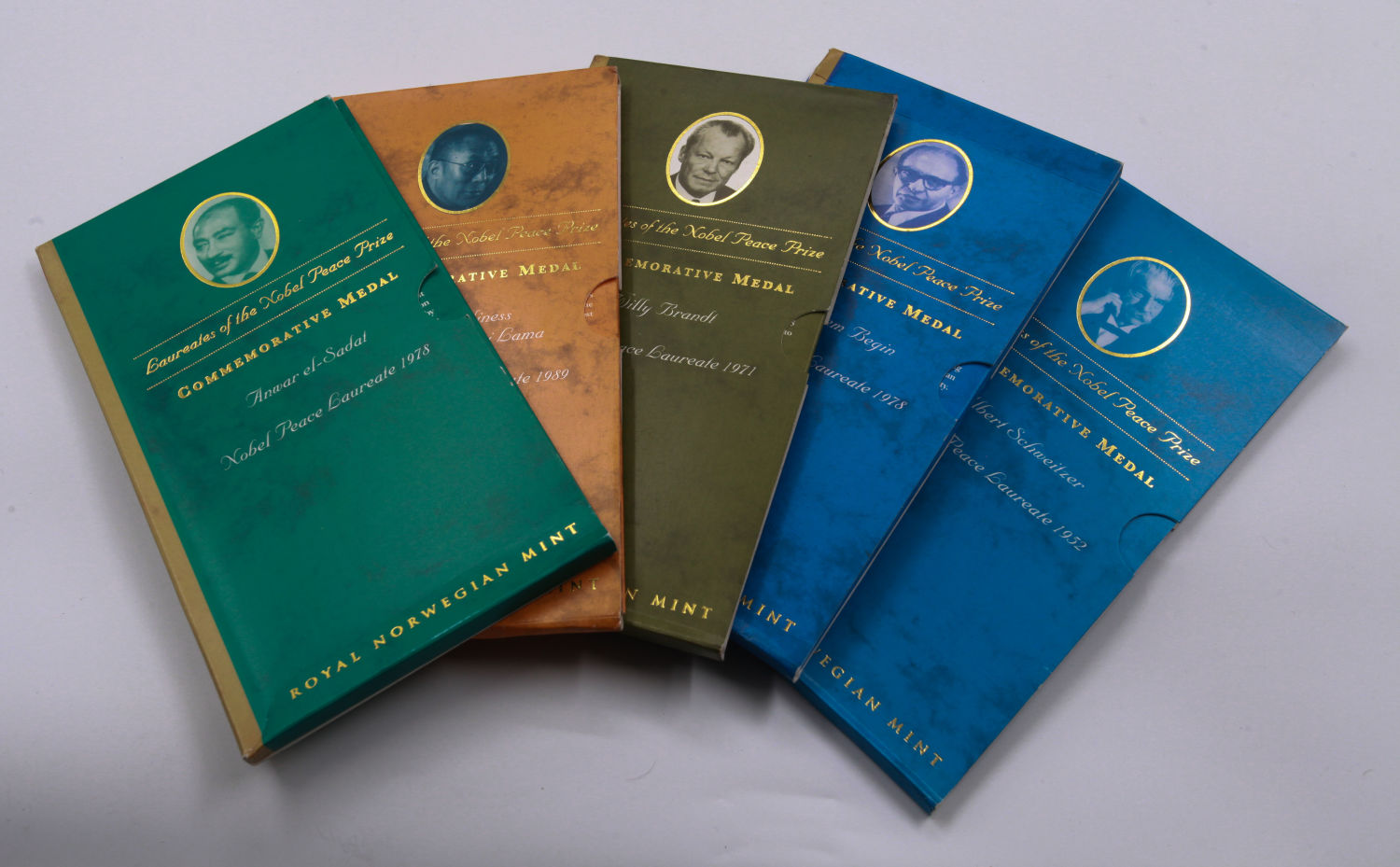
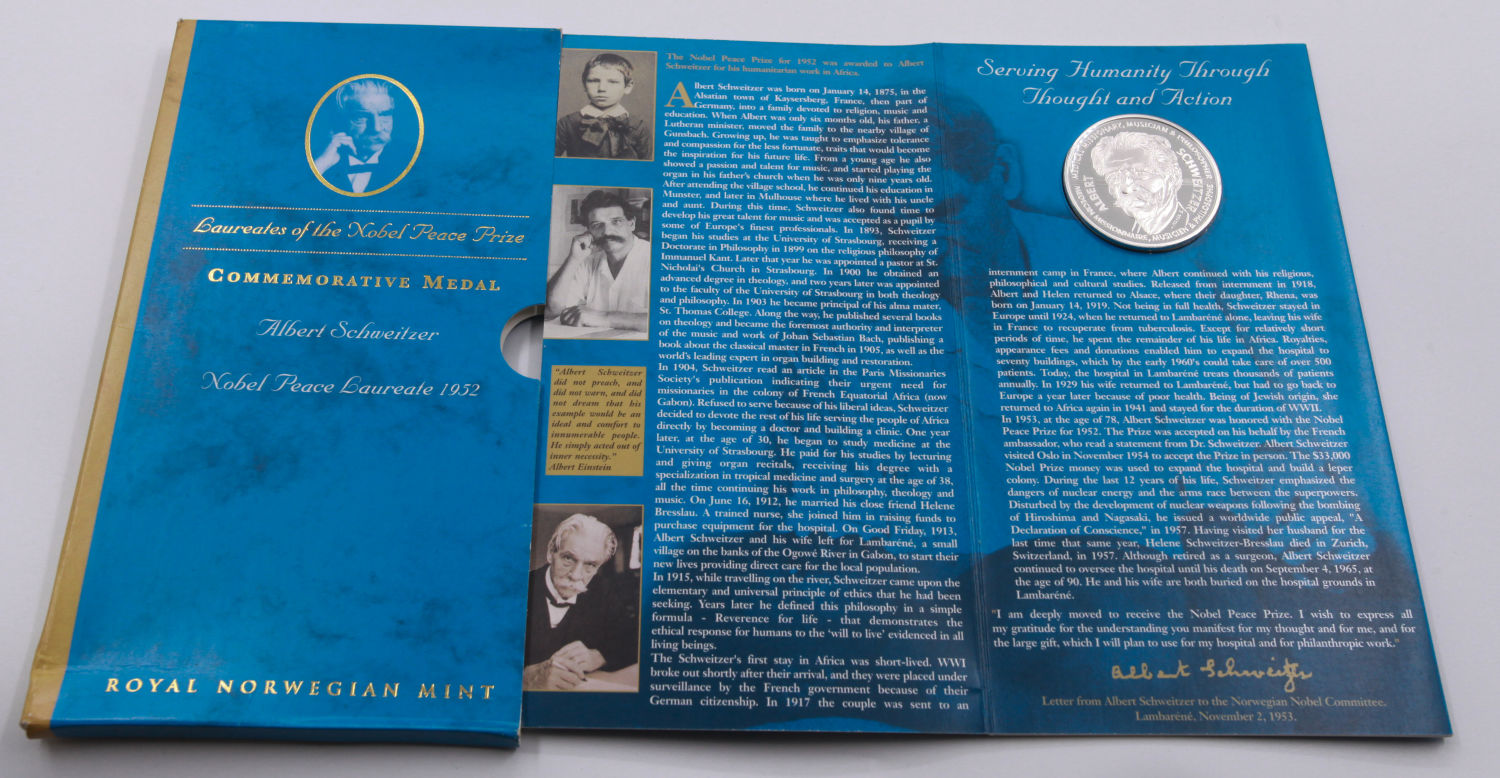
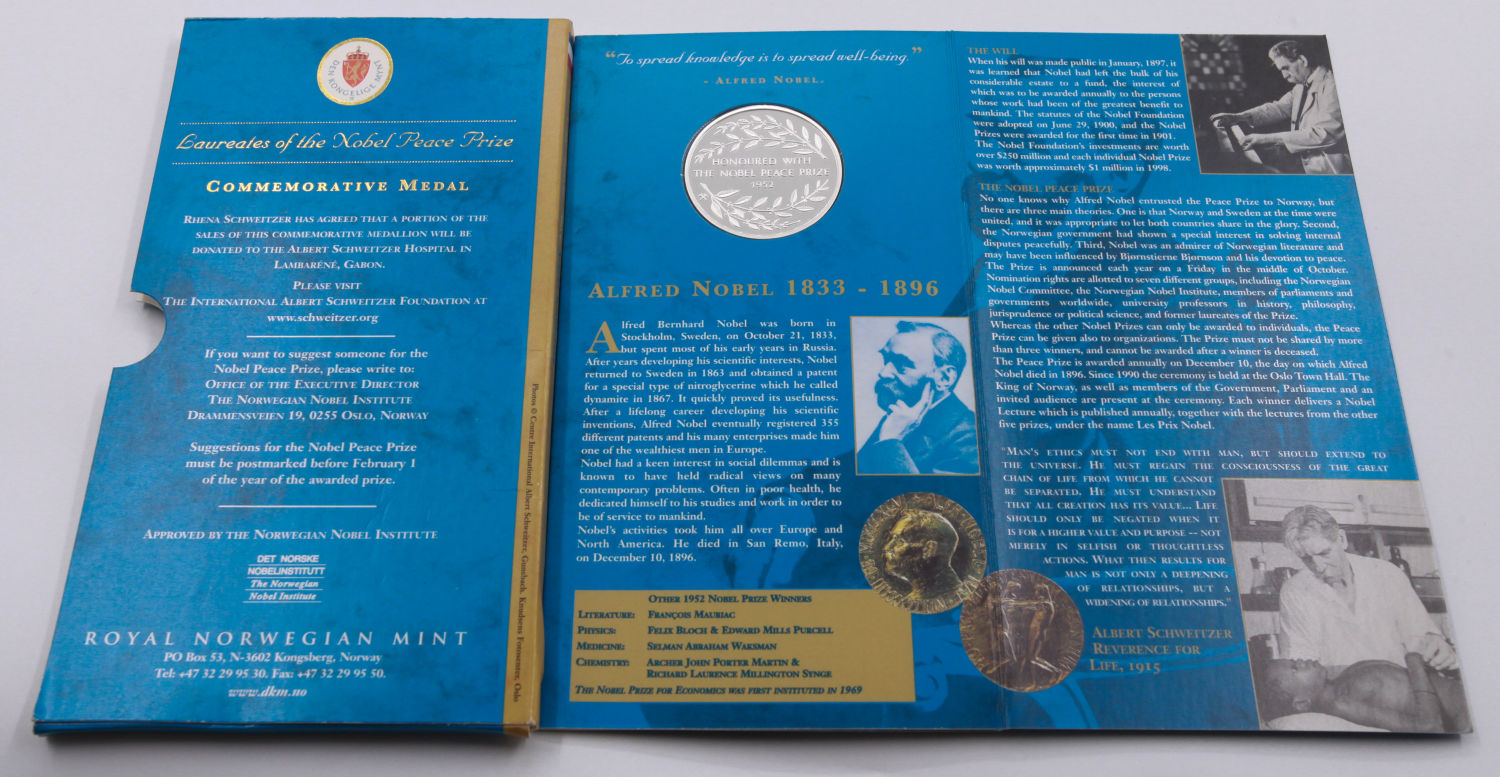
World - Lot of 5 Nobel Prize-winning medals, Menachem Begin, Anwar Sadat, Albert Schweizer, Dali Lama 14 (Tenzin ...
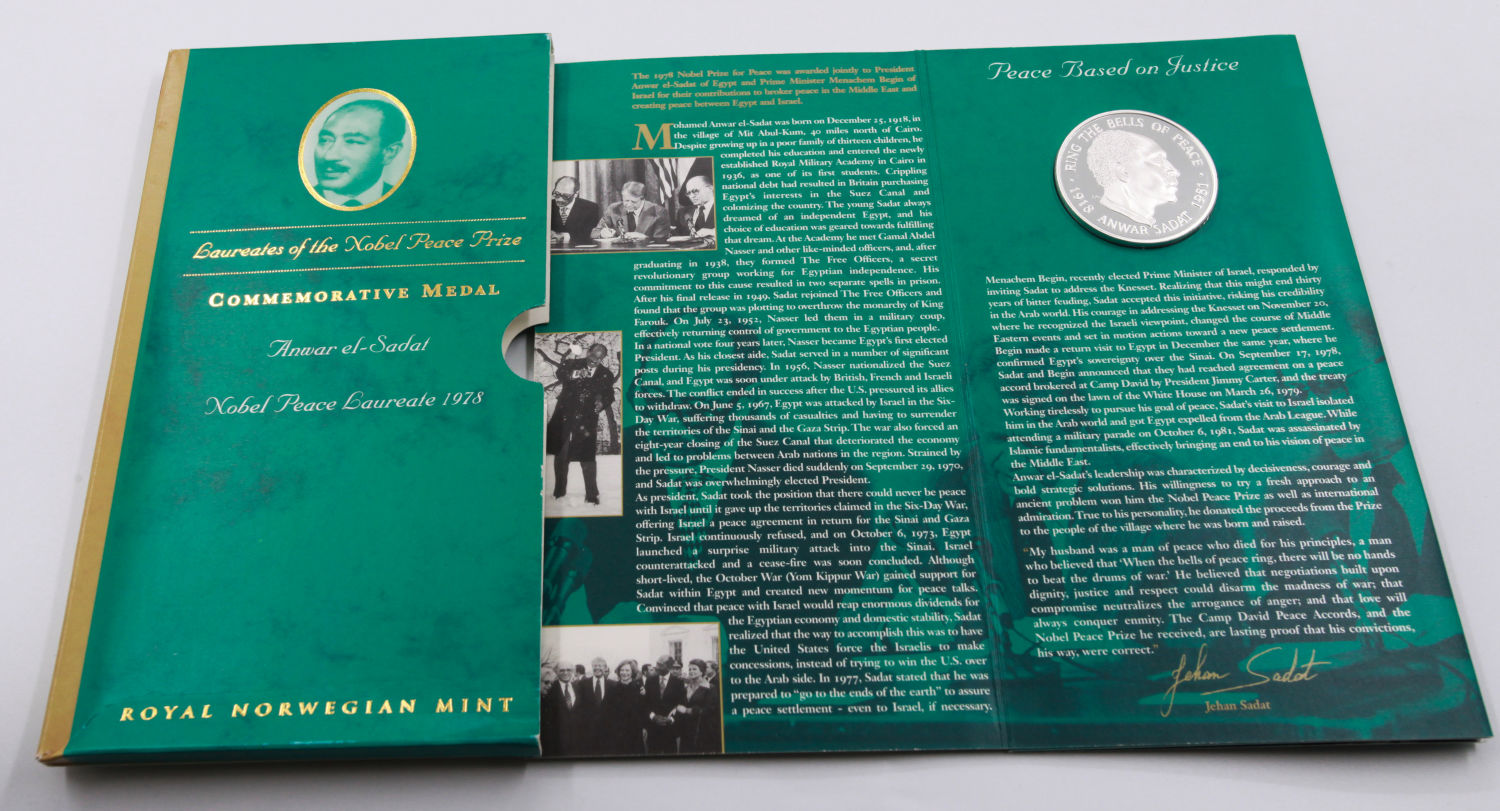
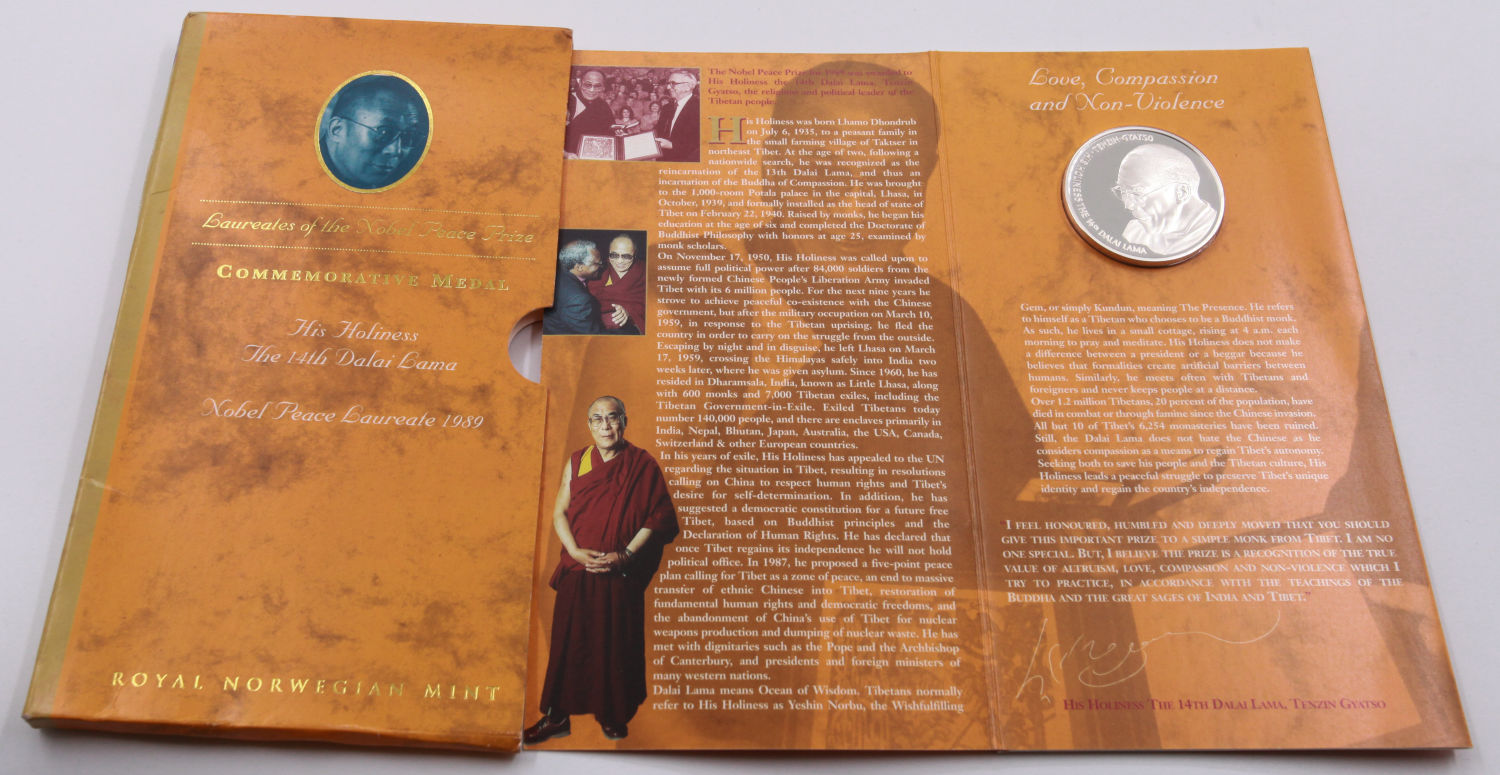
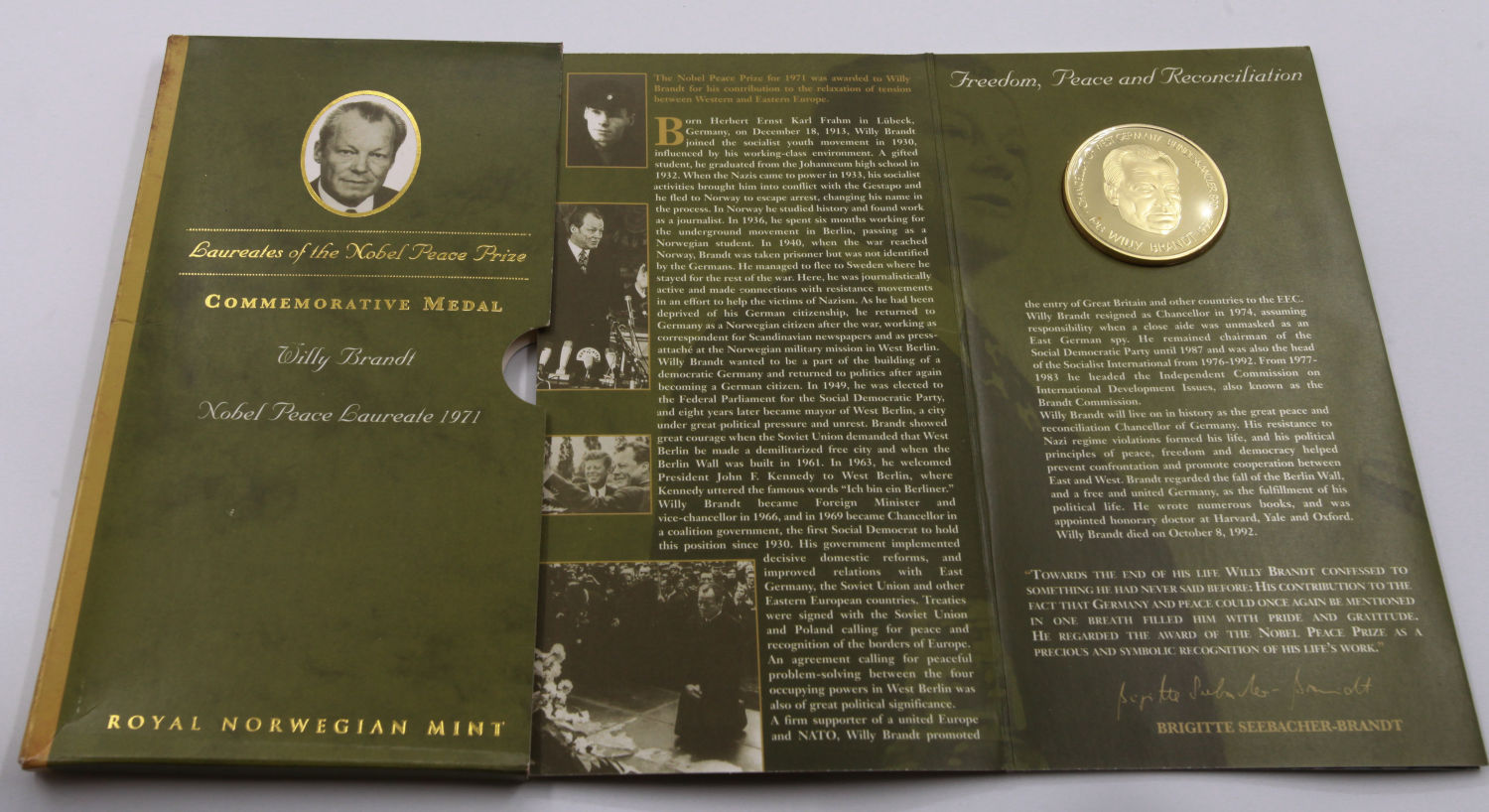
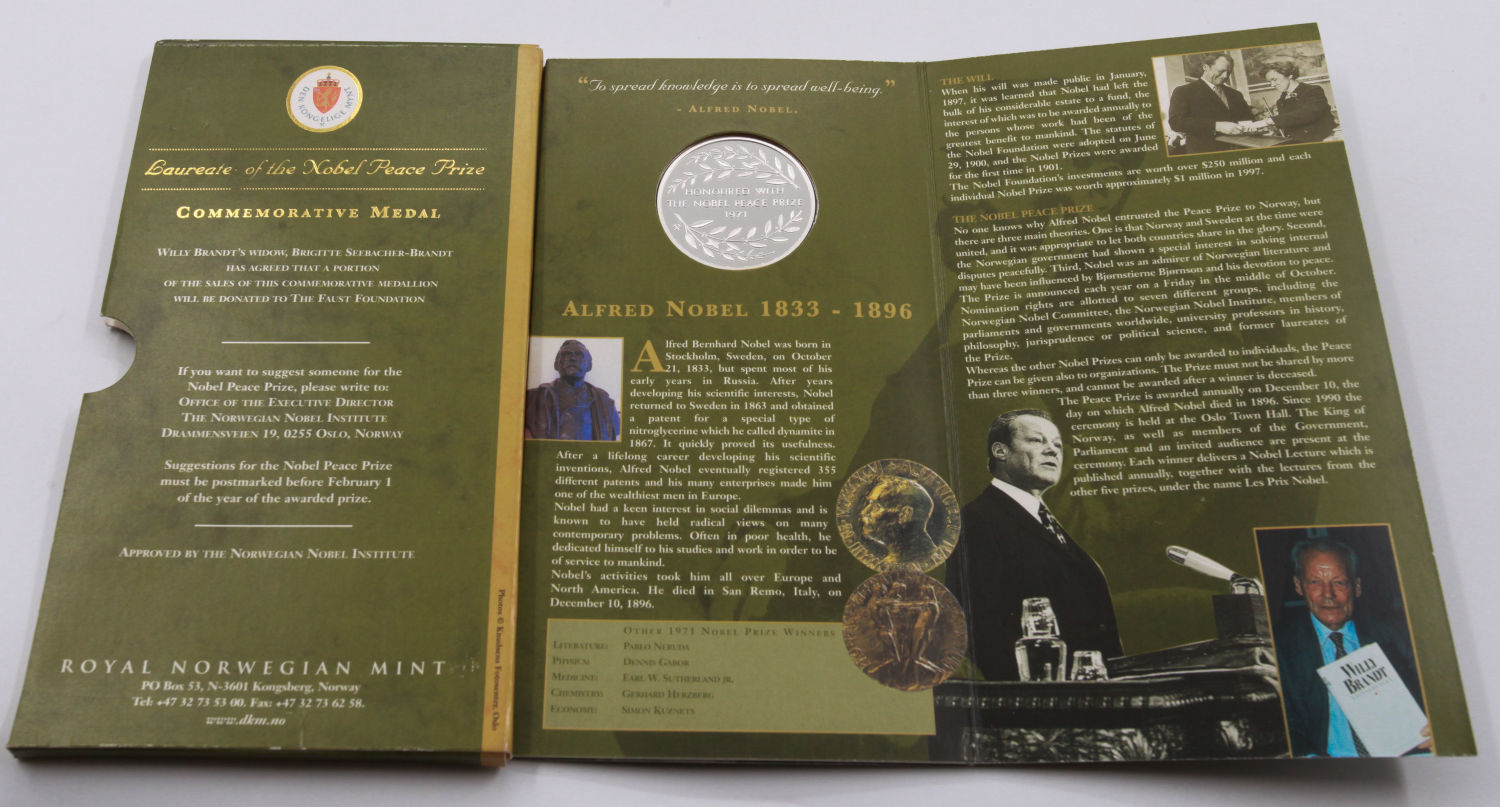
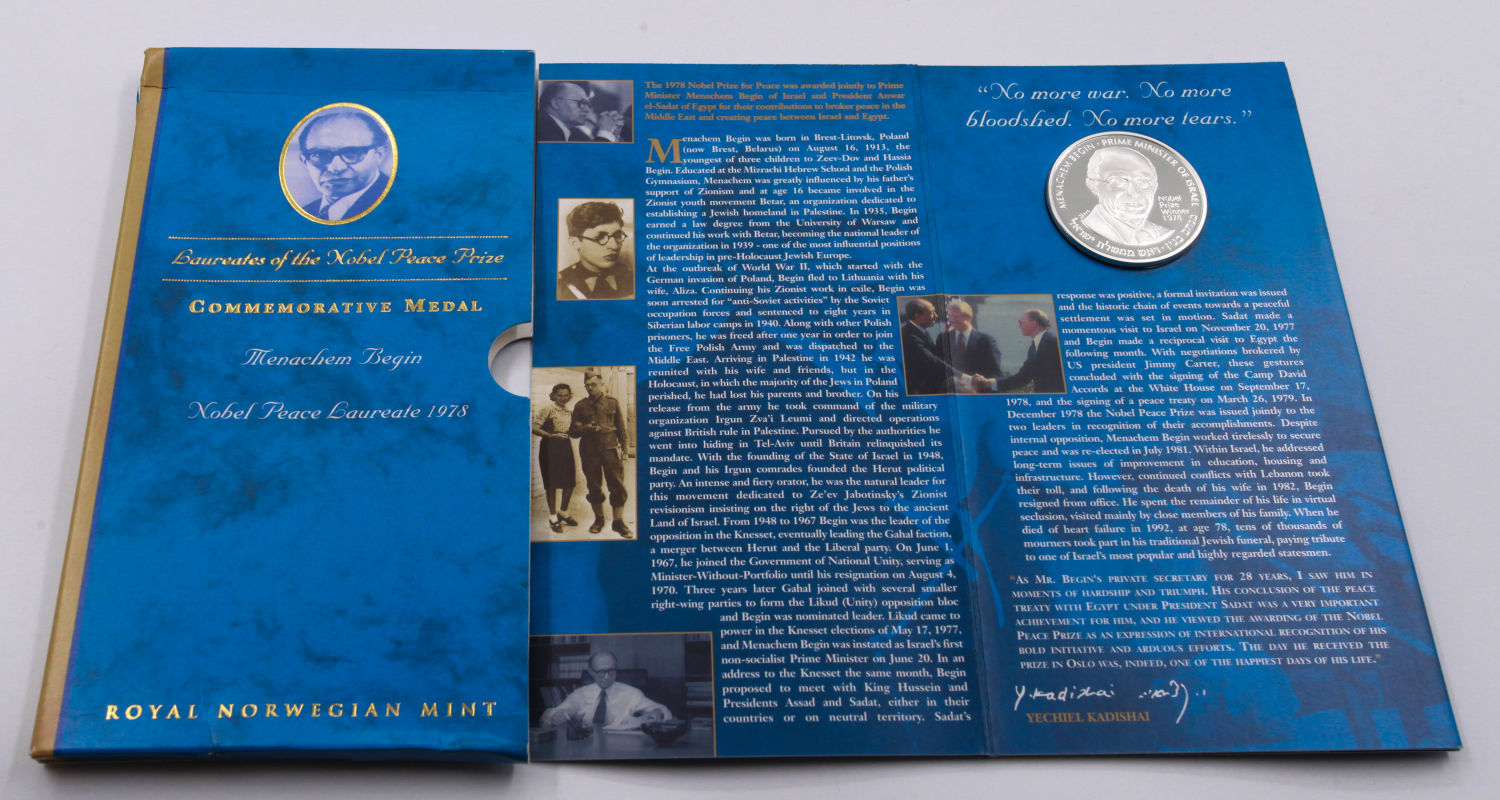
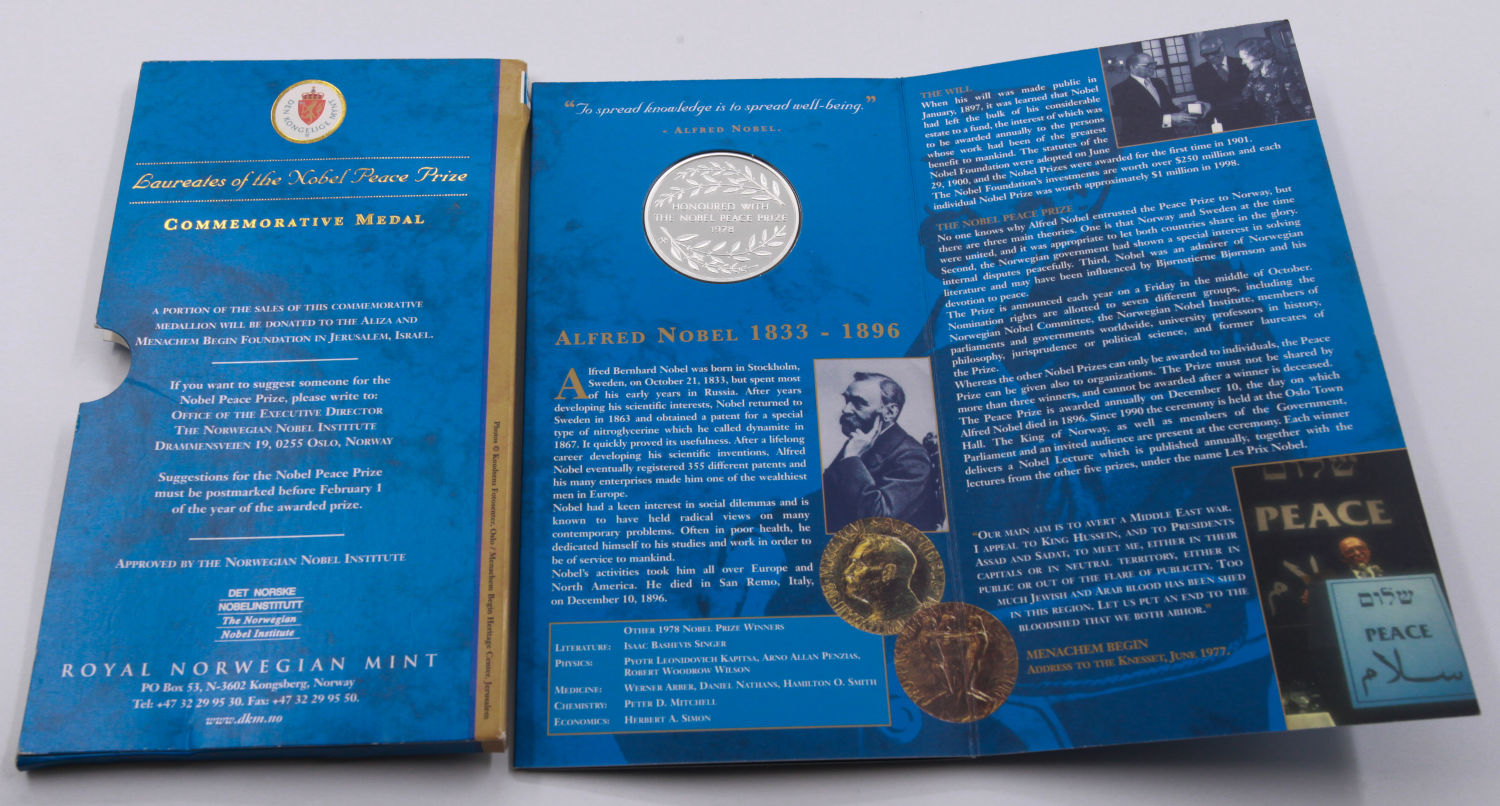
World - Lot of 5 Nobel Prize-winning medals, Menachem Begin, Anwar Sadat, Albert Schweizer, Dali Lama 14 (Tenzin Giatsu), Willy Brandt - 925 silver, ounce, 39 mm Menachem Begin Menachem Begin (Hebrew: מְנַחֵם בֵּגִין Menaḥem Begin (About this soundlisten (help·info)); Polish: Mieczysław Biegun (Polish birth name), Polish: Menachem Begin (Polish documents, 1931–1937)[1]; Russian: Менахем Вольфович Бегин Menakhem Volfovich Begin; 16 August 1913 – 9 March 1992) was an Israeli politician, founder of Likud and the sixth Prime Minister of Israel. Before the creation of the state of Israel, he was the leader of the Zionist militant group Irgun, the Revisionist breakaway from the larger Jewish paramilitary organization Haganah. He proclaimed a revolt, on 1 February 1944, against the British mandatory government, which was opposed by the Jewish Agency. As head of the Irgun, he targeted the British in Palestine.[2] Later, the Irgun fought the Arabs during the 1947–48 Civil War in Mandatory Palestine and its chief Begin was also noted as "leader of the notorious terrorist organisation" by British government and banned from entering the United Kingdom. Source: Wikipedia Anwar Sadat Muhammad Anwar el-Sadat (/səˈdæt/, also UK: /sæˈdæt/, US: /səˈdɑːt/;[2][3][4] Arabic: محمد أنور السادات, romanized: Muḥammad ʾAnwar as-Sādāt, Egyptian Arabic: [mæˈħæmmæd ˈʔɑnwɑɾ essæˈdæːt]; 25 December 1918 – 6 October 1981) was an Egyptian politician who served as the third President of Egypt, from 15 October 1970 until his assassination by fundamentalist army officers on 6 October 1981. Sadat was a senior member of the Free Officers who overthrew King Farouk in the Egyptian Revolution of 1952, and a close confidant of President Gamal Abdel Nasser, under whom he served as Vice President twice and whom he succeeded as president in 1970. In 1978, Sadat and Menachem Begin, Prime Minister of Israel, signed a peace treaty in cooperation with United States President Jimmy Carter, for which they were recognized with the Nobel Peace Prize. Source: Wikipedia Albert Schweizer Albert Schweitzer OM (German: [ˈalbɛʁt ˈʃvaɪ̯t͡sɐ] (About this soundlisten); 14 January 1875 – 4 September 1965) was an Alsatian polymath. He was a theologian, organist, writer, humanitarian, philosopher, and physician. A Lutheran, Schweitzer challenged both the secular view of Jesus as depicted by the historical-critical method current at this time, as well as the traditional Christian view. His contributions to the interpretation of Pauline Christianity concern the role of Paul's mysticism of "being in Christ" as primary and the doctrine of Justification by Faith as secondary. Source: Wikipedia Dali Lama 14 (Tenzin Giatsu) The 14th Dalai Lama[note 1] (religious name: Tenzin Gyatso, shortened from Jetsun Jamphel Ngawang Lobsang Yeshe Tenzin Gyatso; born Lhamo Dhondup, [note 2] 6 July 1935) is the current Dalai Lama. Dalai Lamas are important monks of the Gelug school, the newest school of Tibetan Buddhism, [3] which was formally headed by the Ganden Tripas. From the time of the 5th Dalai Lama to 1959, the central government of Tibet, the Ganden Phodrang, invested the position of Dalai Lama with temporal duties Source: Wikipedia Willy Brandt Willy Brandt (German: [ˈvɪliː ˈbʁant]; born Herbert Ernst Karl Frahm; 18 December 1913 – 8 October 1992) was a German politician and statesman who was leader of the Social Democratic Party of Germany (SPD) from 1964 to 1987 and served as Chancellor of the Federal Republic of Germany (West Germany) from 1969 to 1974. He was awarded the Nobel Peace Prize in 1971 for his efforts to strengthen cooperation in western Europe through the EEC and to achieve reconciliation between West Germany and the countries of Eastern Europe.[1] He was the first Social Democrat chancellor[2] since 1930. Source: Wikipedia
 Israel
 הביטחון 6, פתח תקווה.
