


United States - Massachusetts - 5 Dollars 1852 - The Cochituate Bank, Boston - Early Private Banknote
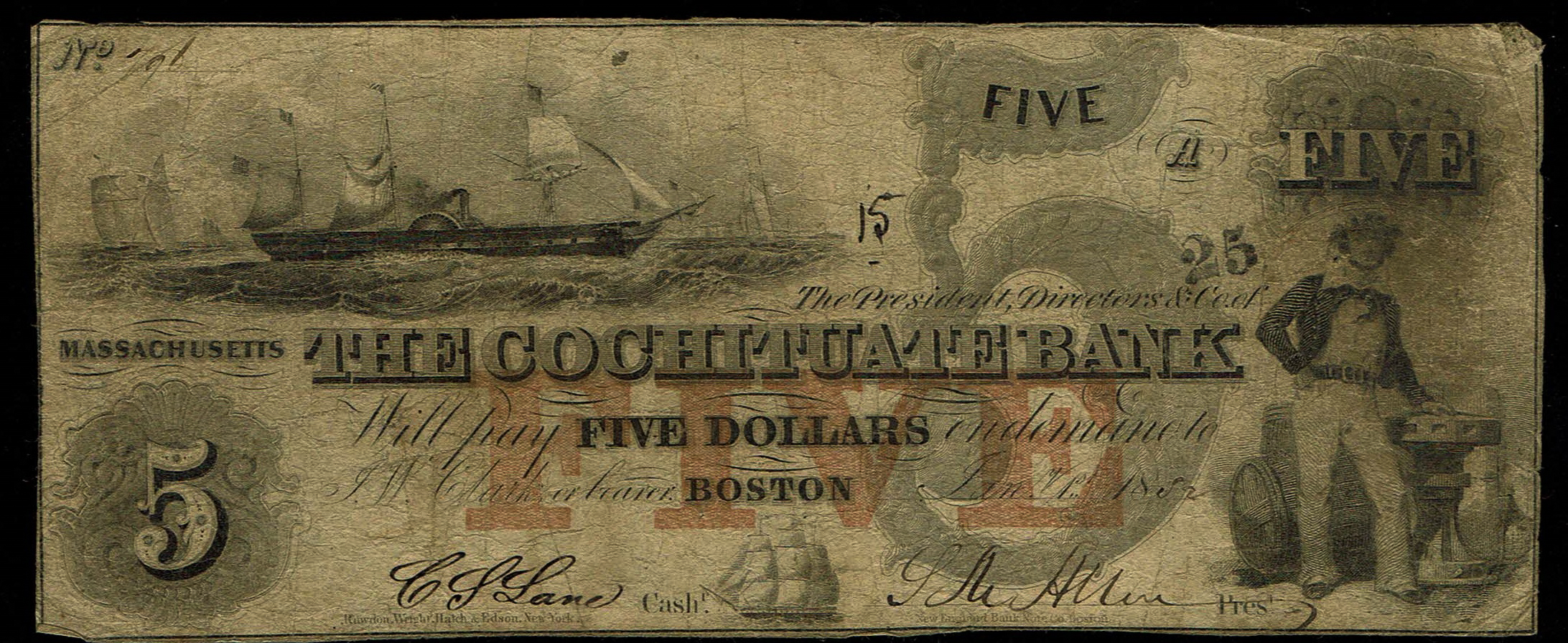
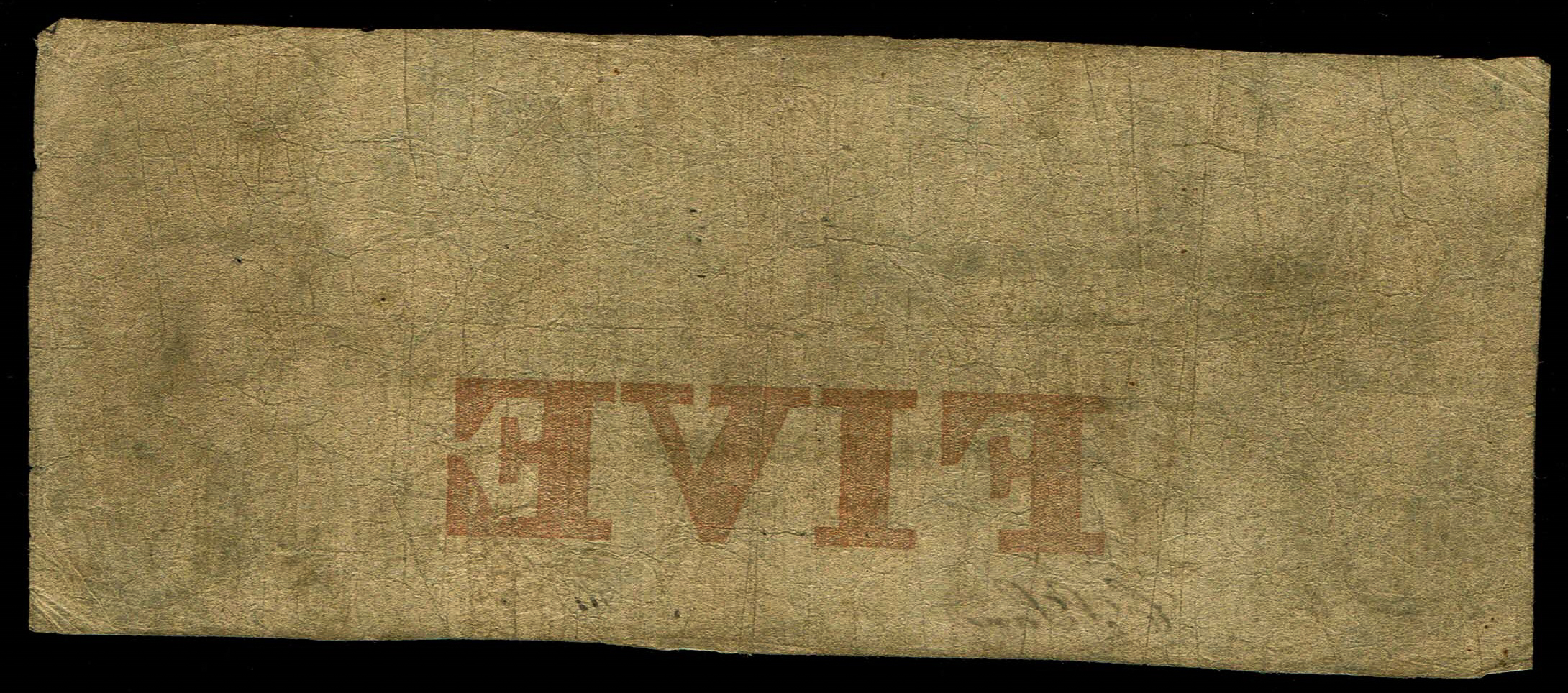
United States - Massachusetts - 5 Dollars 1852 - The Cochituate Bank, Boston - Early Private Banknote A Five Dollar note issued in 1852 by The Cochituate Bank of Boston, Massachusetts. It is an early private banknote from the period before the introduction of a uniform federal banknote system in the United States. Notes of this type, now known as Obsolete Banknotes, were issued by local banks and circulated as money while the issuing institution remained active and trusted. Obverse An elaborate design featuring a steamship and additional vessels in the upper section. The bank's name, "THE COCHITUATE BANK, " appears prominently at the center. Above it is the inscription "THE PRESIDENT, DIRECTORS & CO., " and below appears the promise "WILL PAY FIVE DOLLARS ON DEMAND." A standing male figure beside industrial or maritime equipment appears at the right, while the denomination 5 appears at the left and in the corners. The signatures of the bank officers and the location "BOSTON" appear below. A large red "FIVE" value protector is printed across the lower center. Reverse A relatively plain reverse bearing the large red inscription "FIVE, " printed in reverse orientation relative to the obverse. The note shows extensive circulation and handling, including numerous folds, considerable wear, staining, toning, softened paper and edge damage. Despite its condition, it is an interesting historical artifact from the era of private banking in the United States and reflects the wide variety of locally issued currency that circulated during the mid-19th century.
 Israel
 הביטחון 6, פתח תקווה.
