


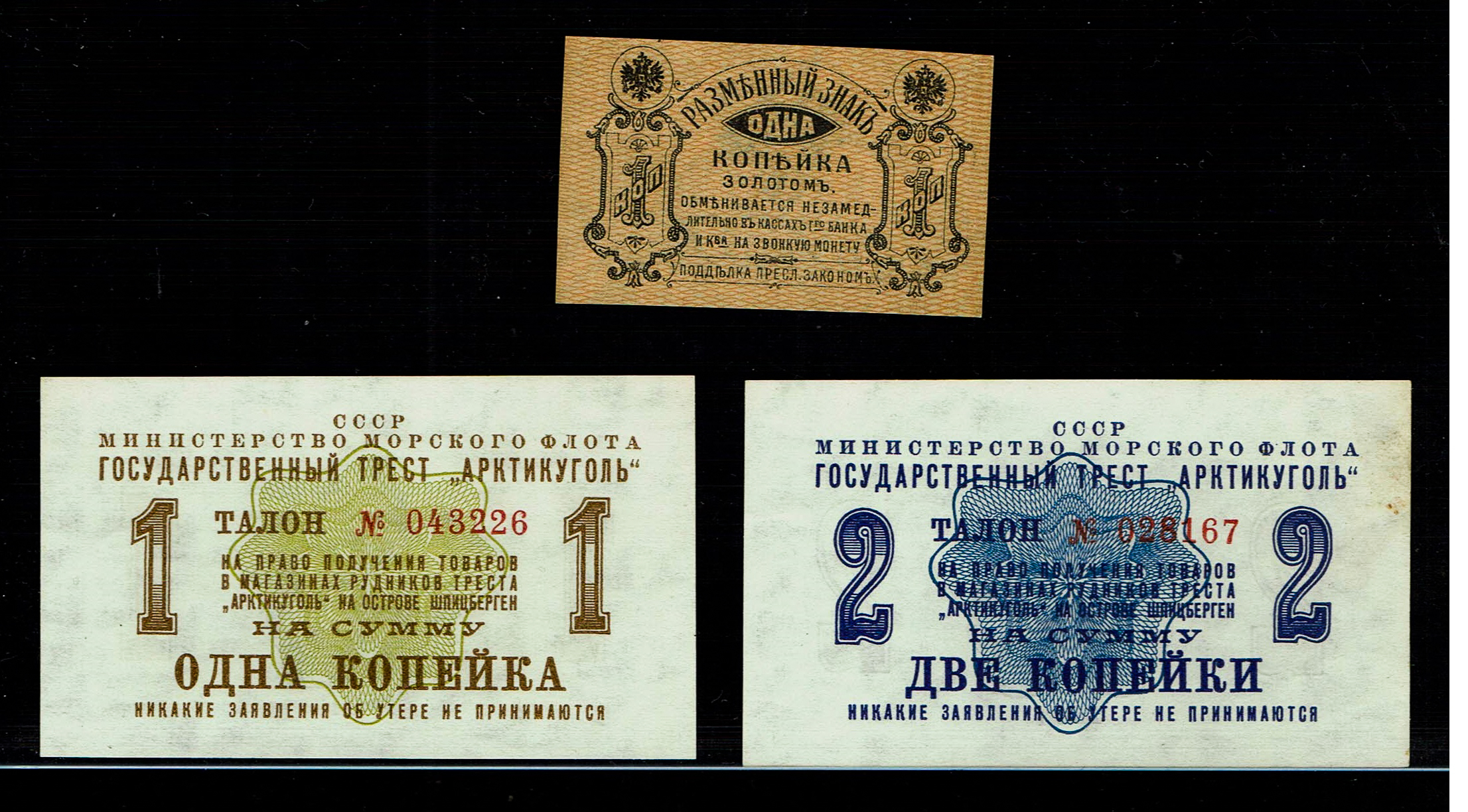
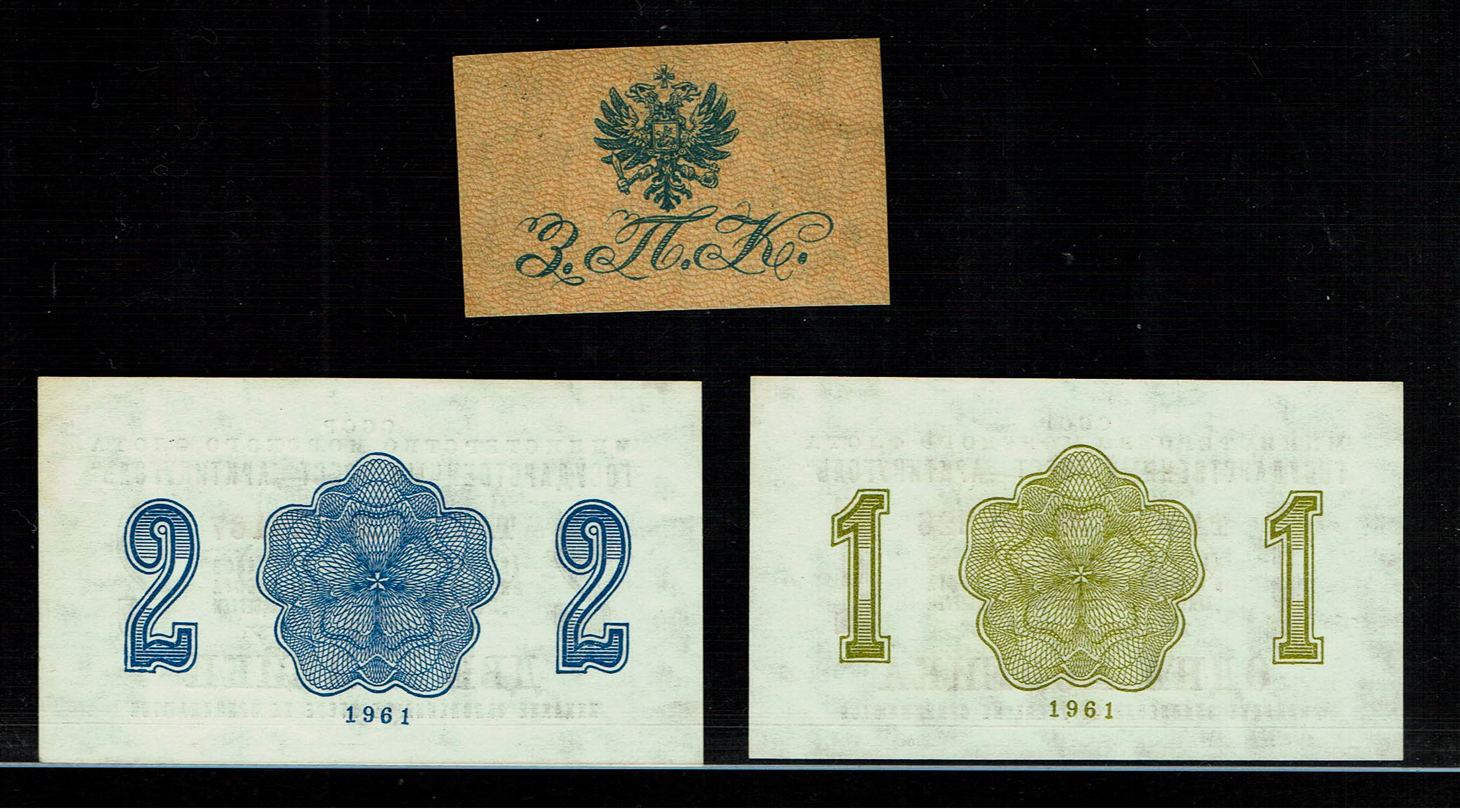
Russia - Set of 3 Russian Banknotes - UNC 1 Kopeck Banknote, Primorsky Krai, 1921 – General Diterichs - UNC This 1 kopeck banknote was issued in 1921 by the Zemsky Primorsky Krai, a local government under General Diterichs during the Russian Civil War. The note was part of the provisional currency system used by the White Army forces in the Far East. These emergency banknotes were necessary due to the instability of the Russian economy at the time. Catalog References: Kardakov p. 226, section 11, #1; Pick #S-1226 This banknote is highly valued among collectors due to its rarity and its significance as part of the currency used by anti-Bolshevik forces in the Far East. 1 Kopeck Spitzbergen, 1961 The 1 Kopeck issued in 1961 for Spitzbergen (also known as Svalbard), a Norwegian archipelago, is a commemorative coin produced as part of the Soviet Union's interest in Arctic regions during the Cold War era. Spitzbergen, part of Norway, was a location of geopolitical significance and the Soviet Union issued coins like this to assert its presence in Arctic and polar regions. Significance: This coin is part of a series of commemorative coins issued by the Soviet Union for remote or politically significant territories during the Cold War. This coin is collected for its unique historical context and its connection to Soviet geopolitical interests in the Arctic. 2 Kopeks Banknote, 1961 The 2 Kopeks banknote issued in 1961 was part of the Soviet Union's currency system. It was issued during the Khrushchev era, when the Soviet government introduced a range of new banknotes for everyday transactions. The 2 Kopeks note was a small denomination, used for low-value purchases and everyday exchanges within the Soviet Union. Significance: The 2 Kopeks note is significant as a representation of Soviet currency in the early 1960s and reflects the economic environment during Khrushchev's leadership. Notes like these were widely used across the USSR during this time.
 Israel
 הביטחון 6, פתח תקווה.
