


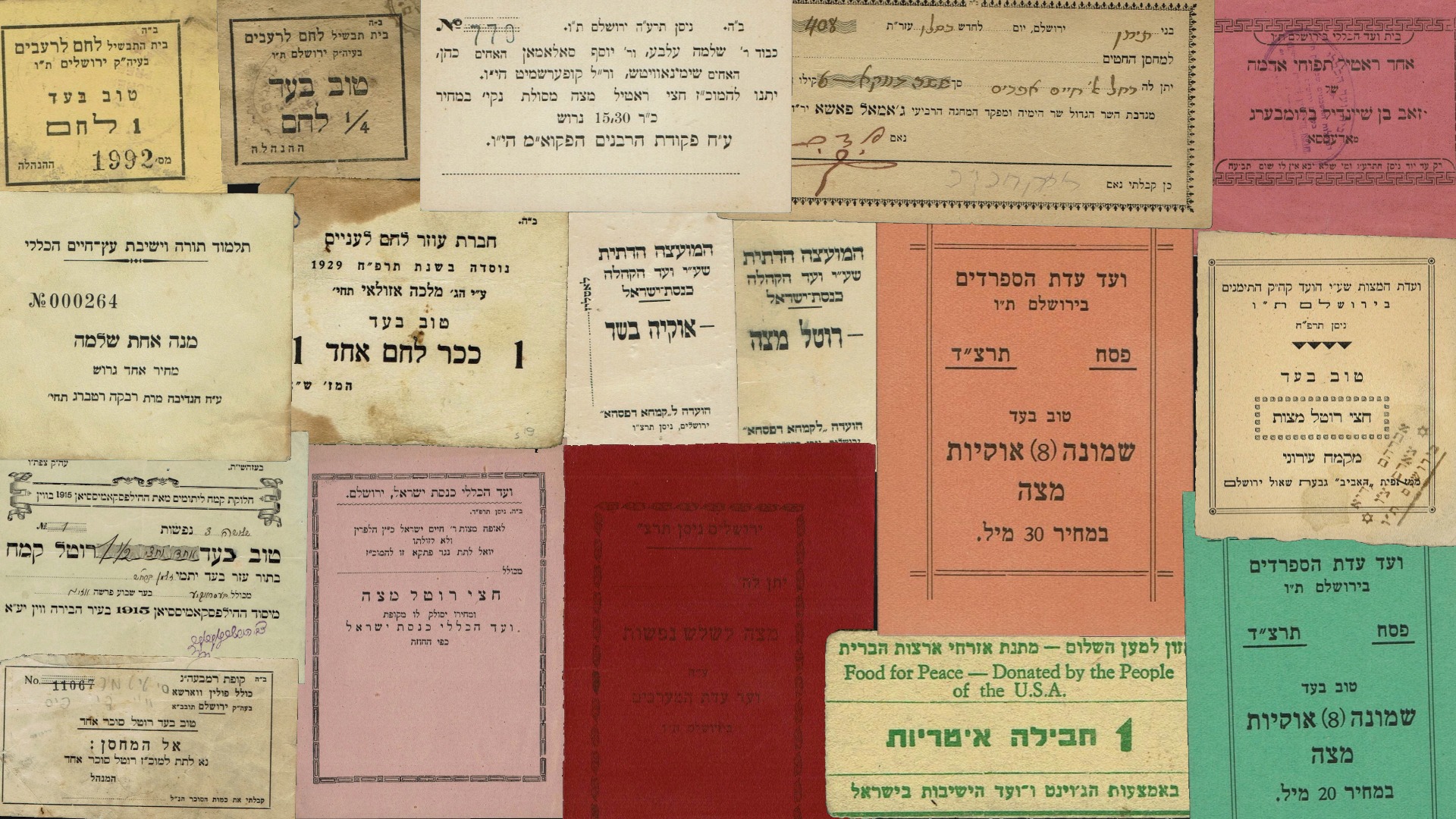
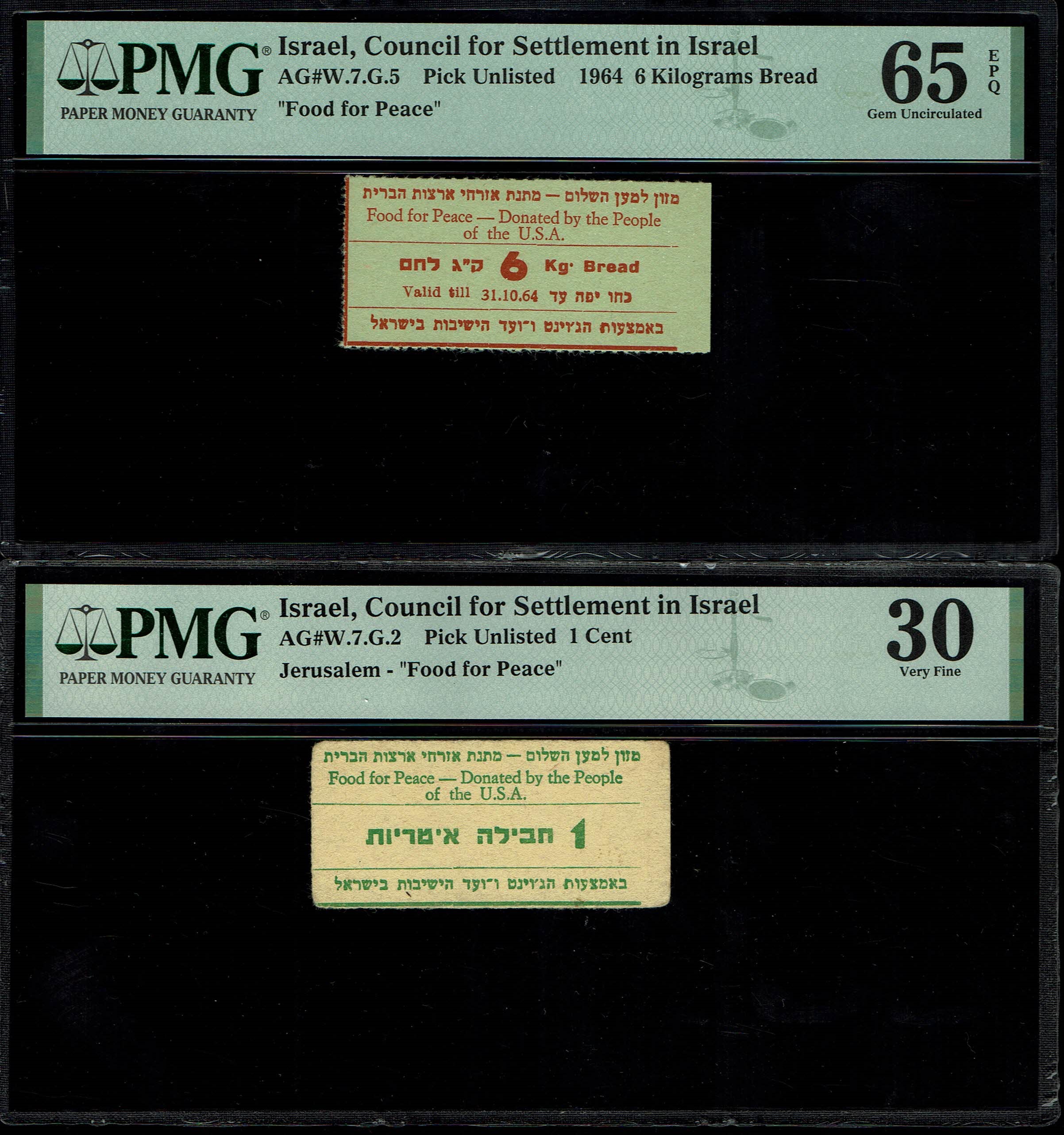
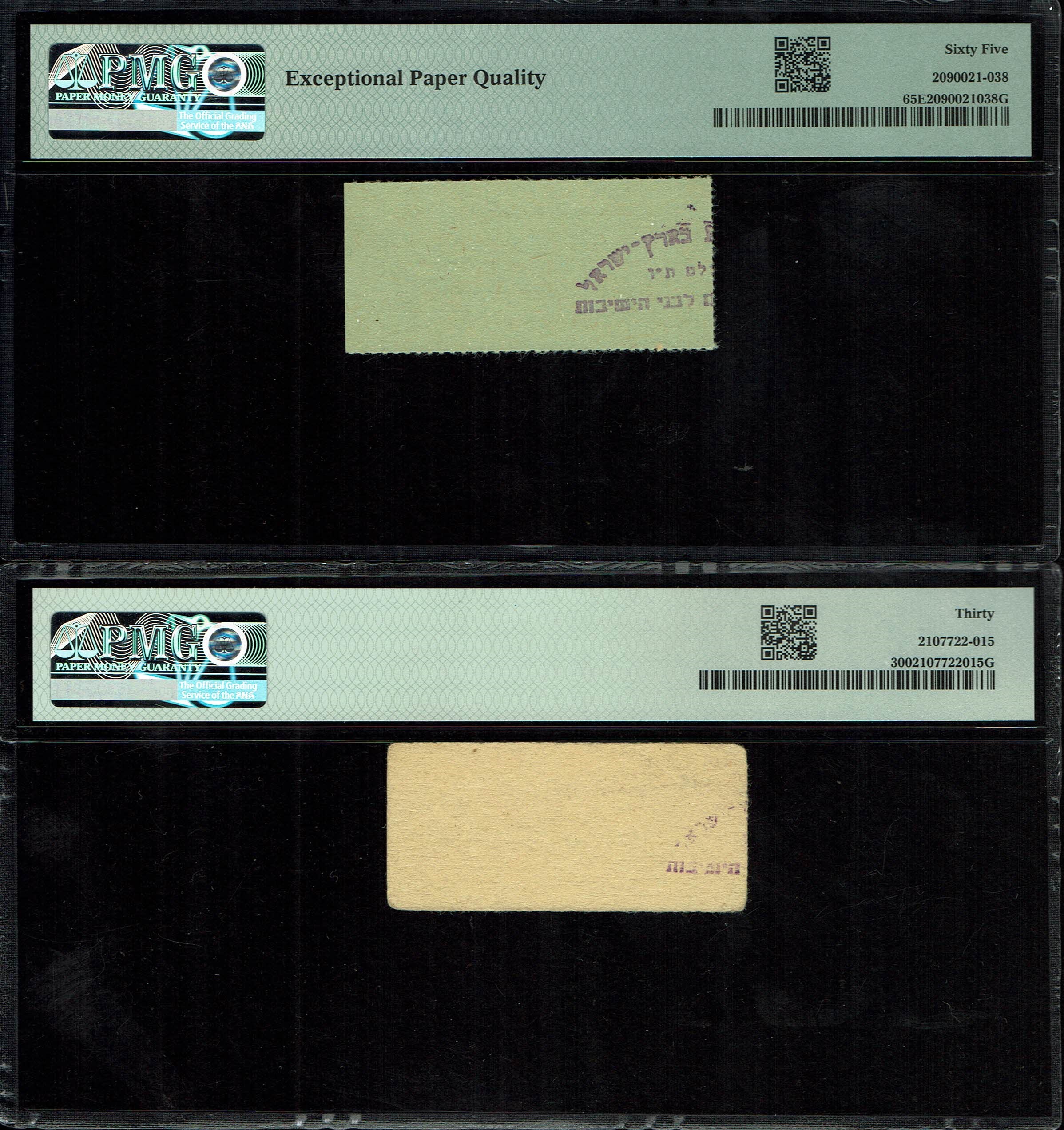
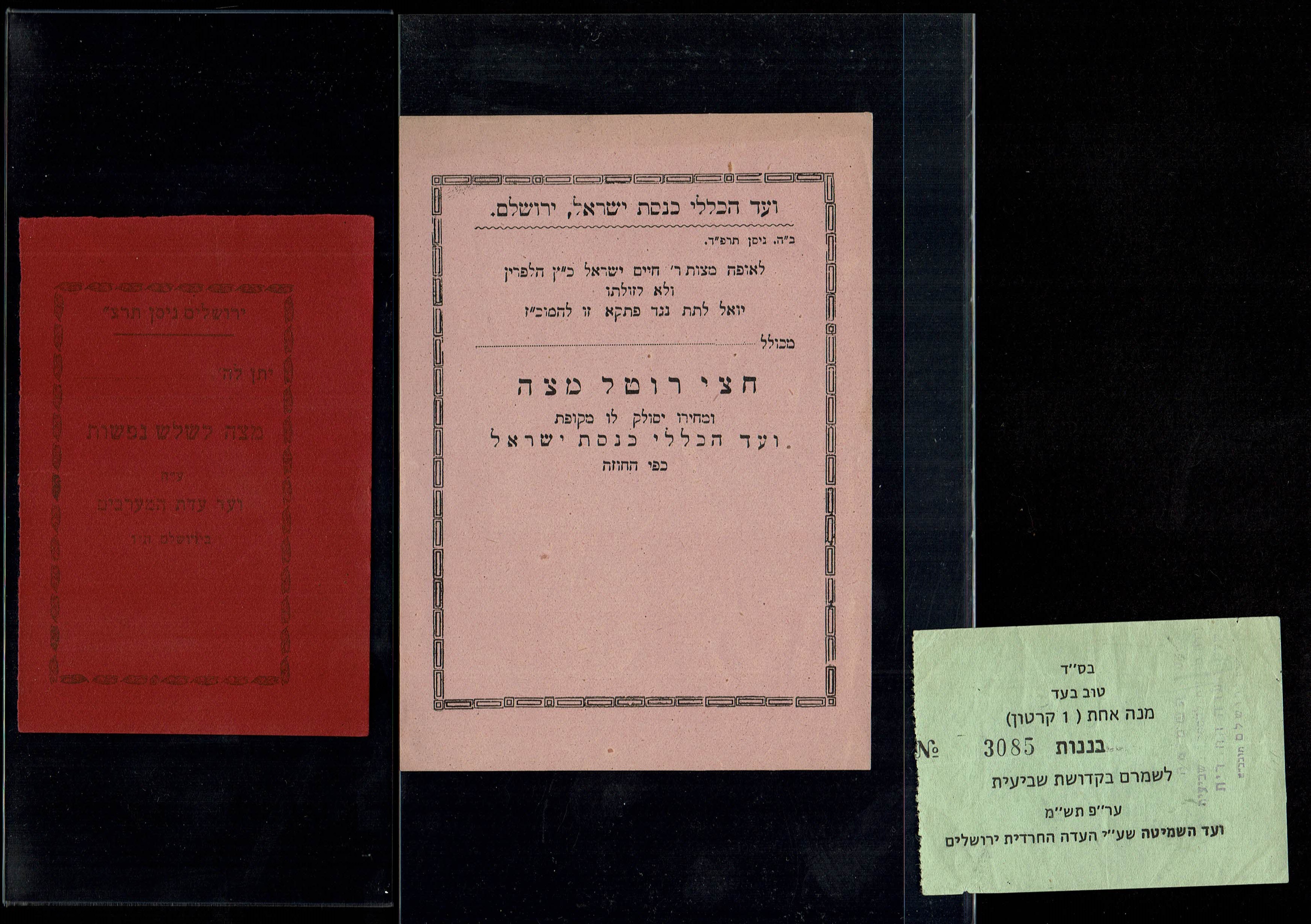
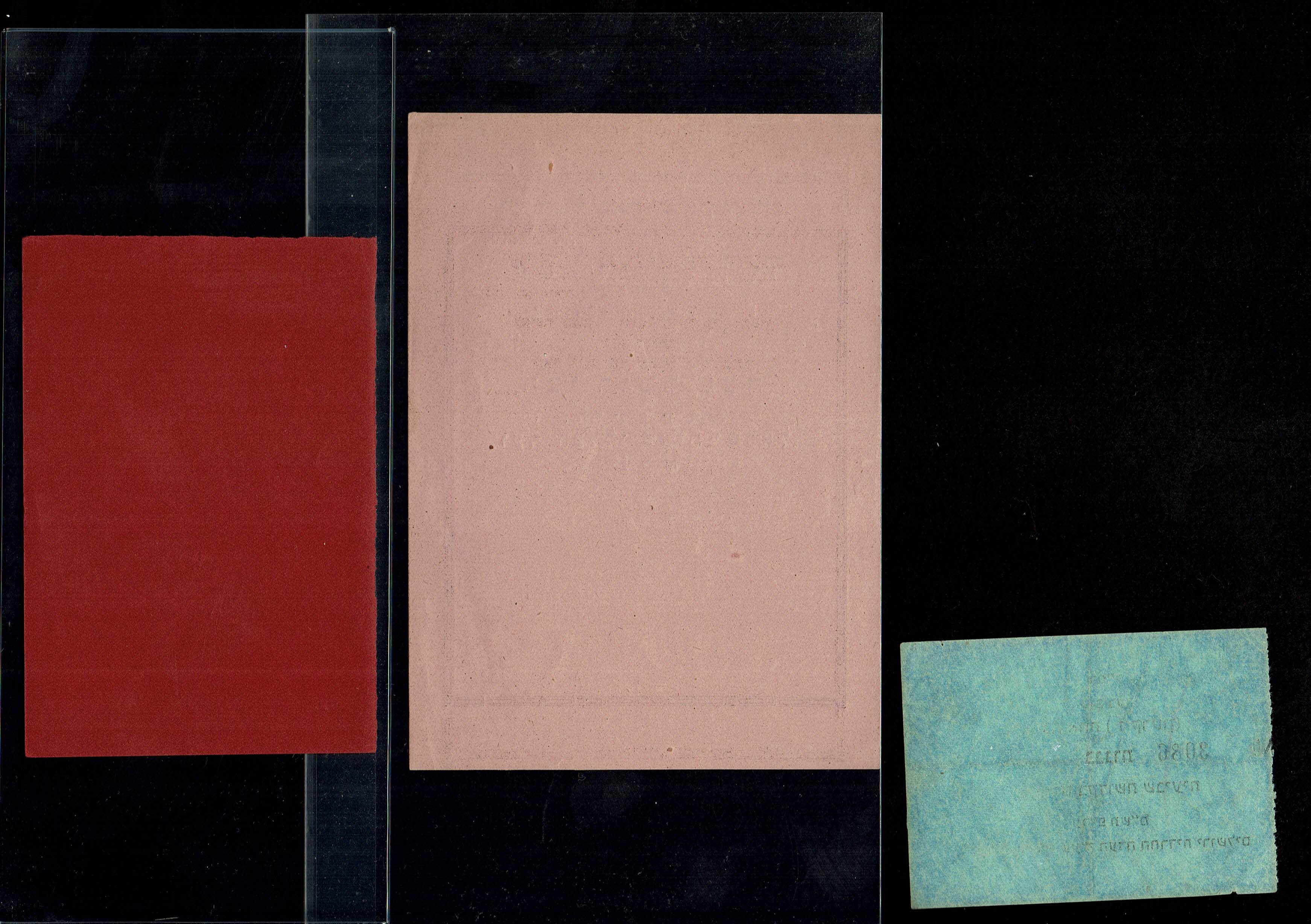
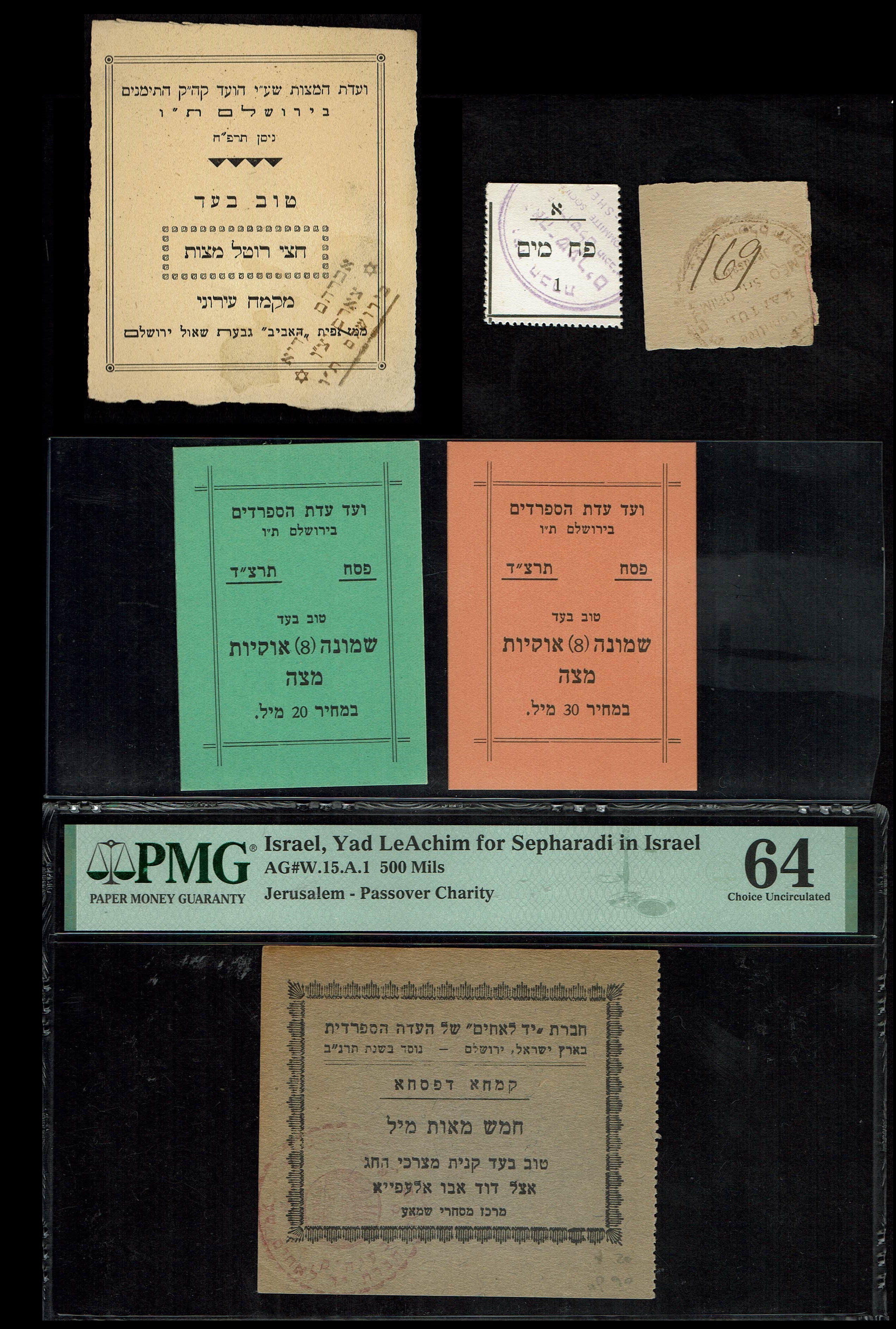
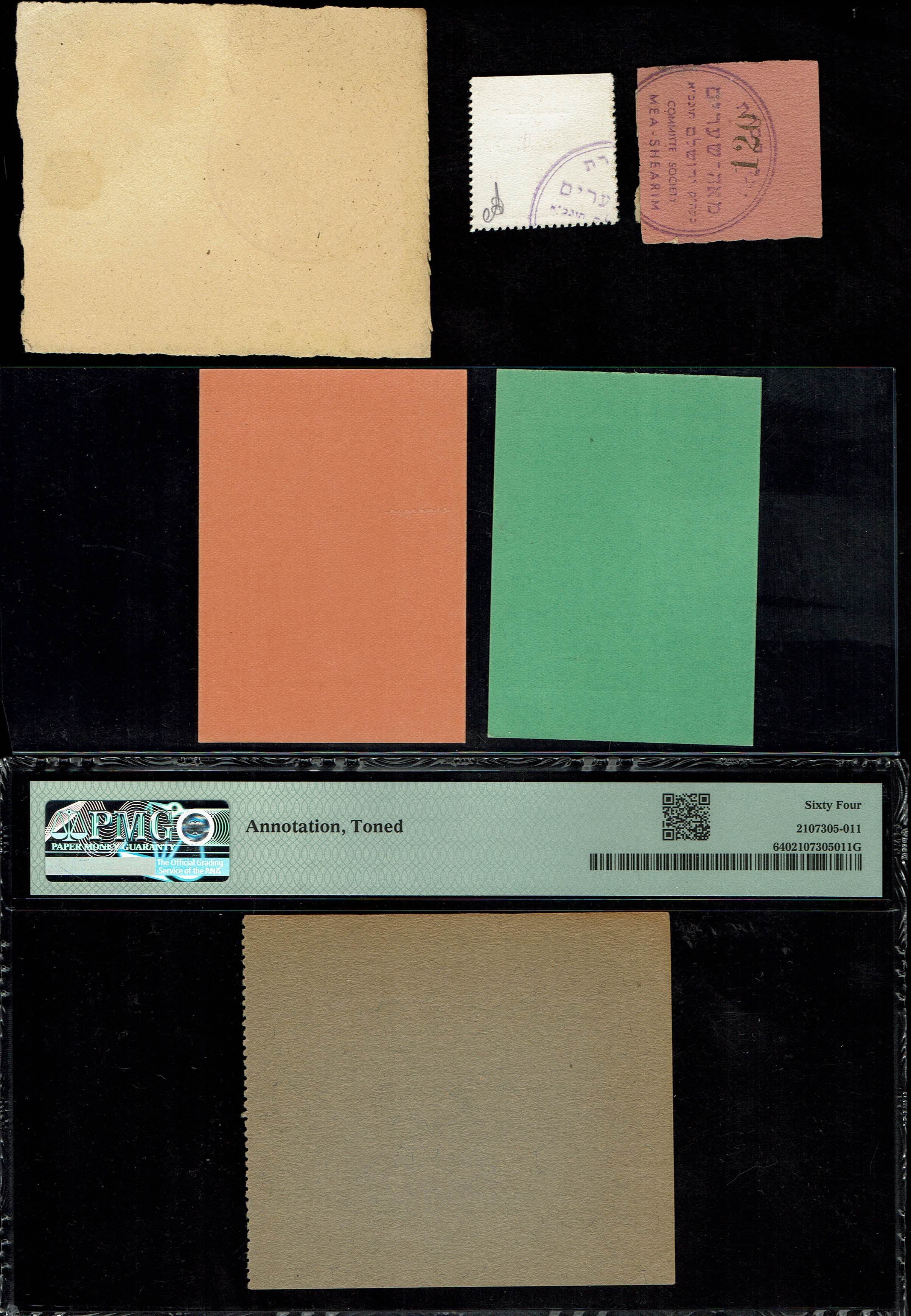
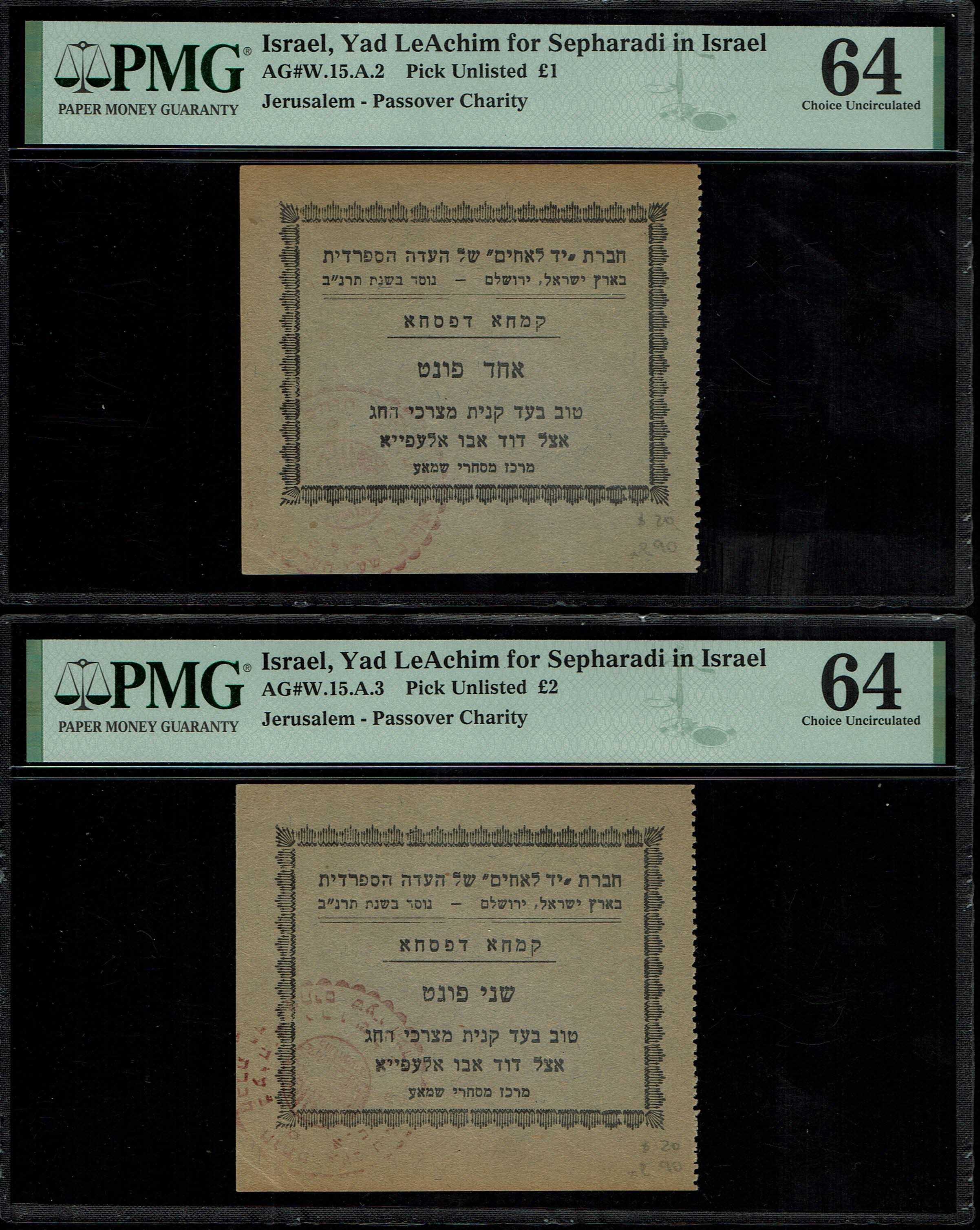
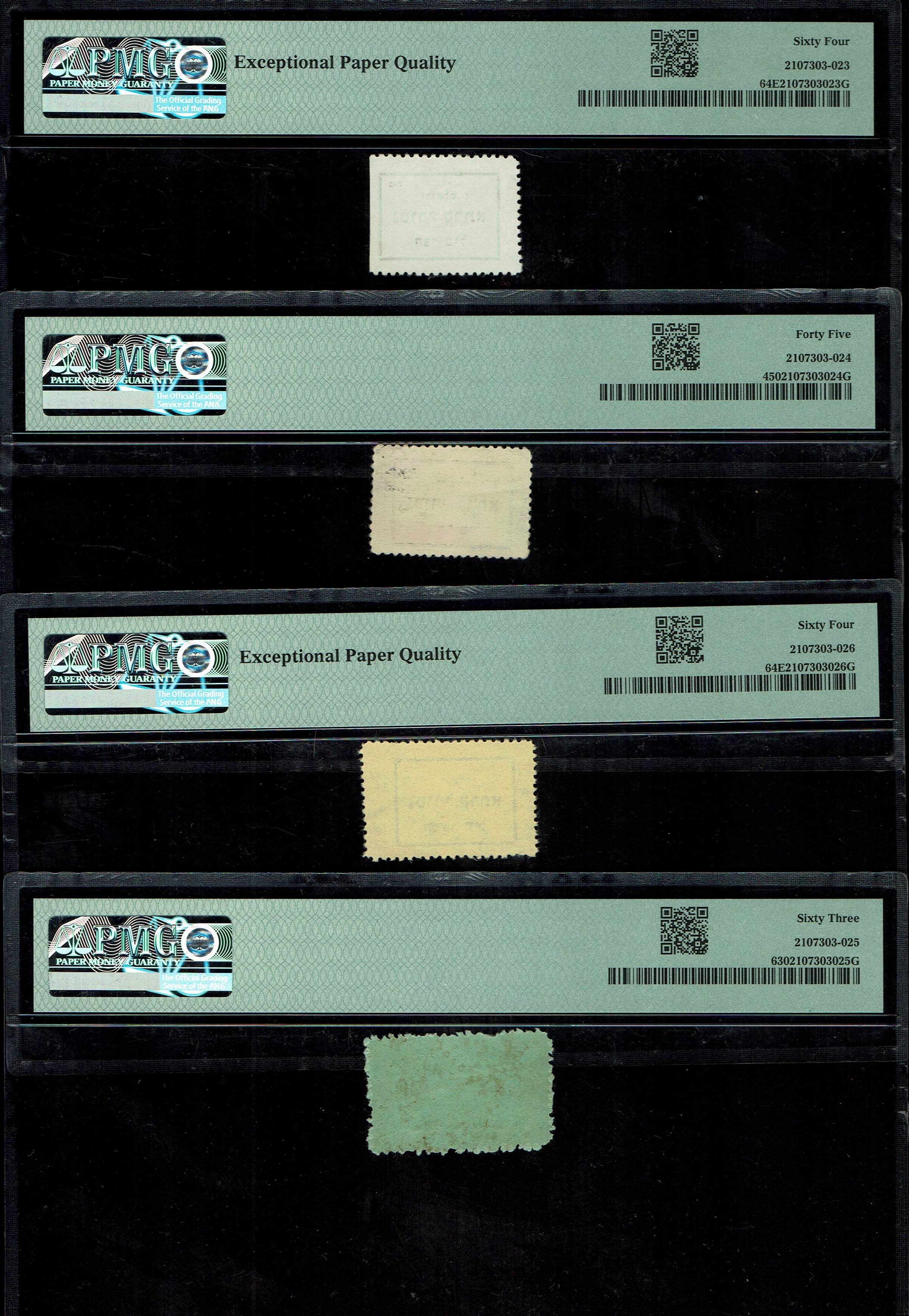
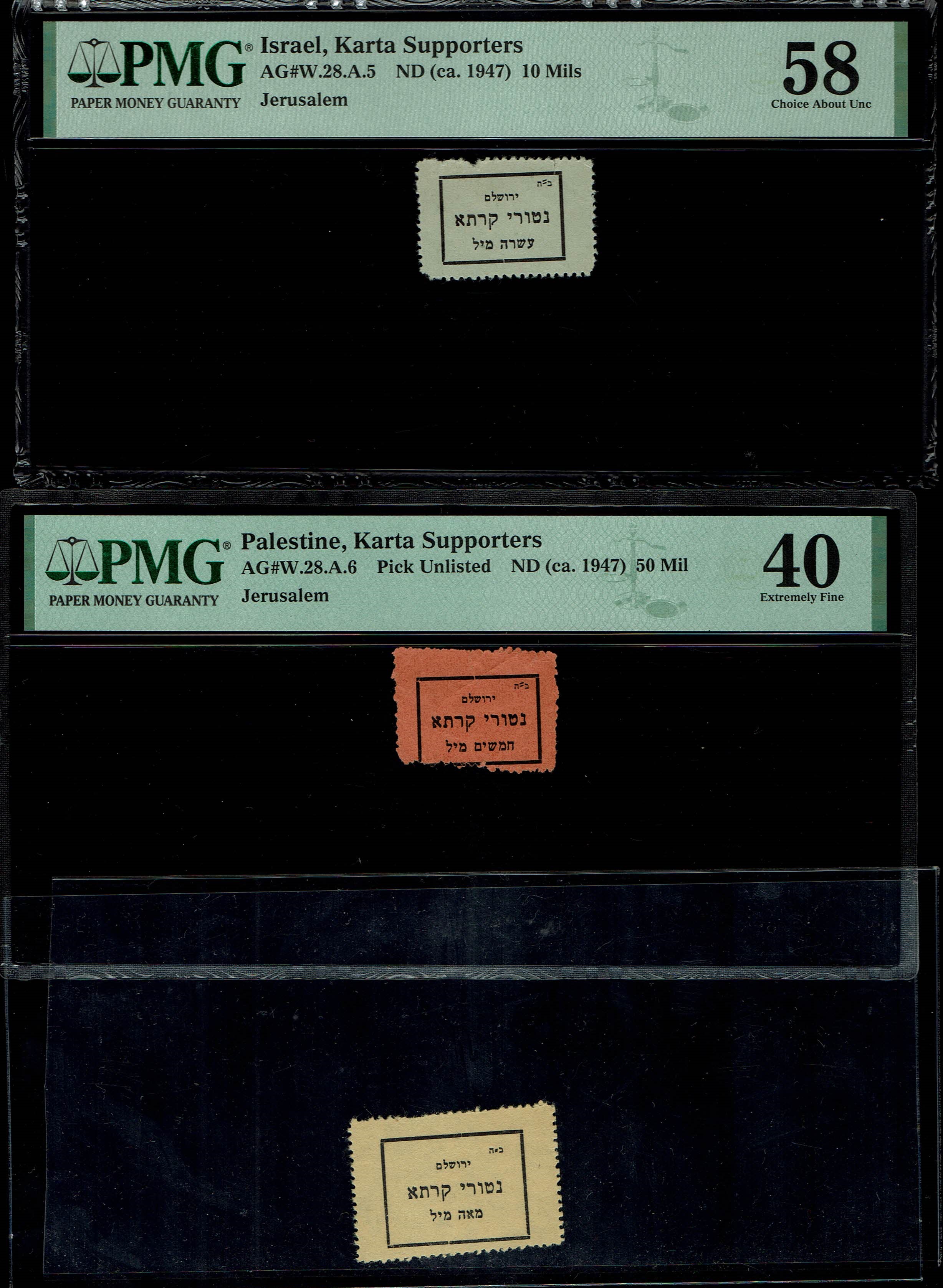
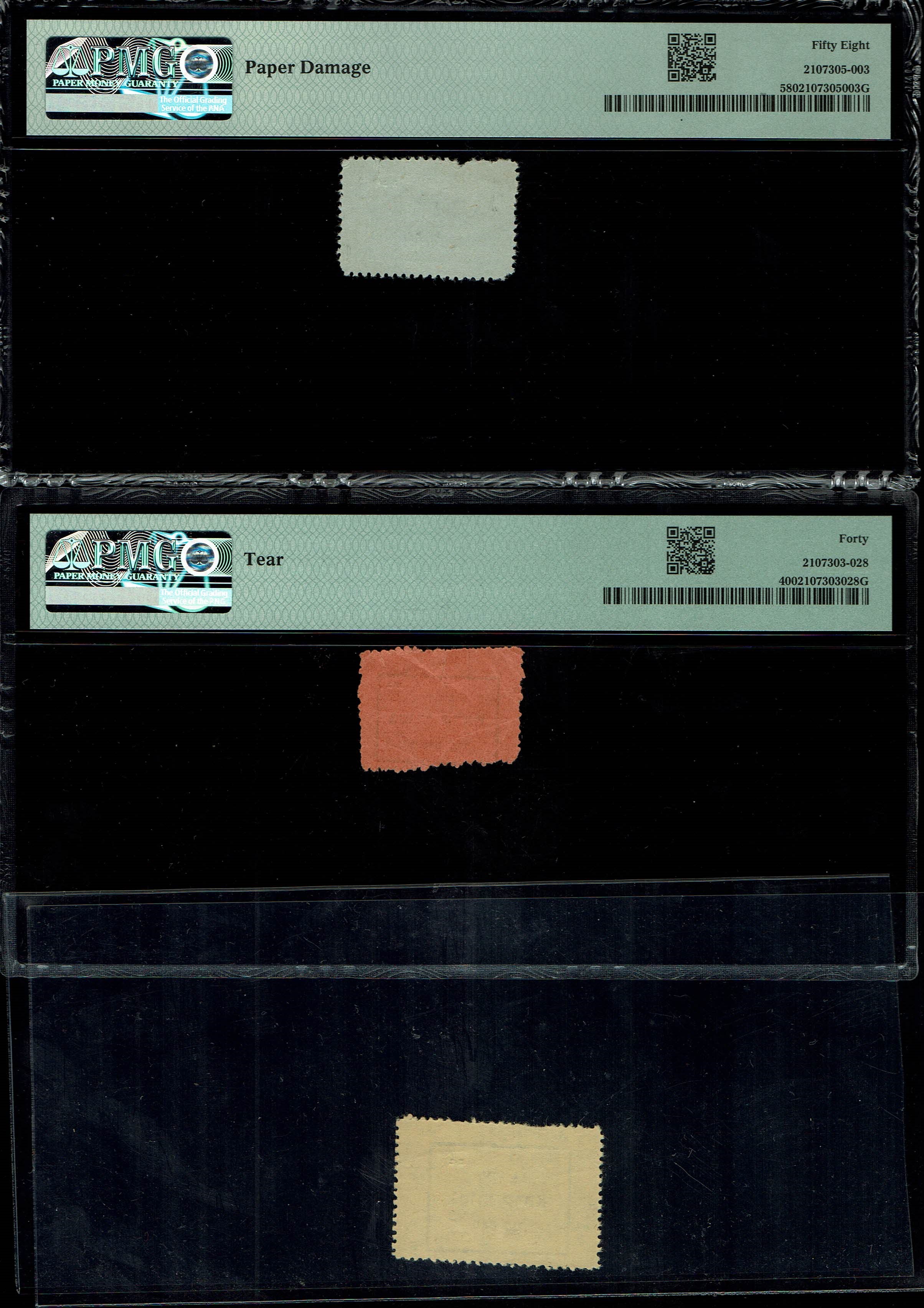
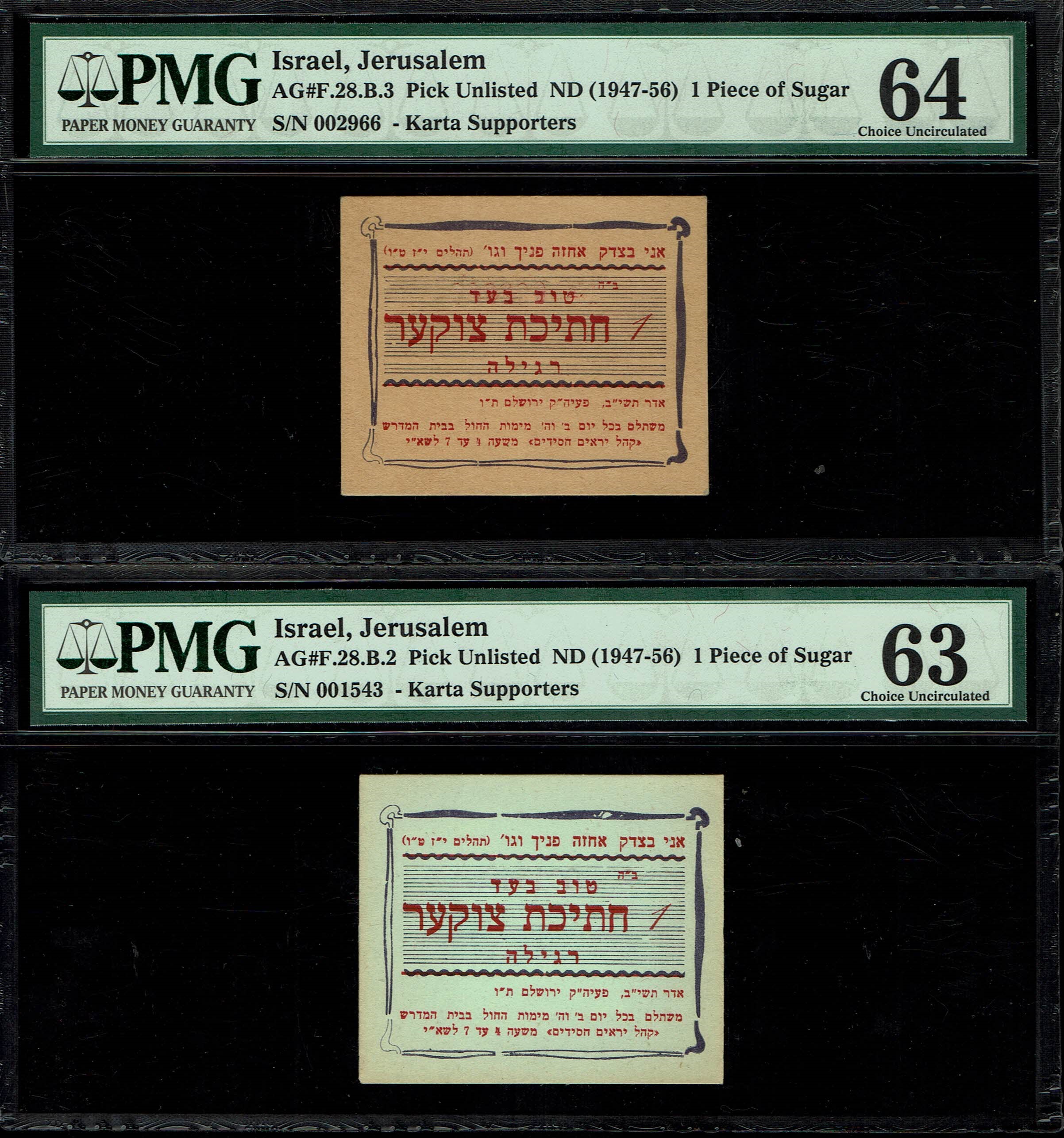
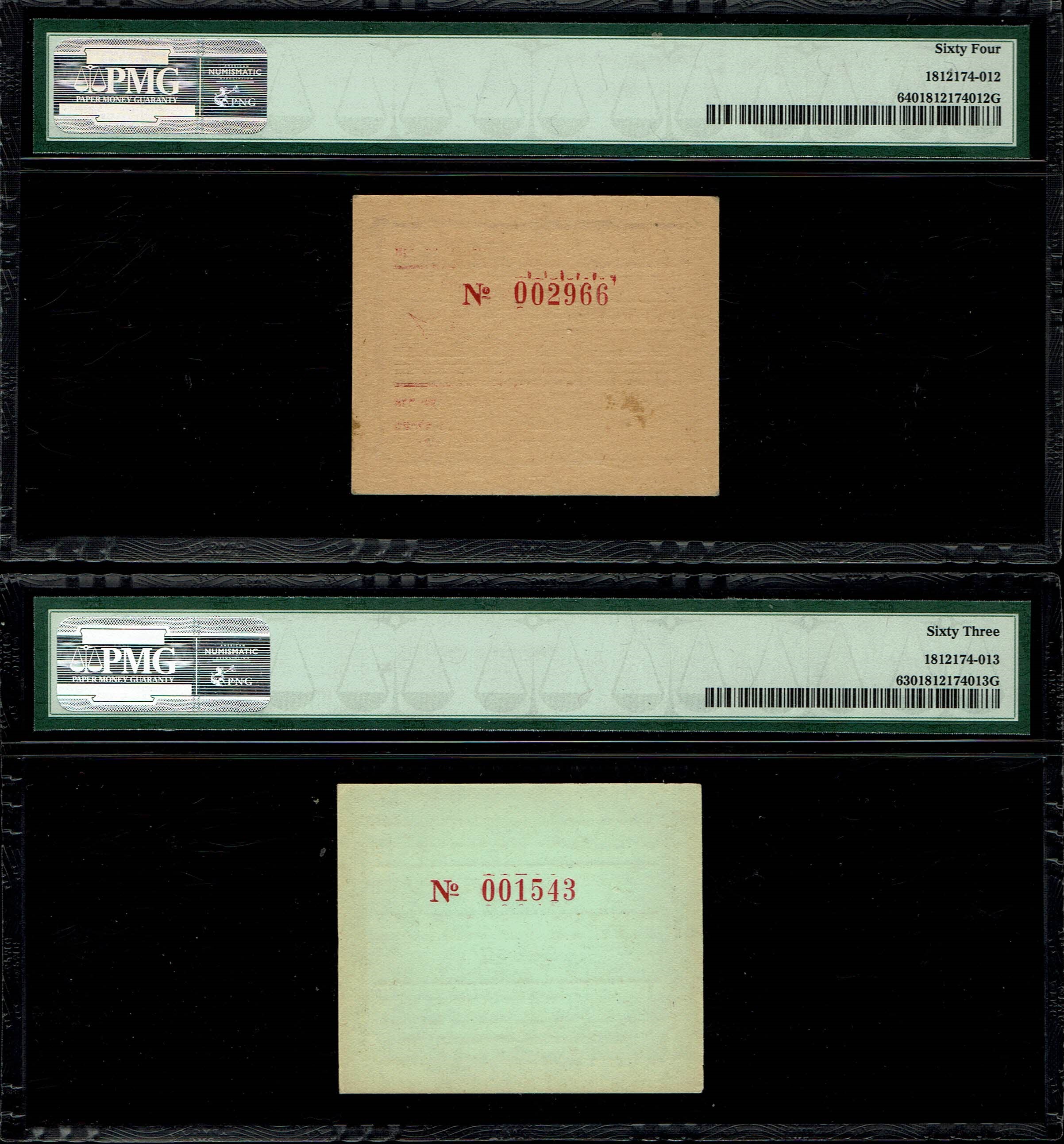
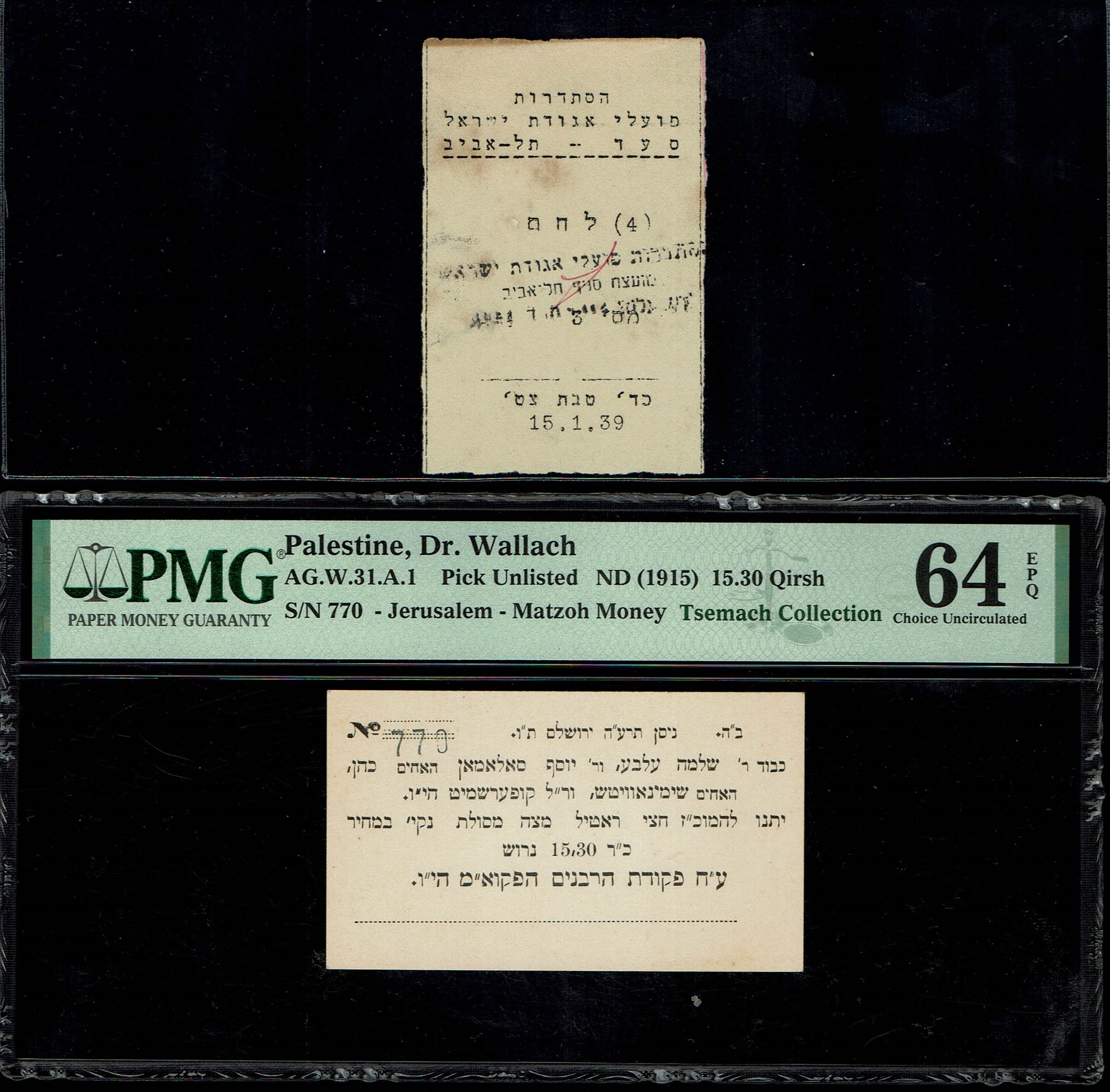
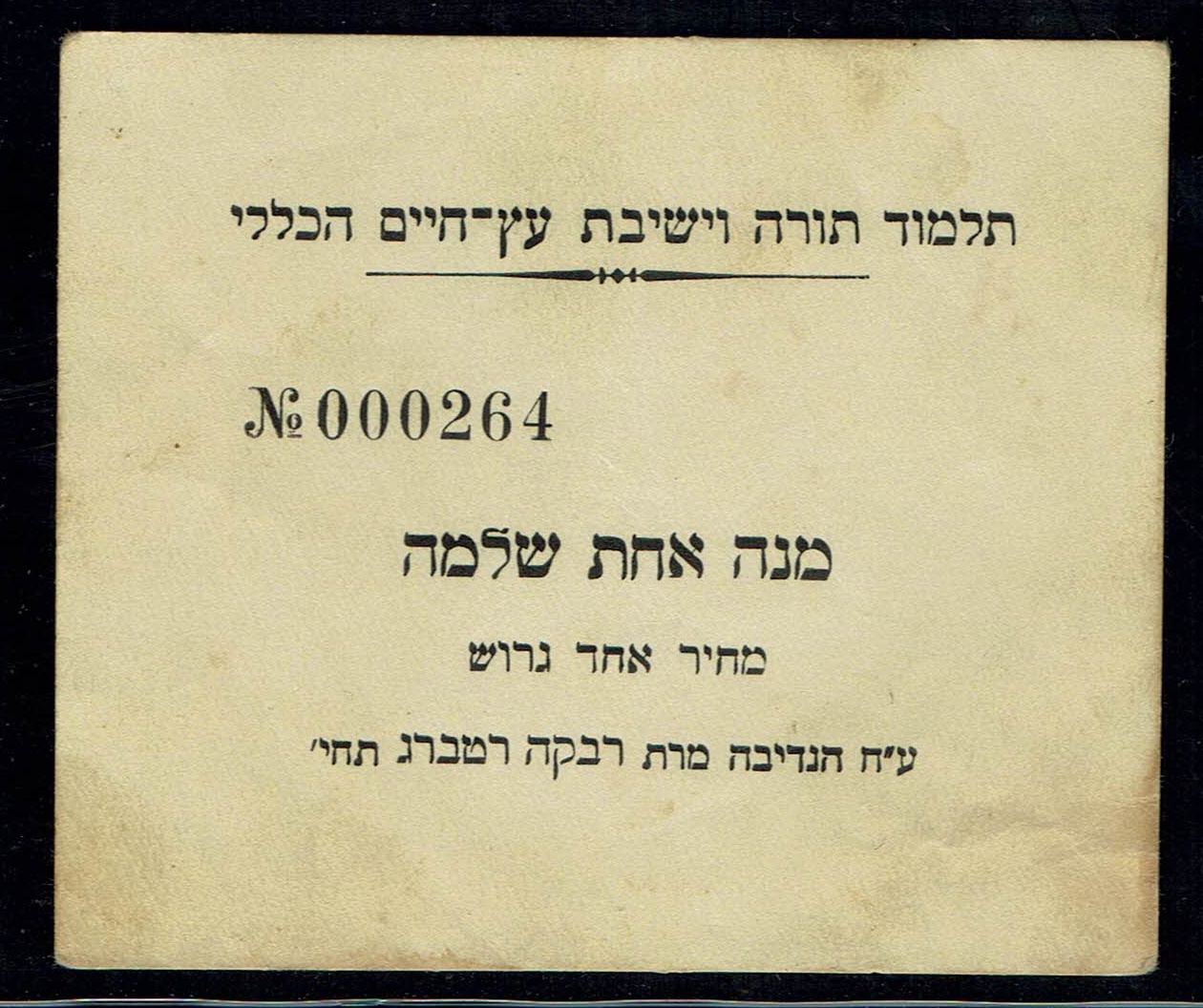
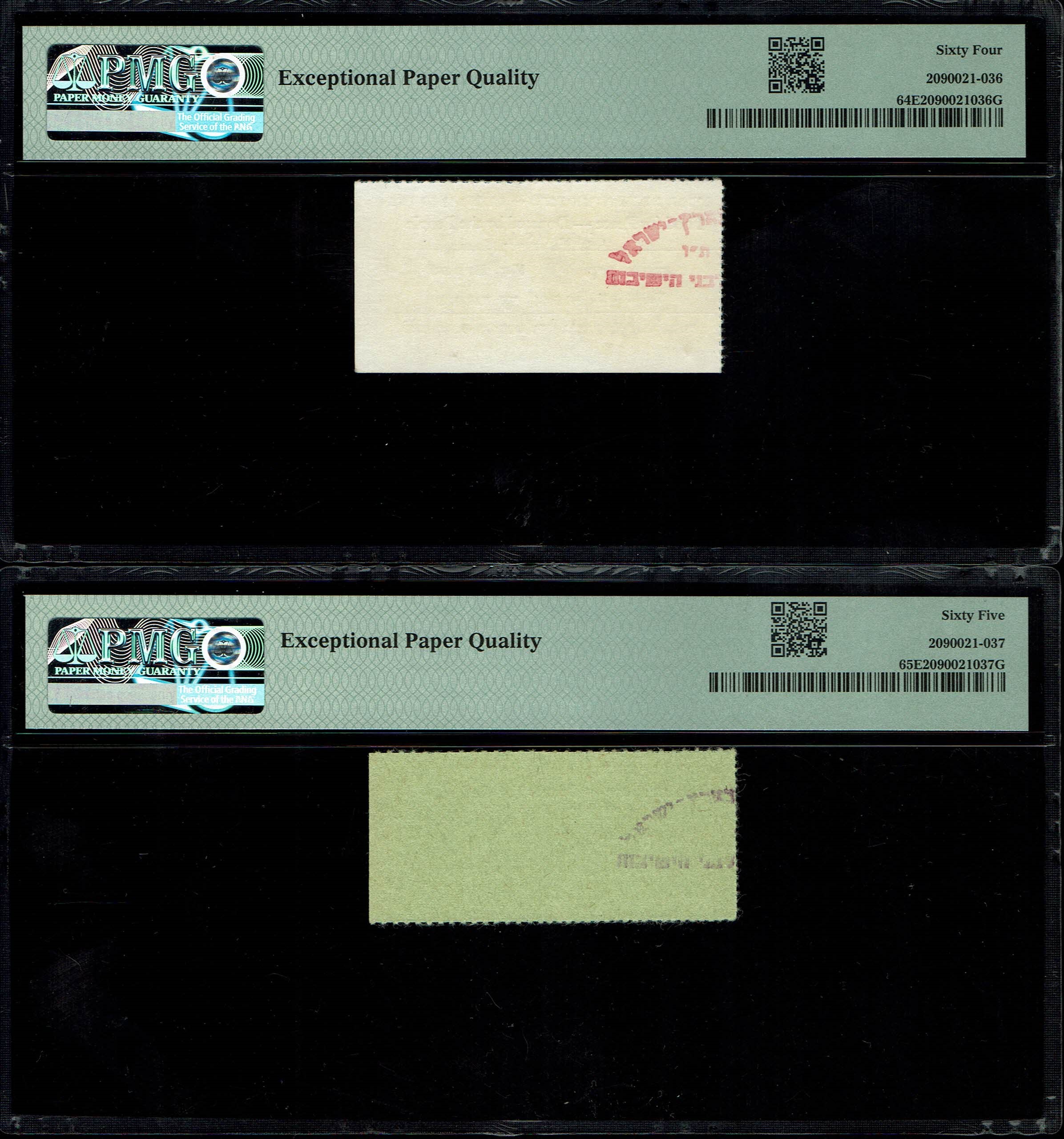
Paper Money Tokens - Palestine / Eretz Israel - Lot of 72 Paper Money Tokens in Subject of Charities
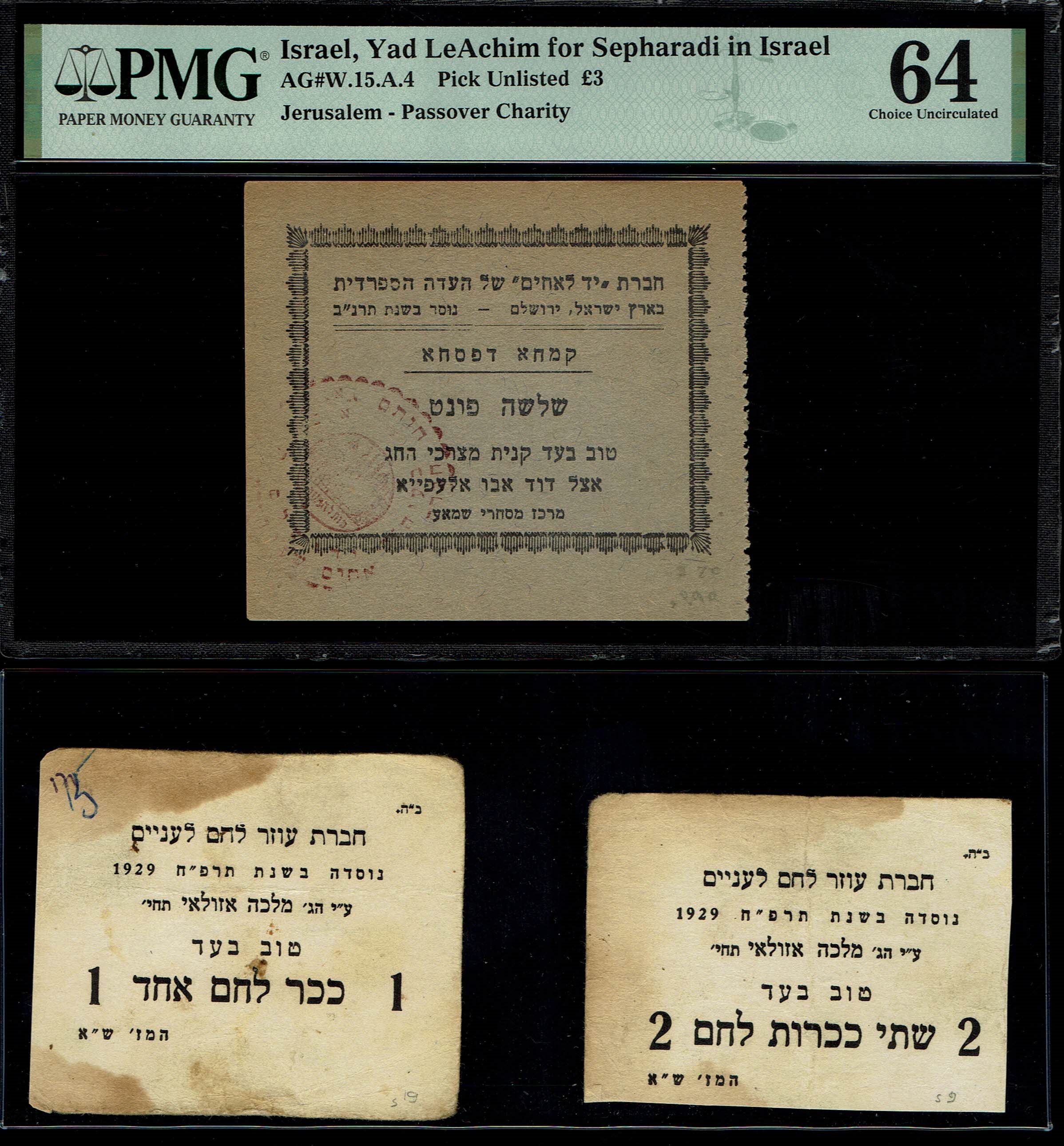
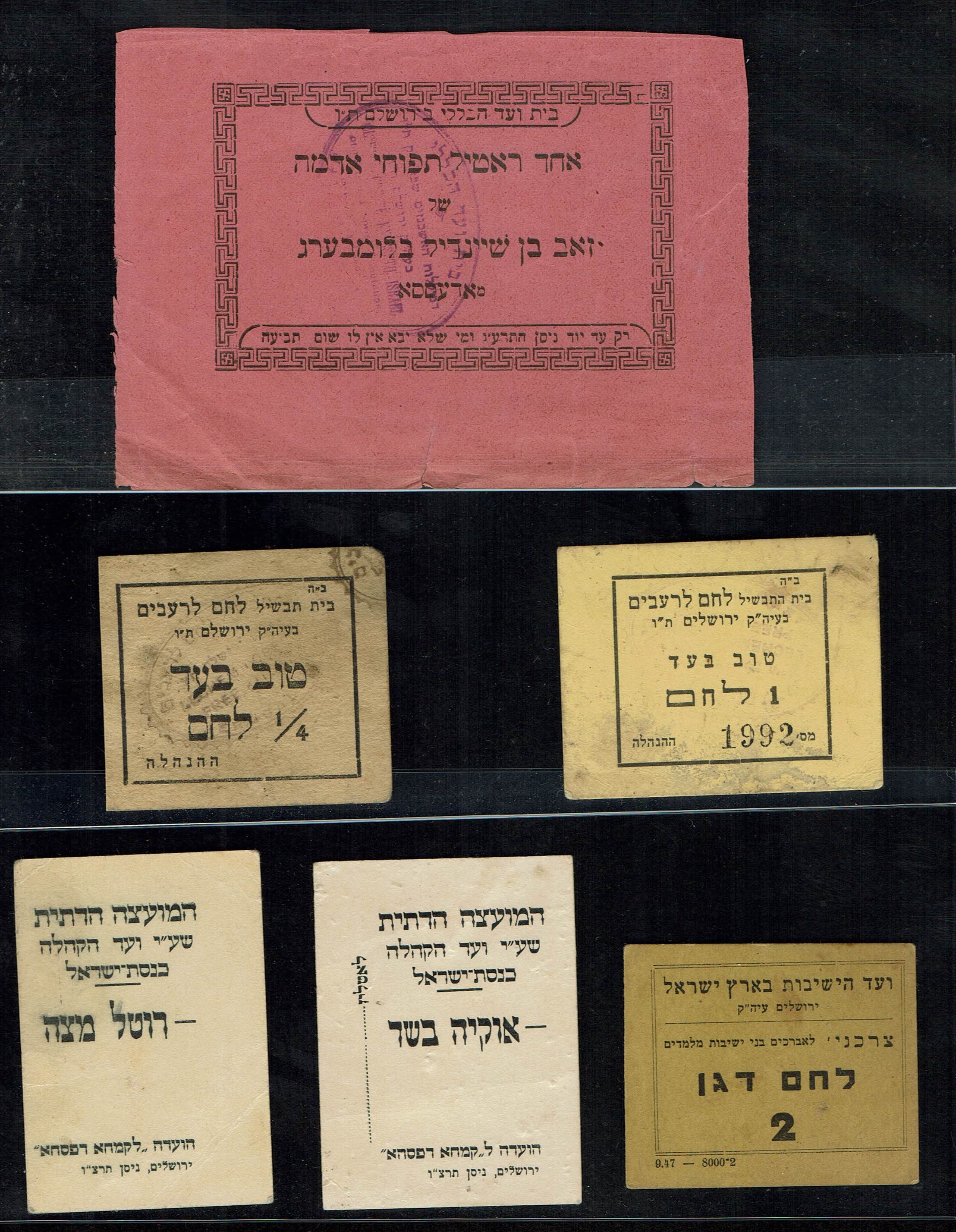
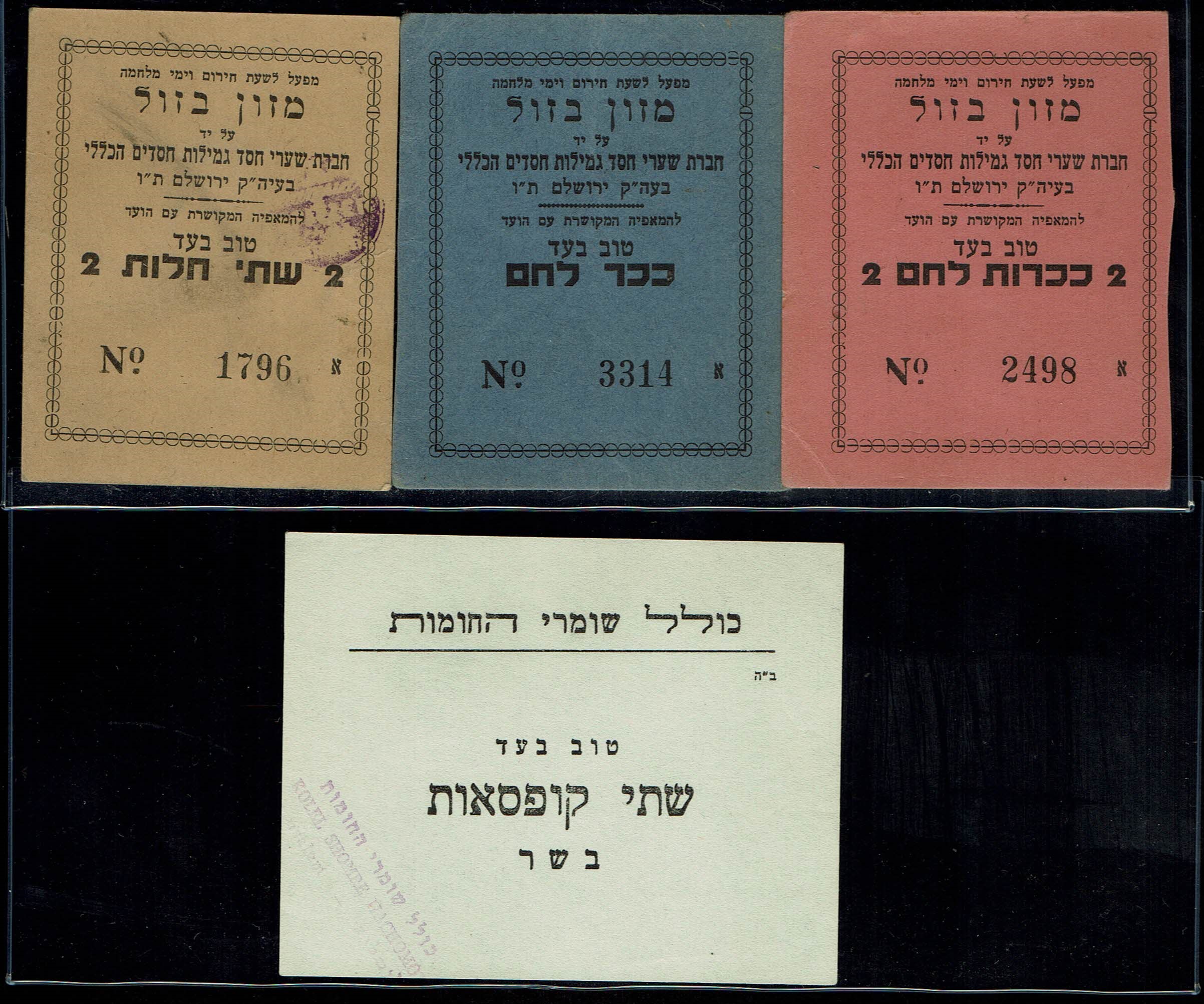
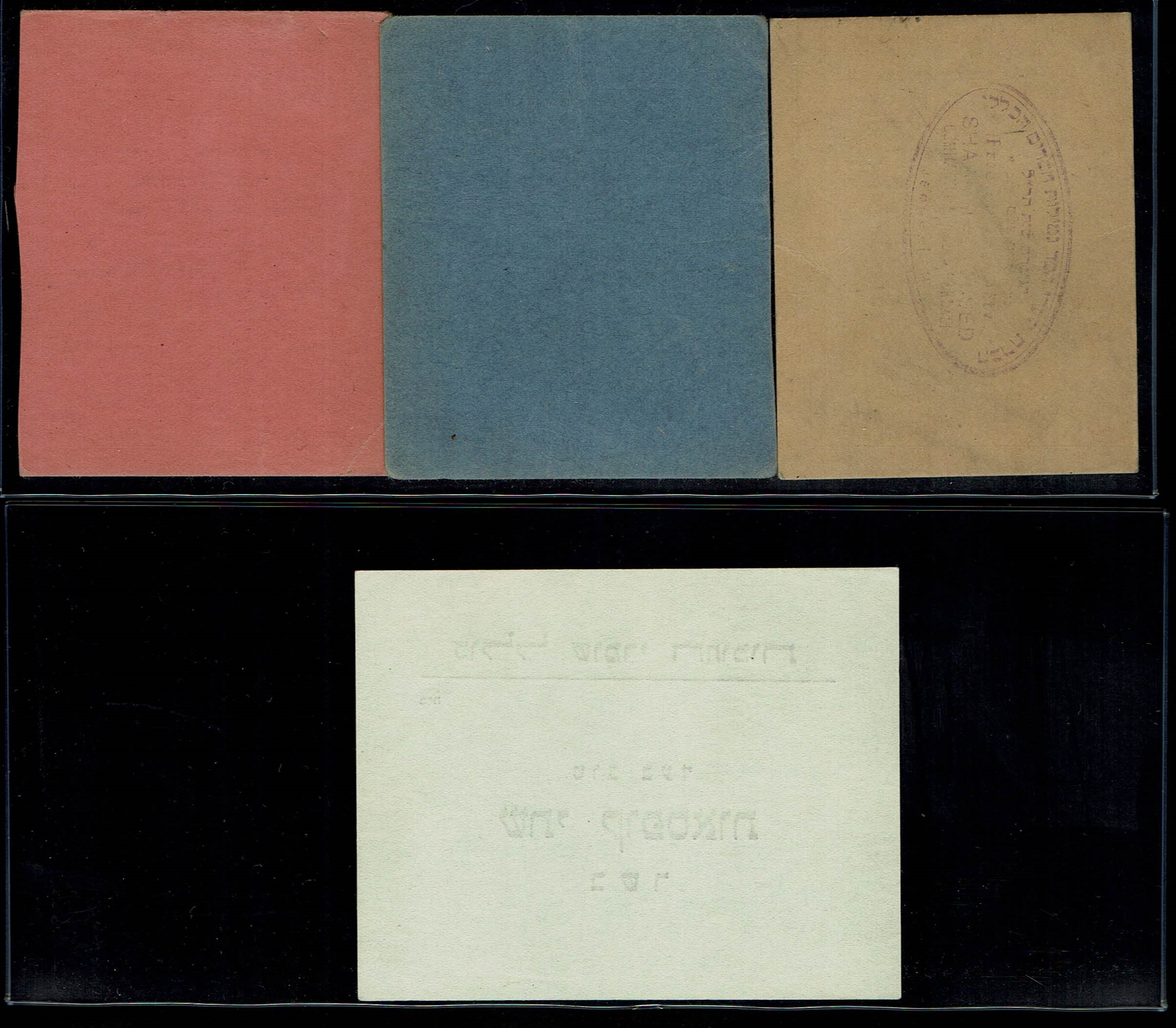
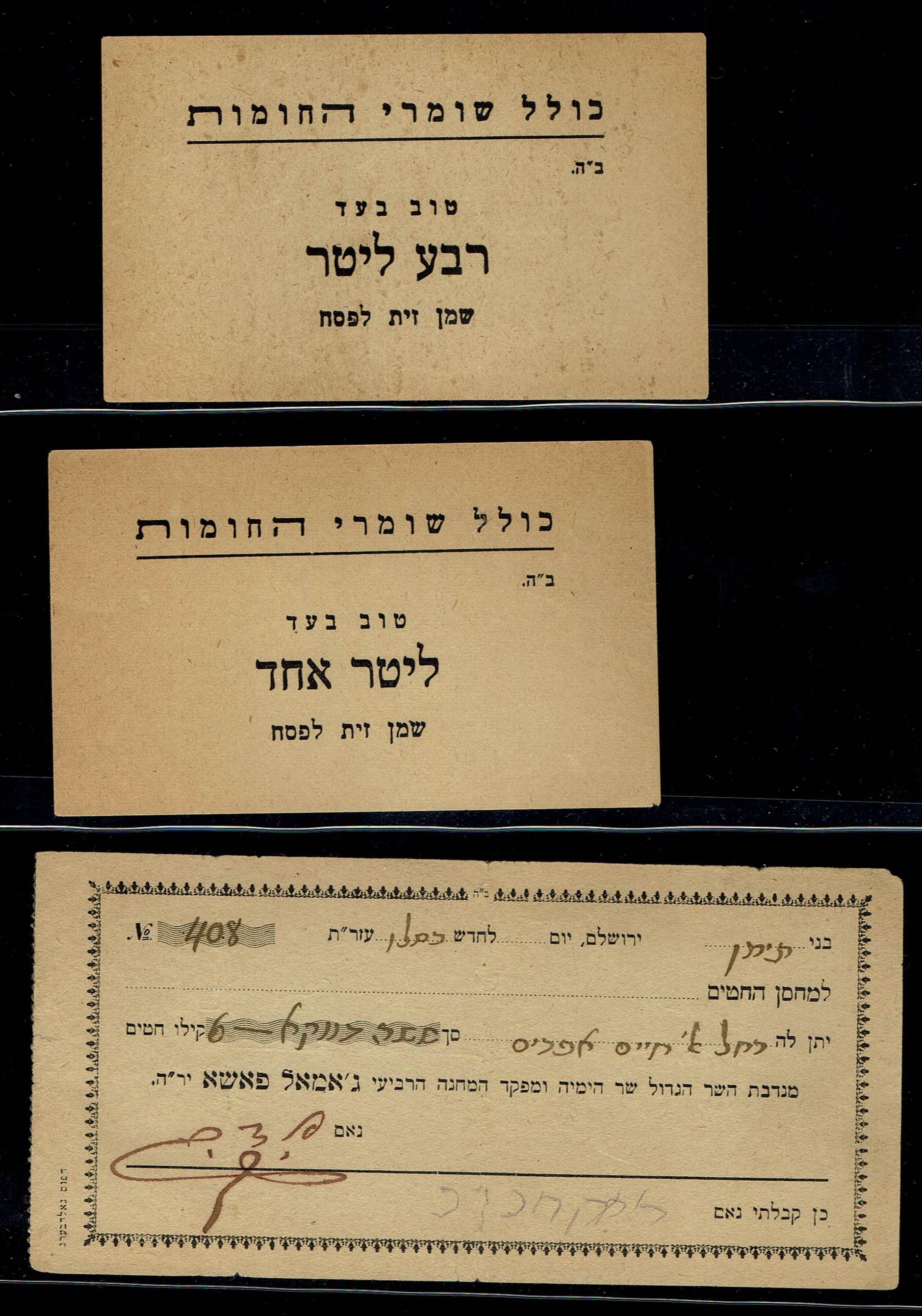
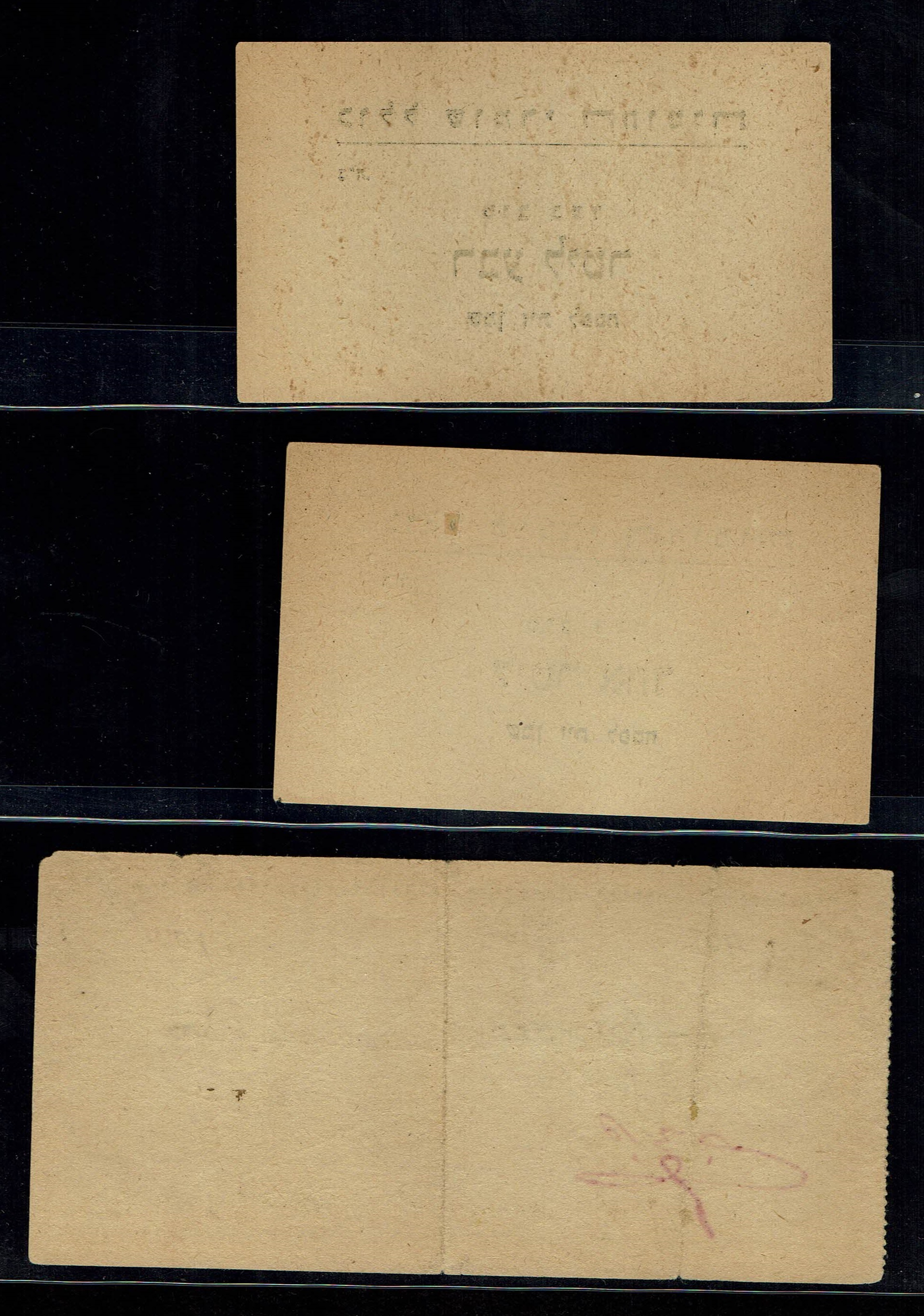
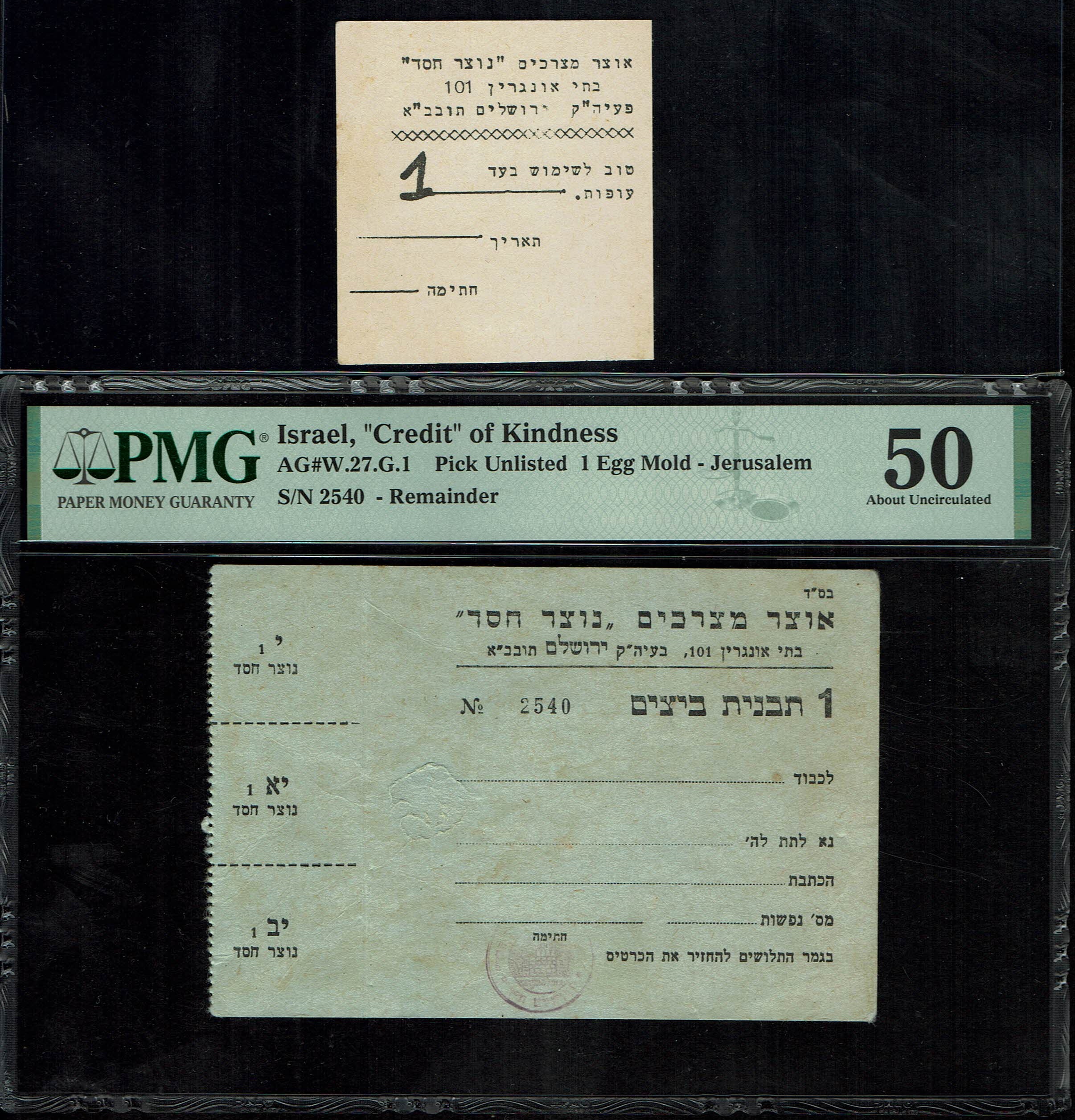
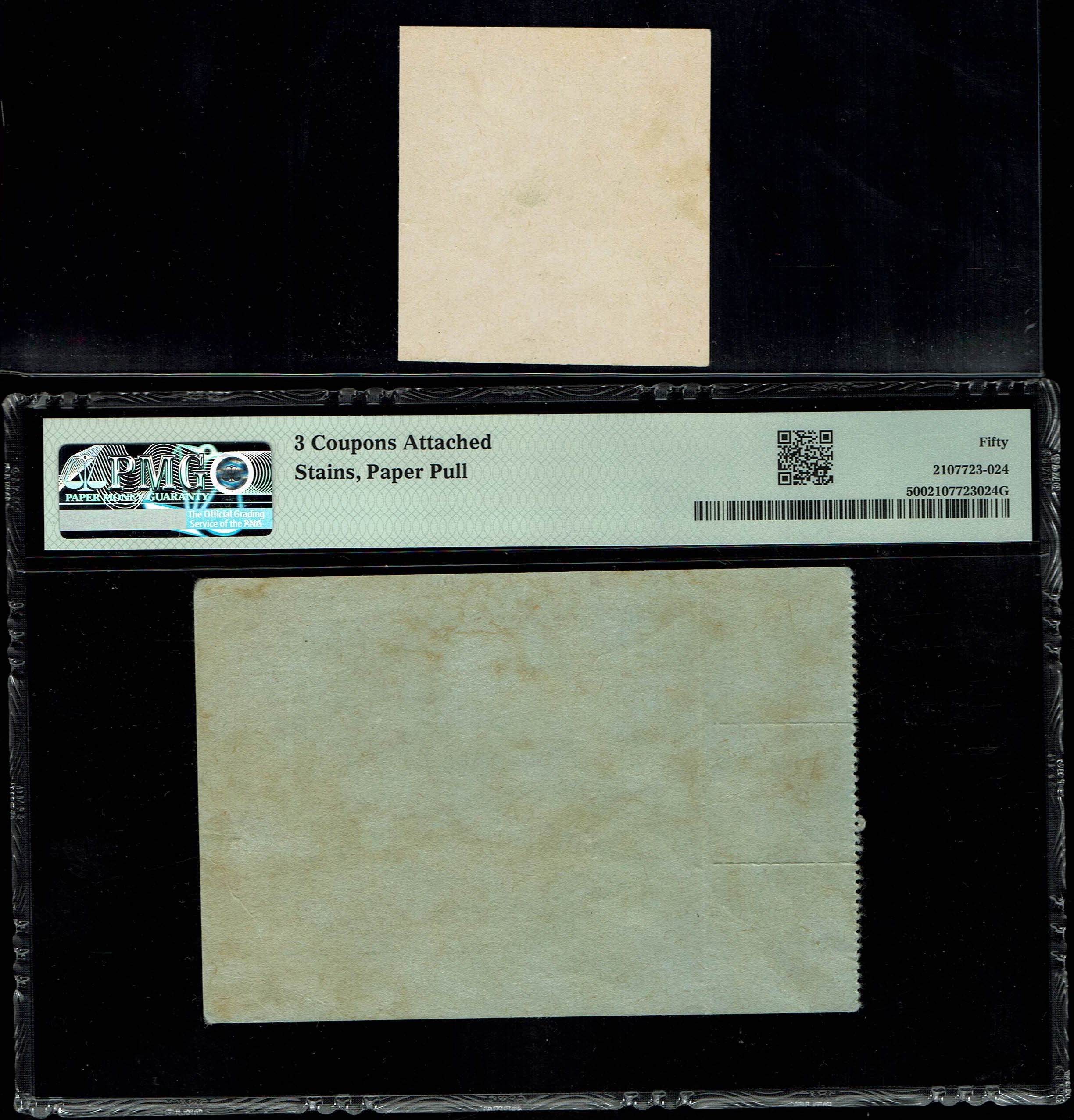
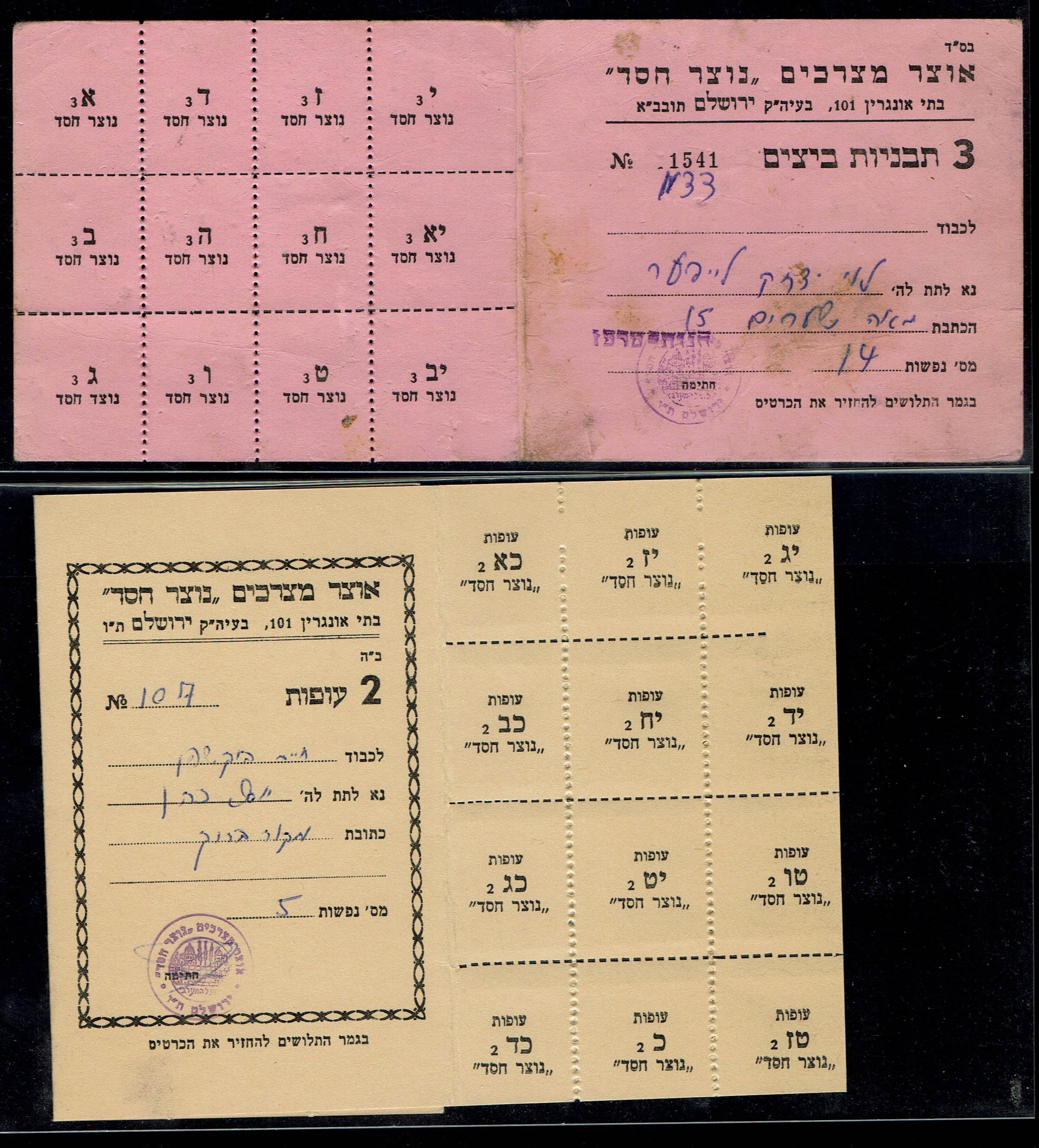
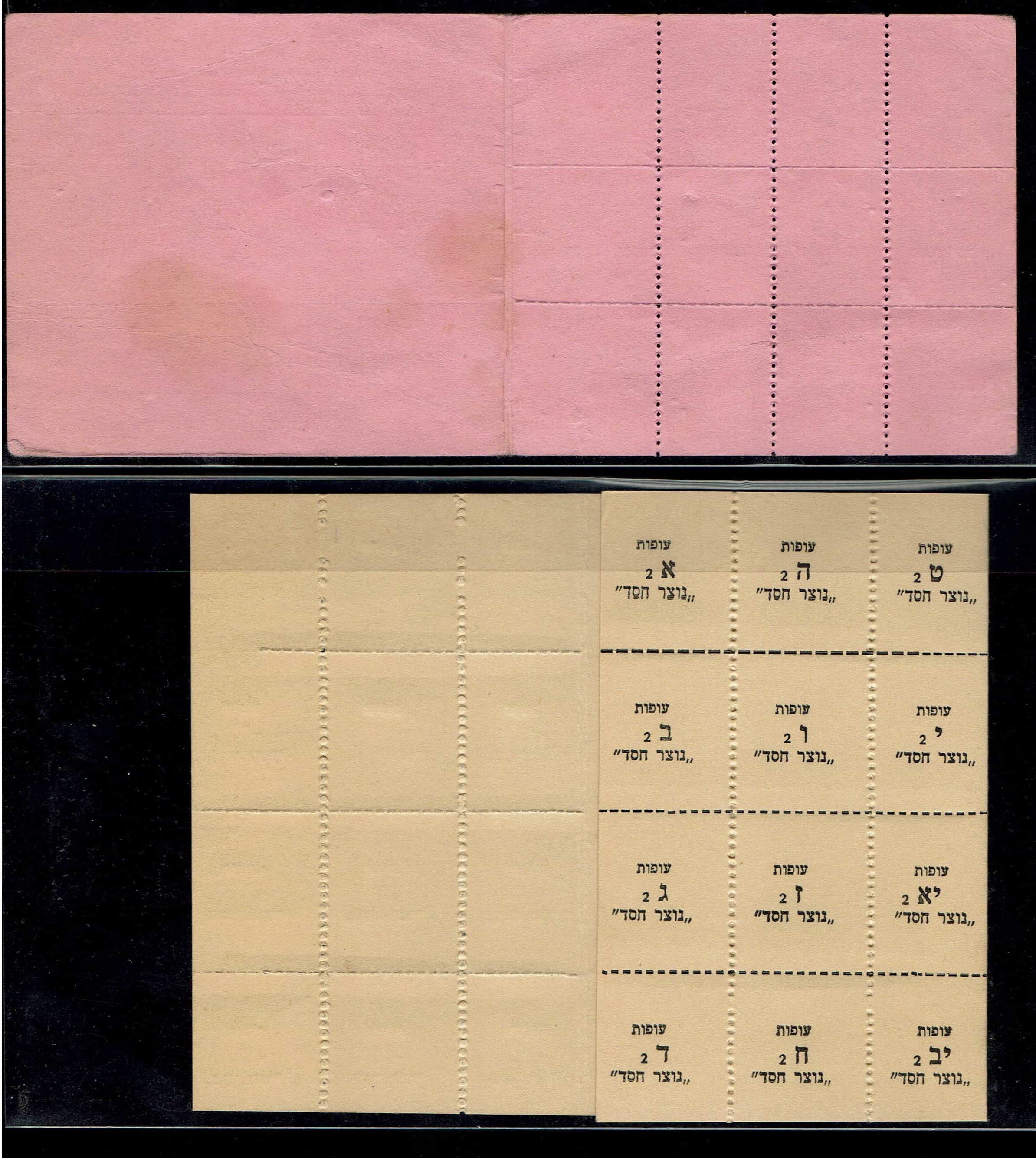
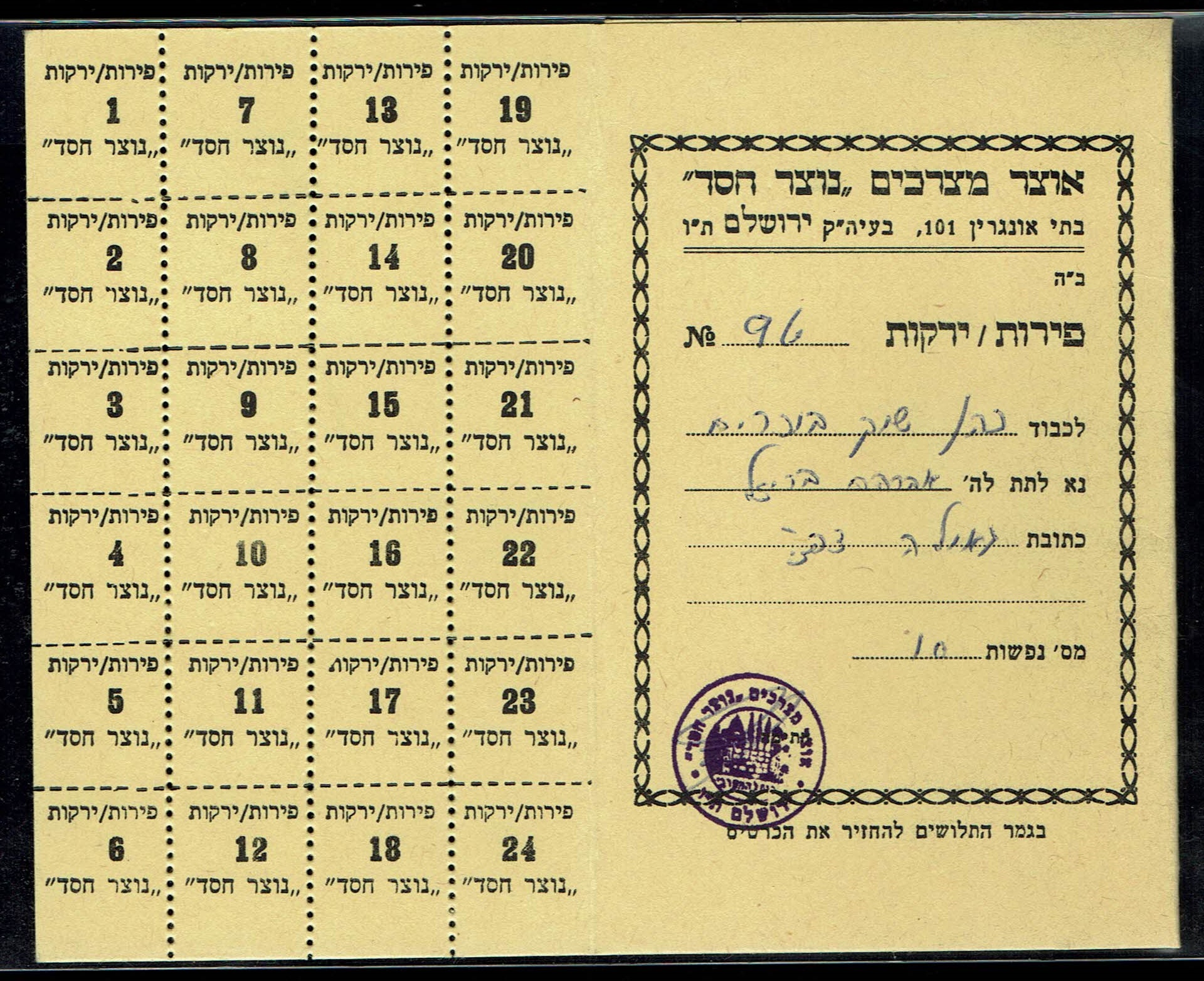
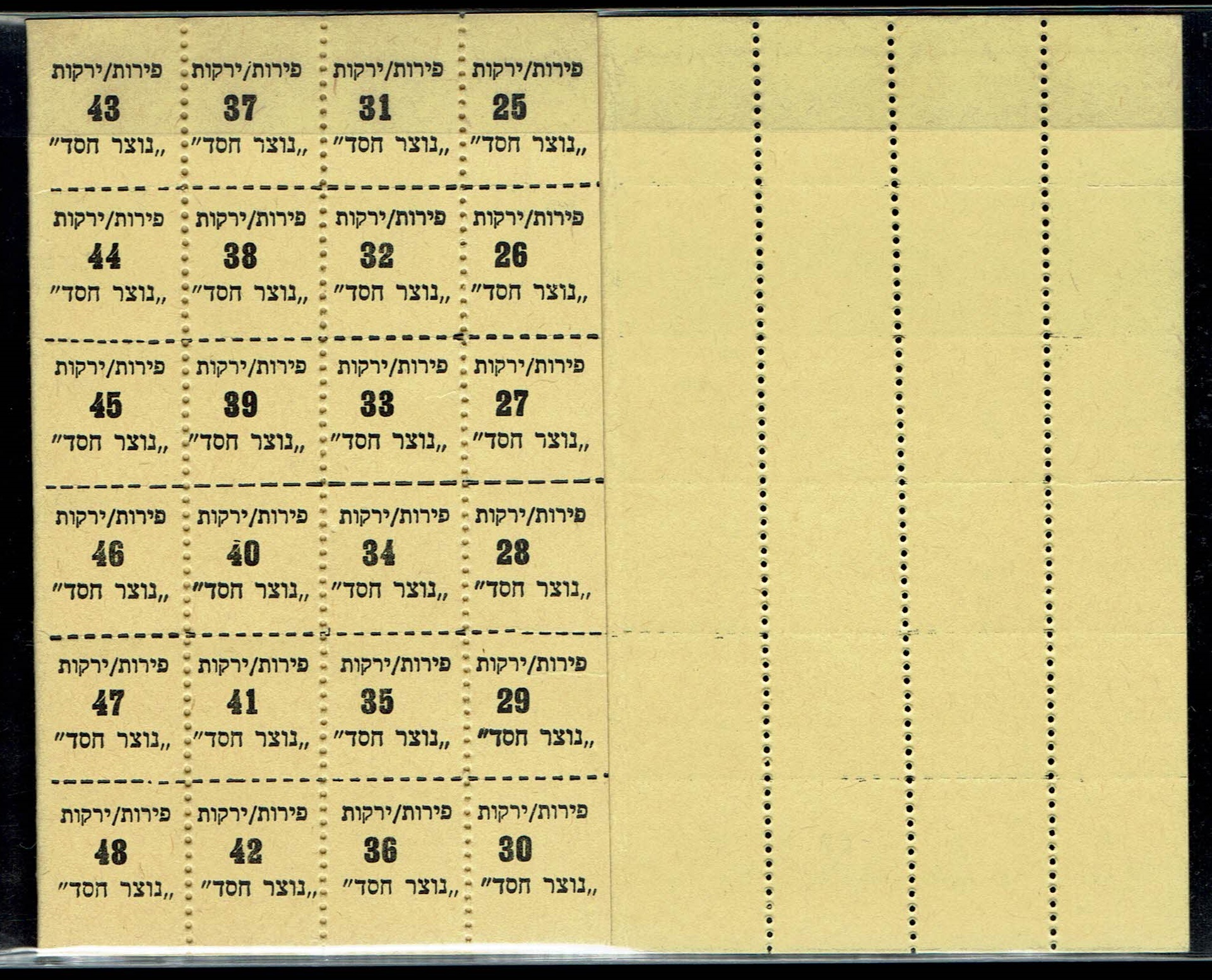
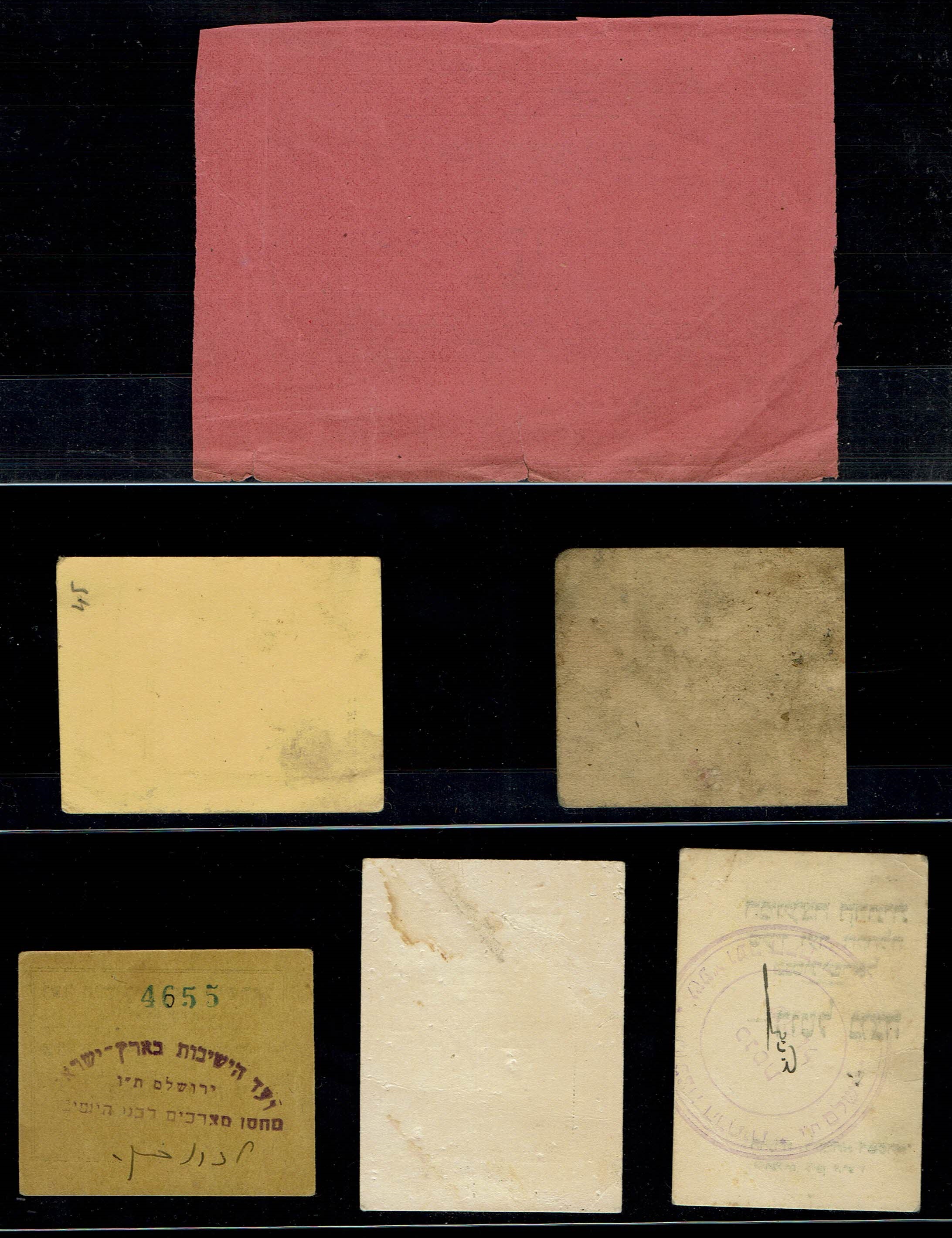
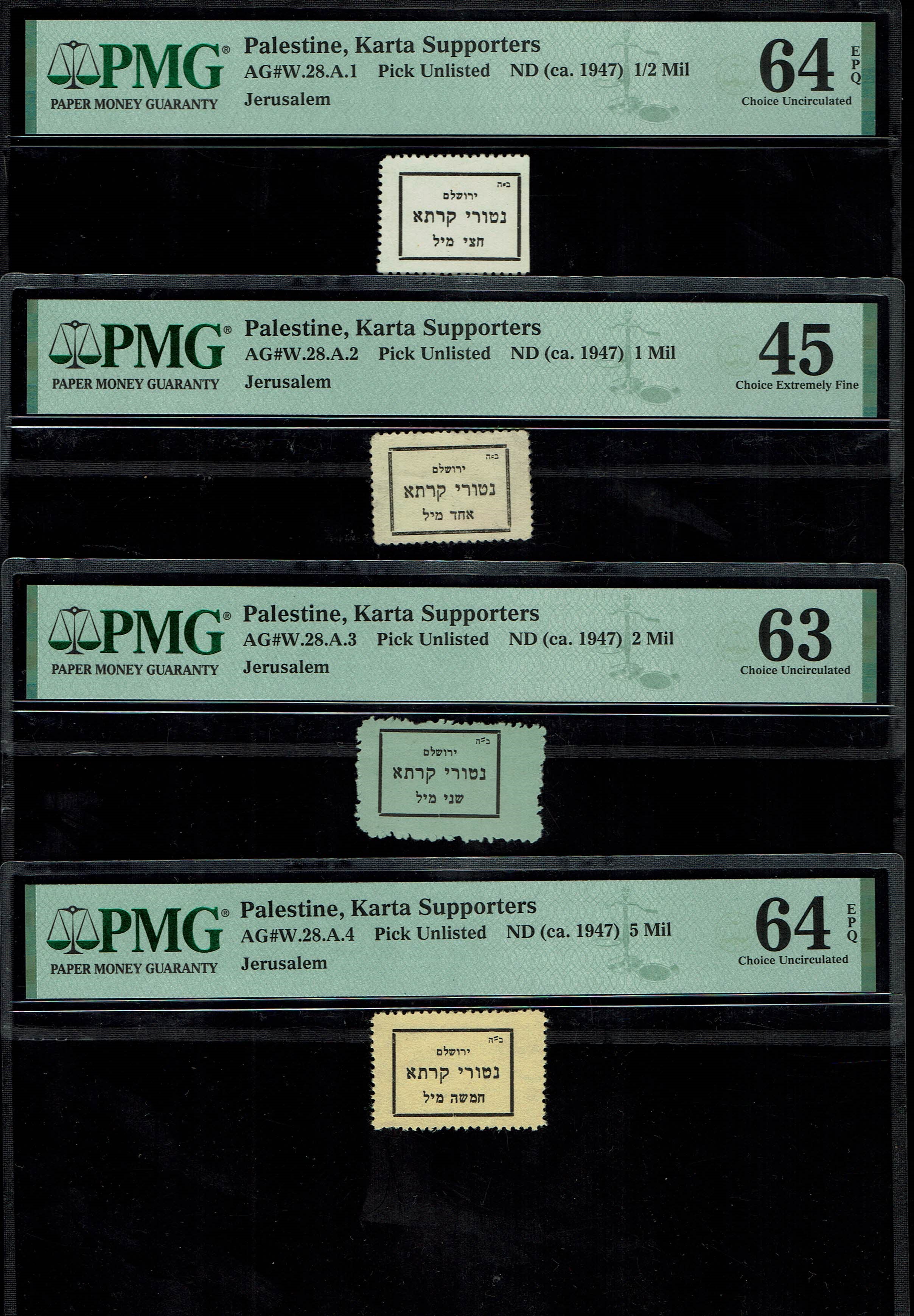
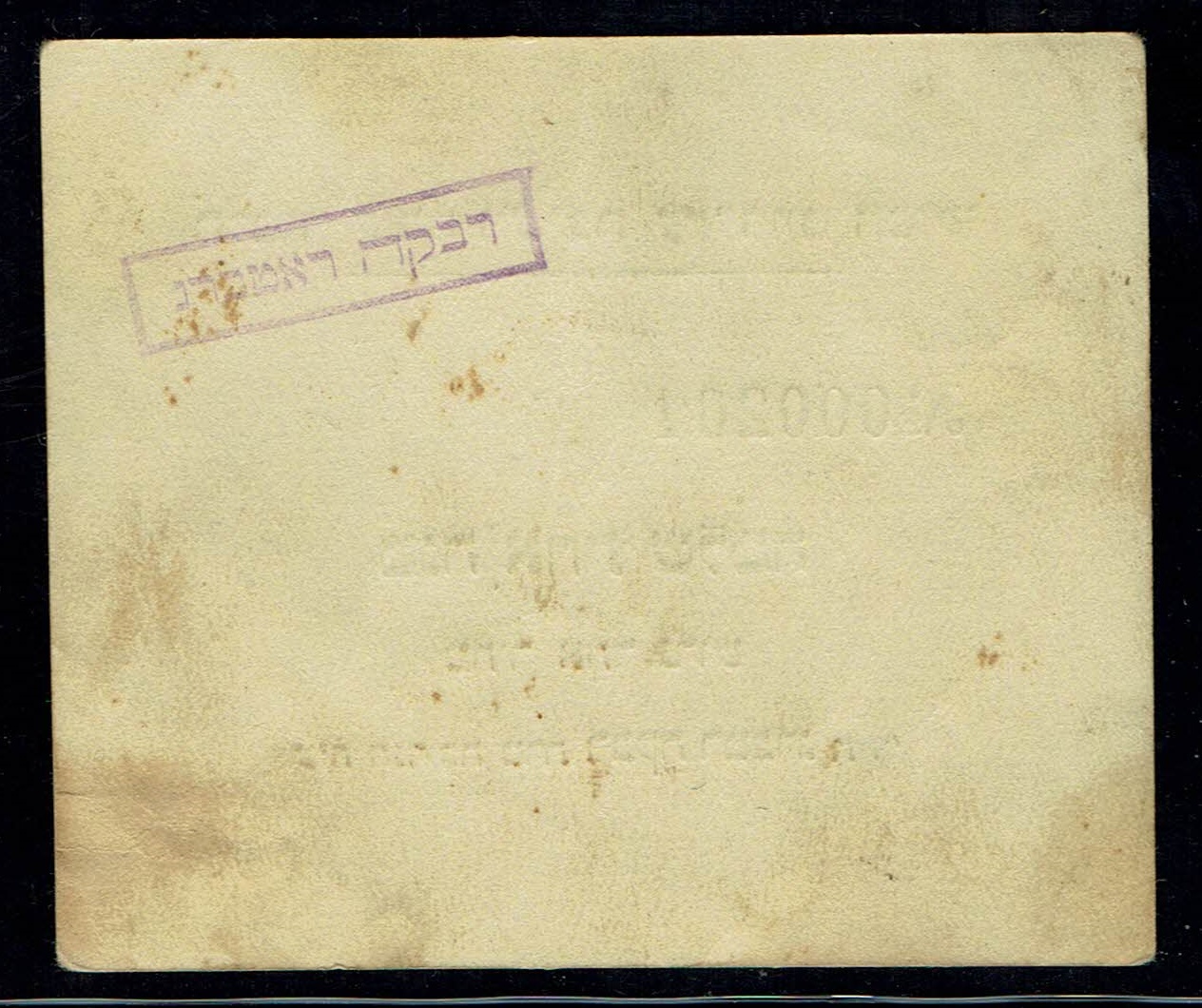
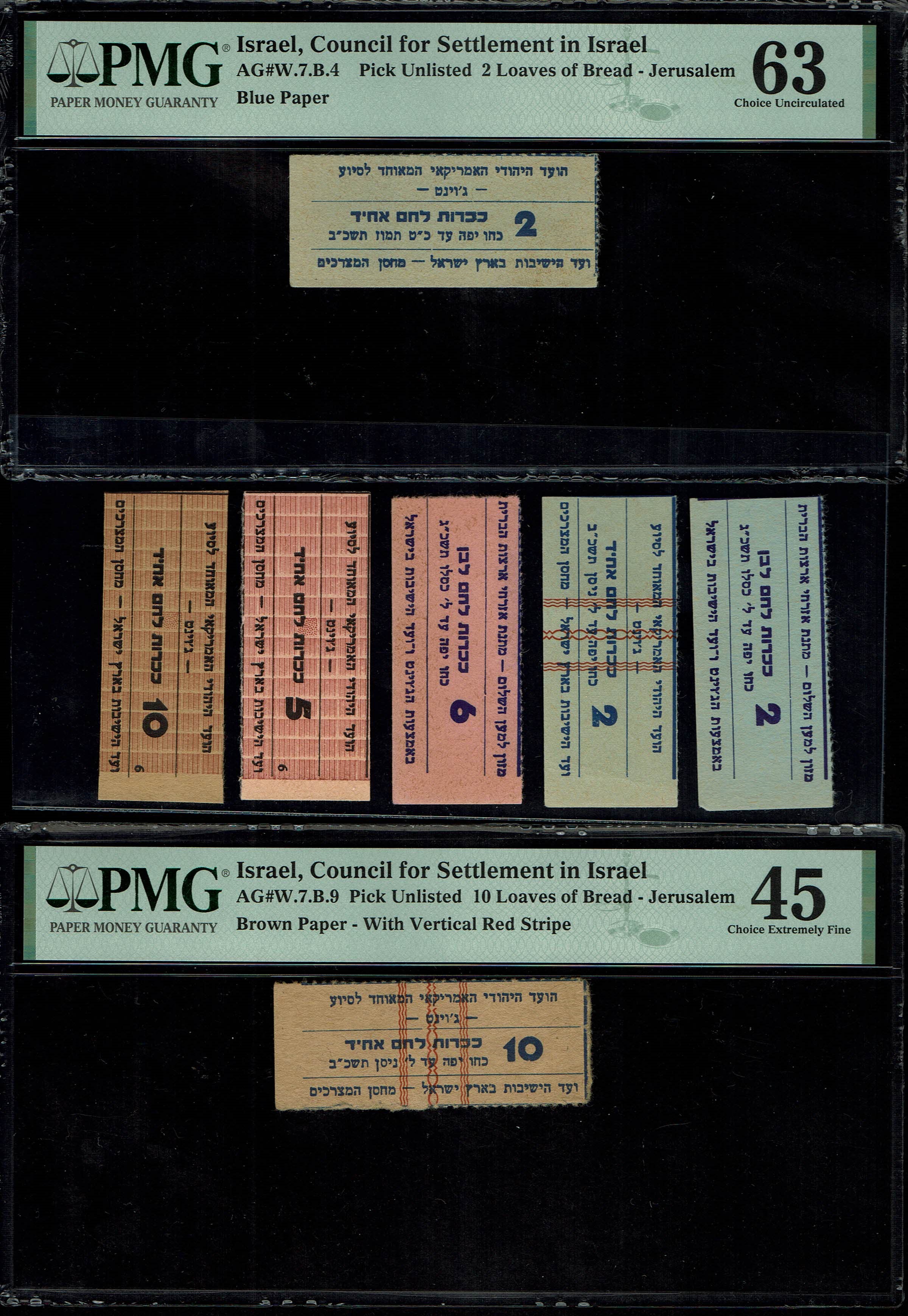
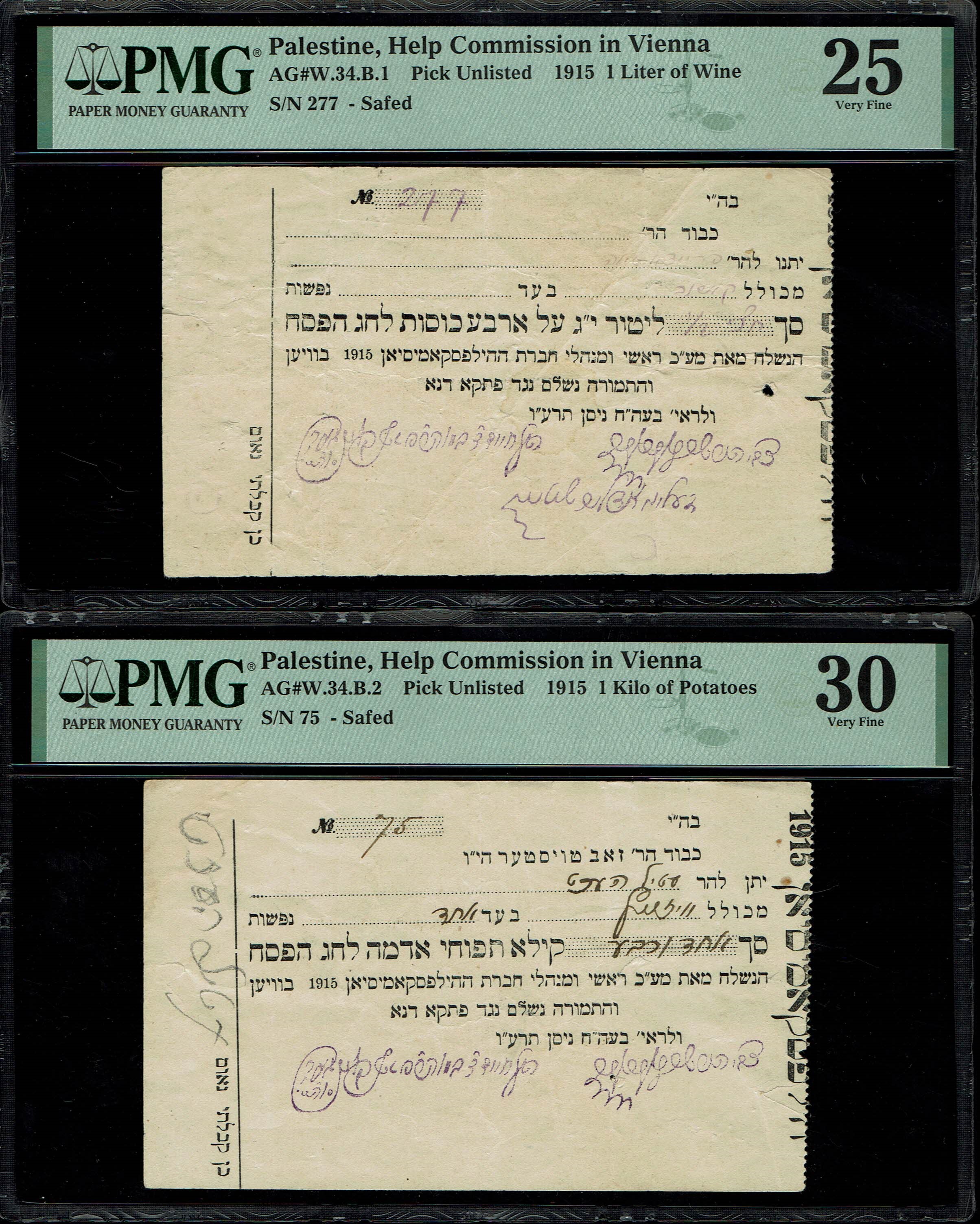
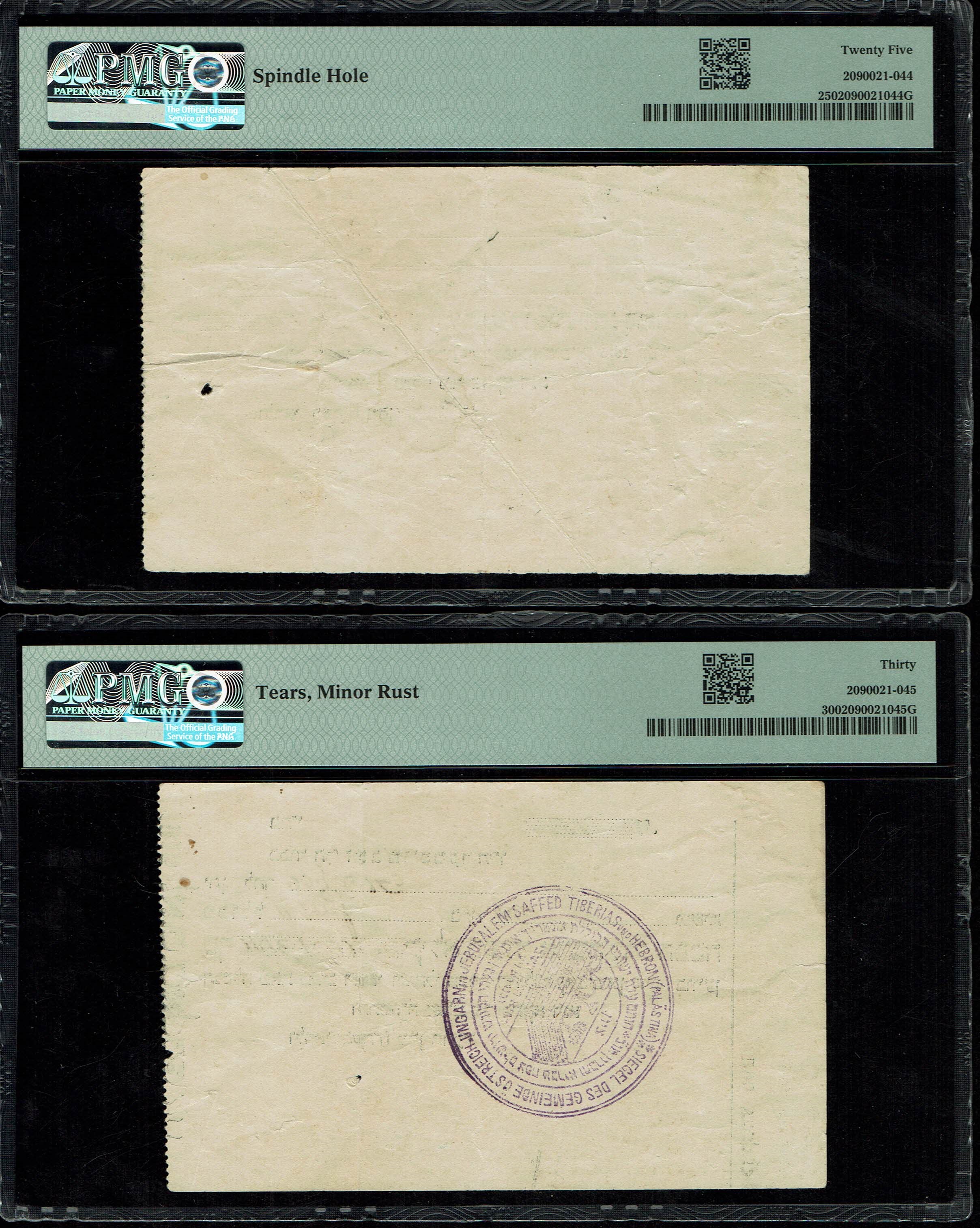
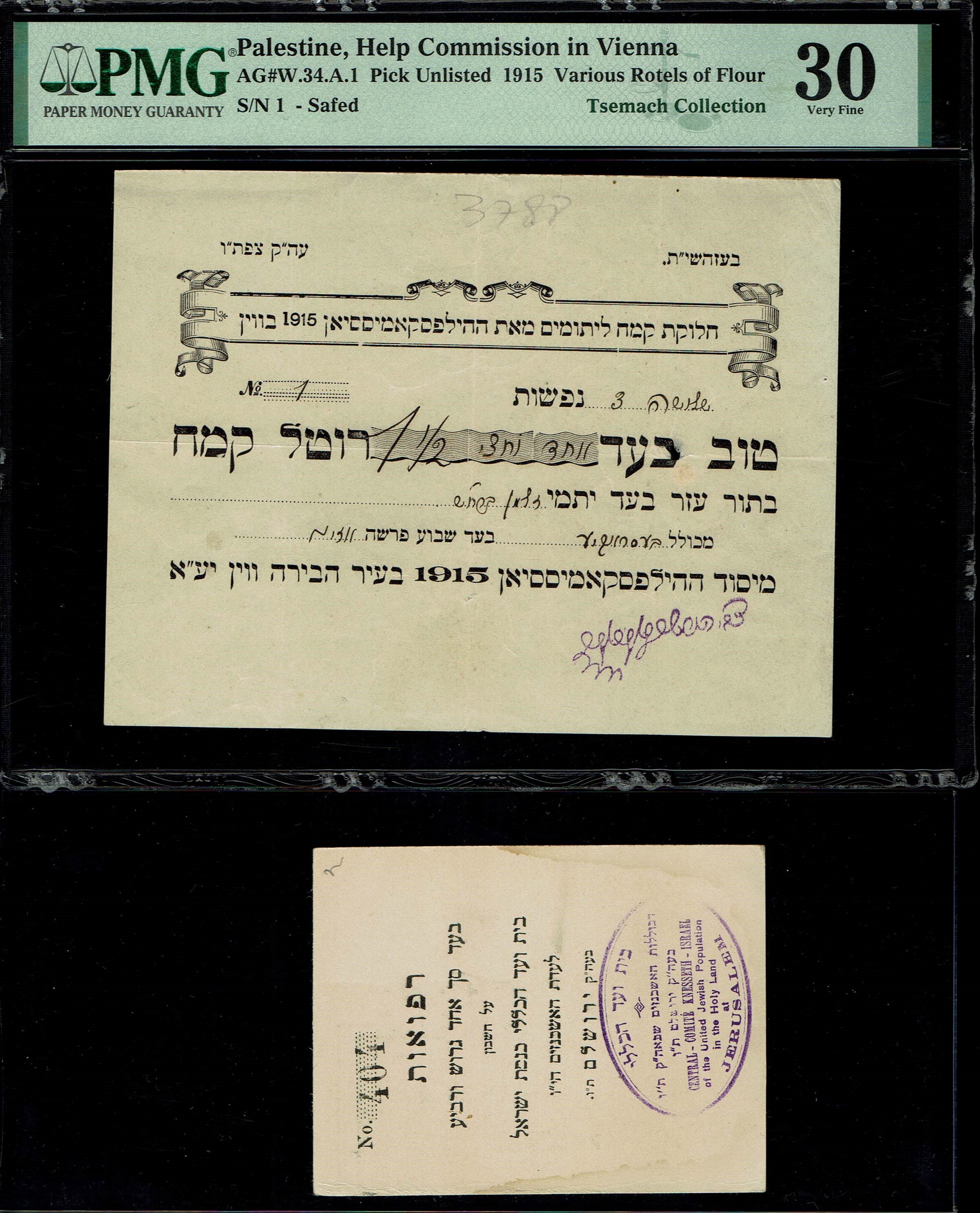
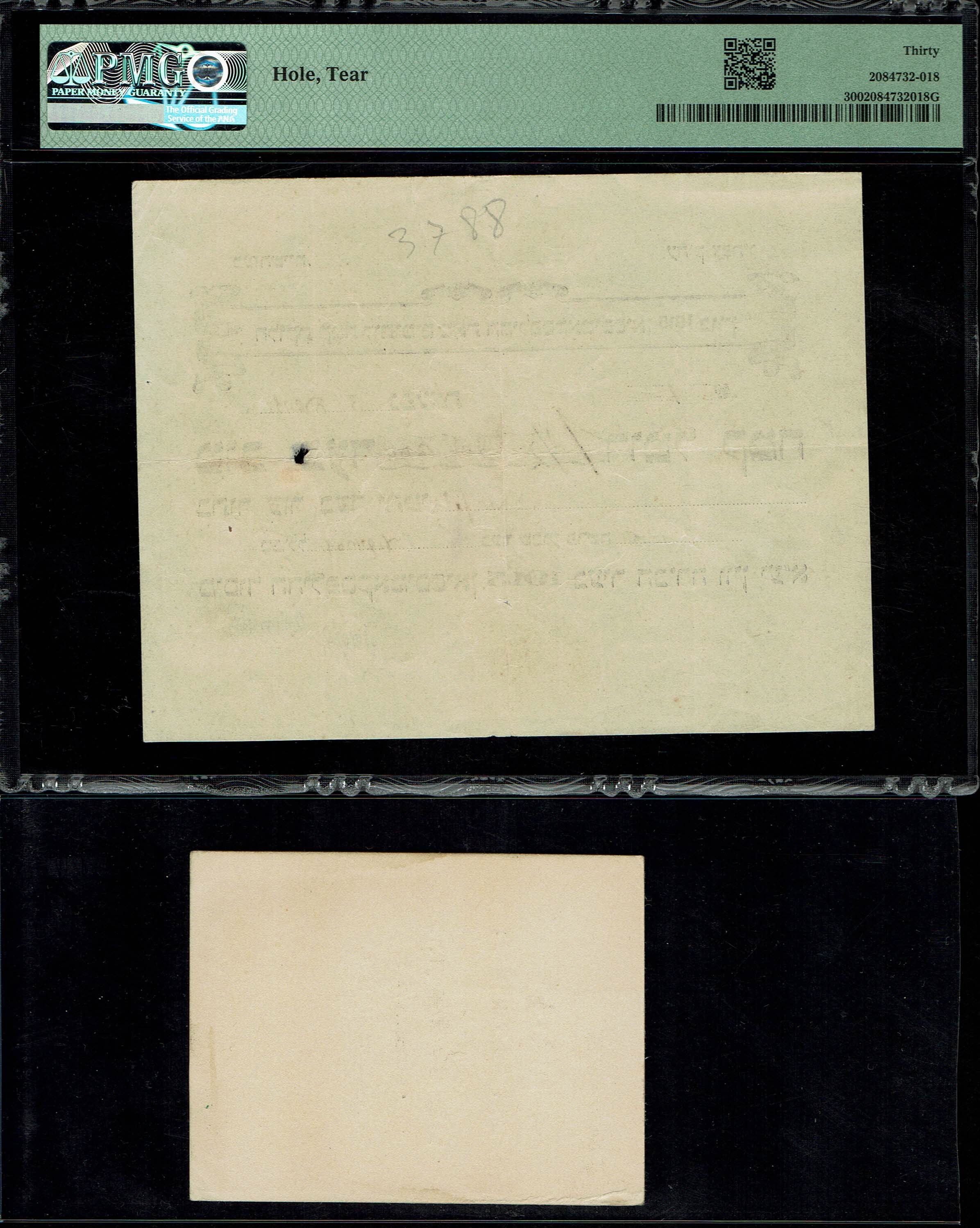
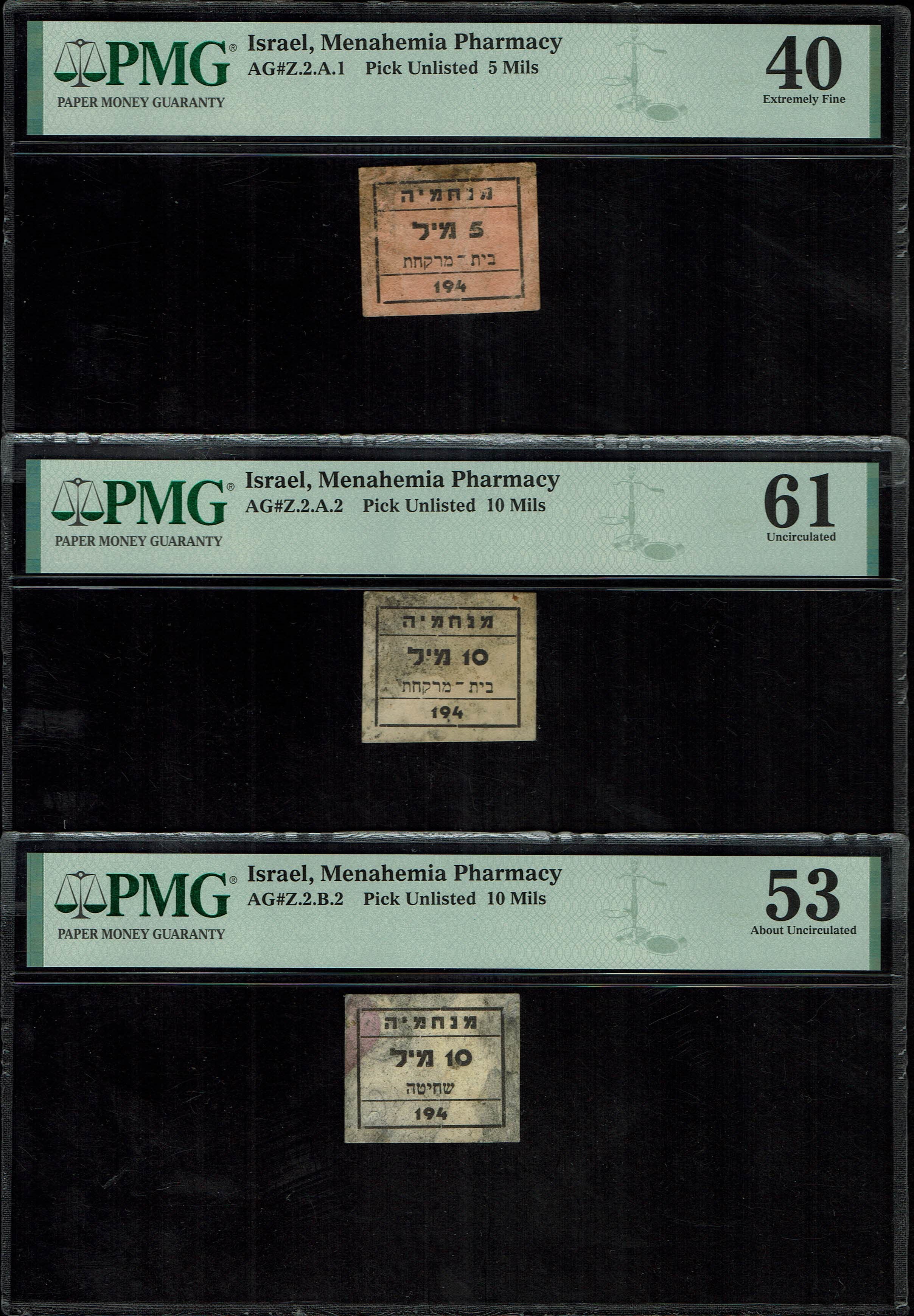
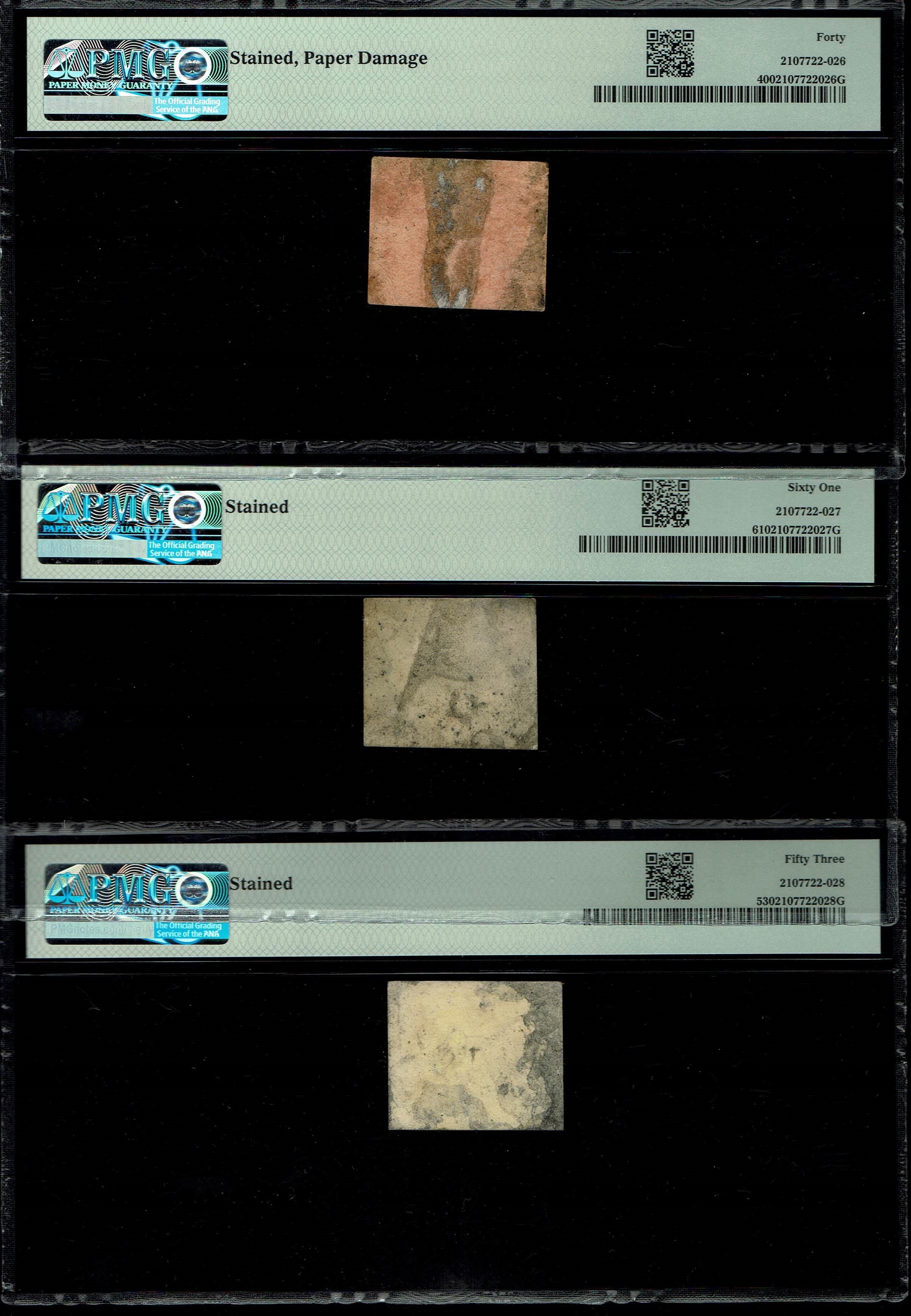
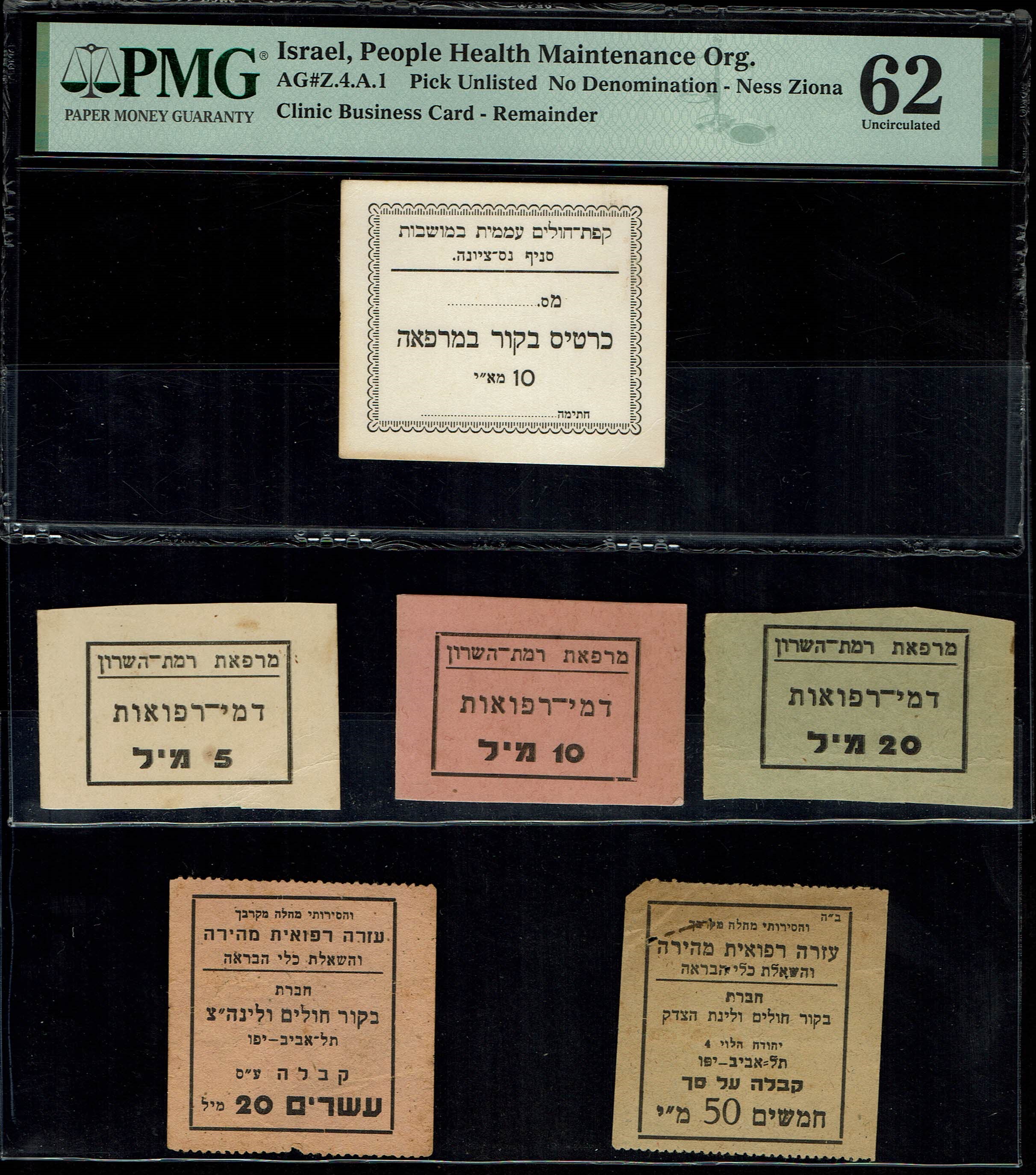
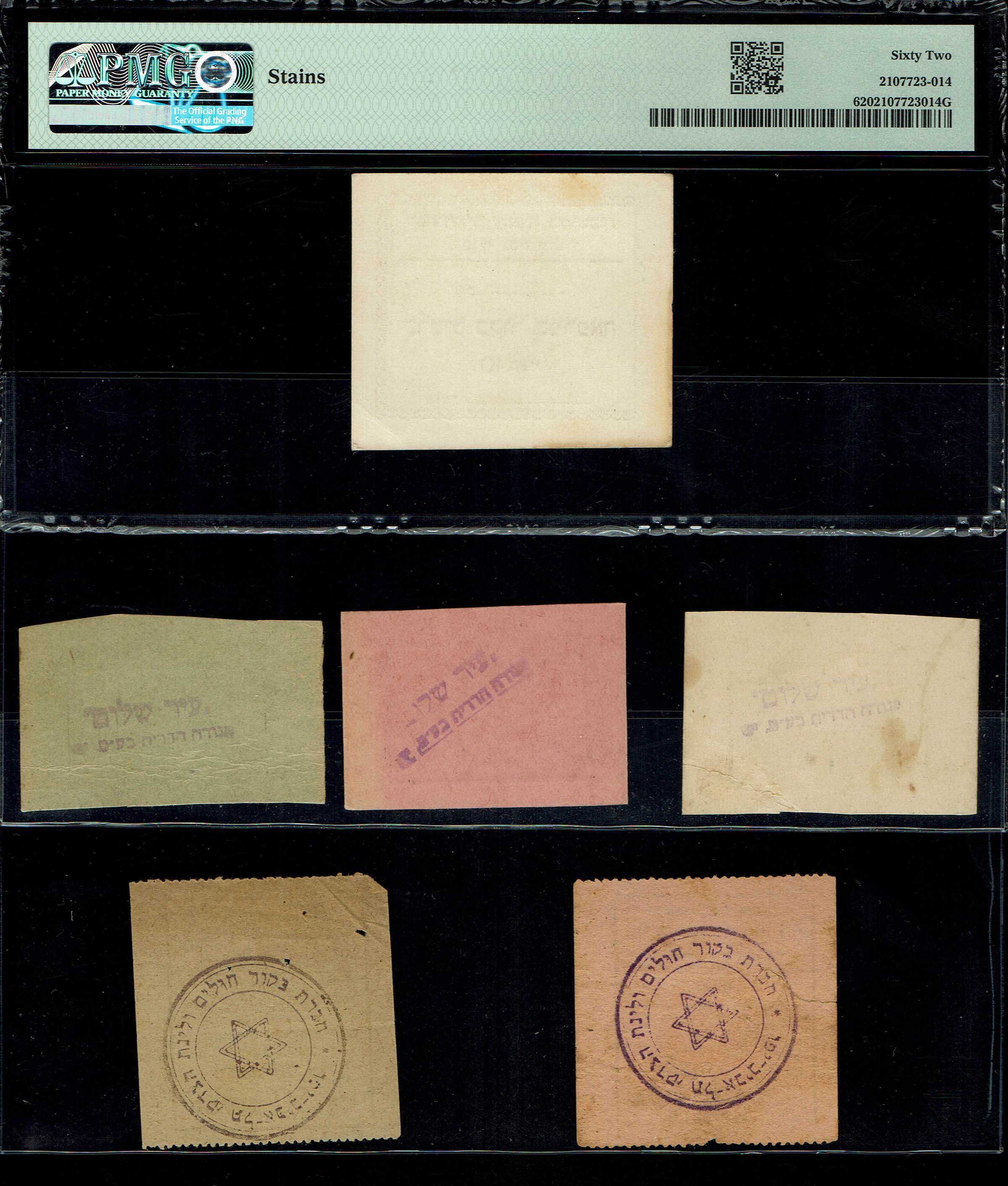
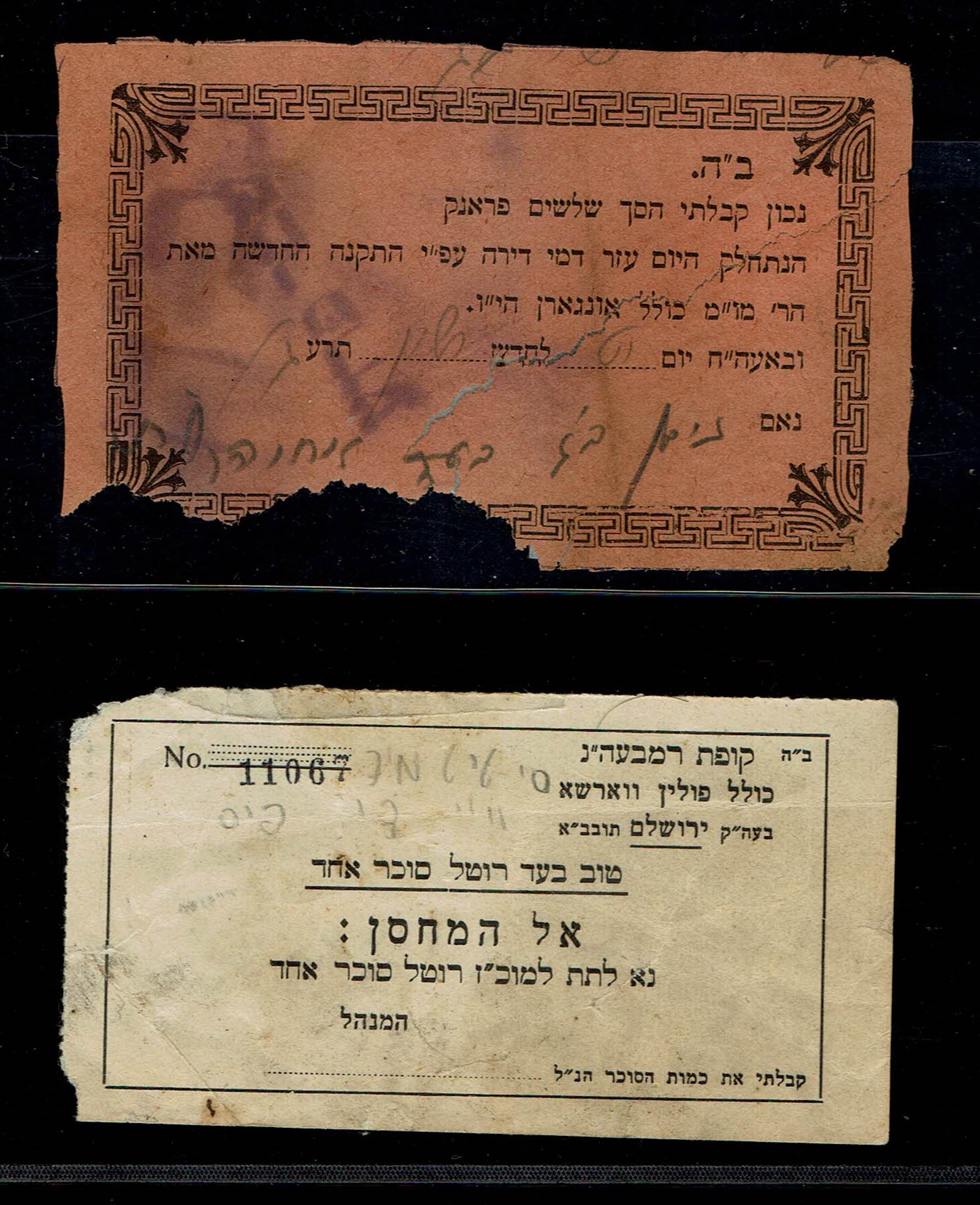
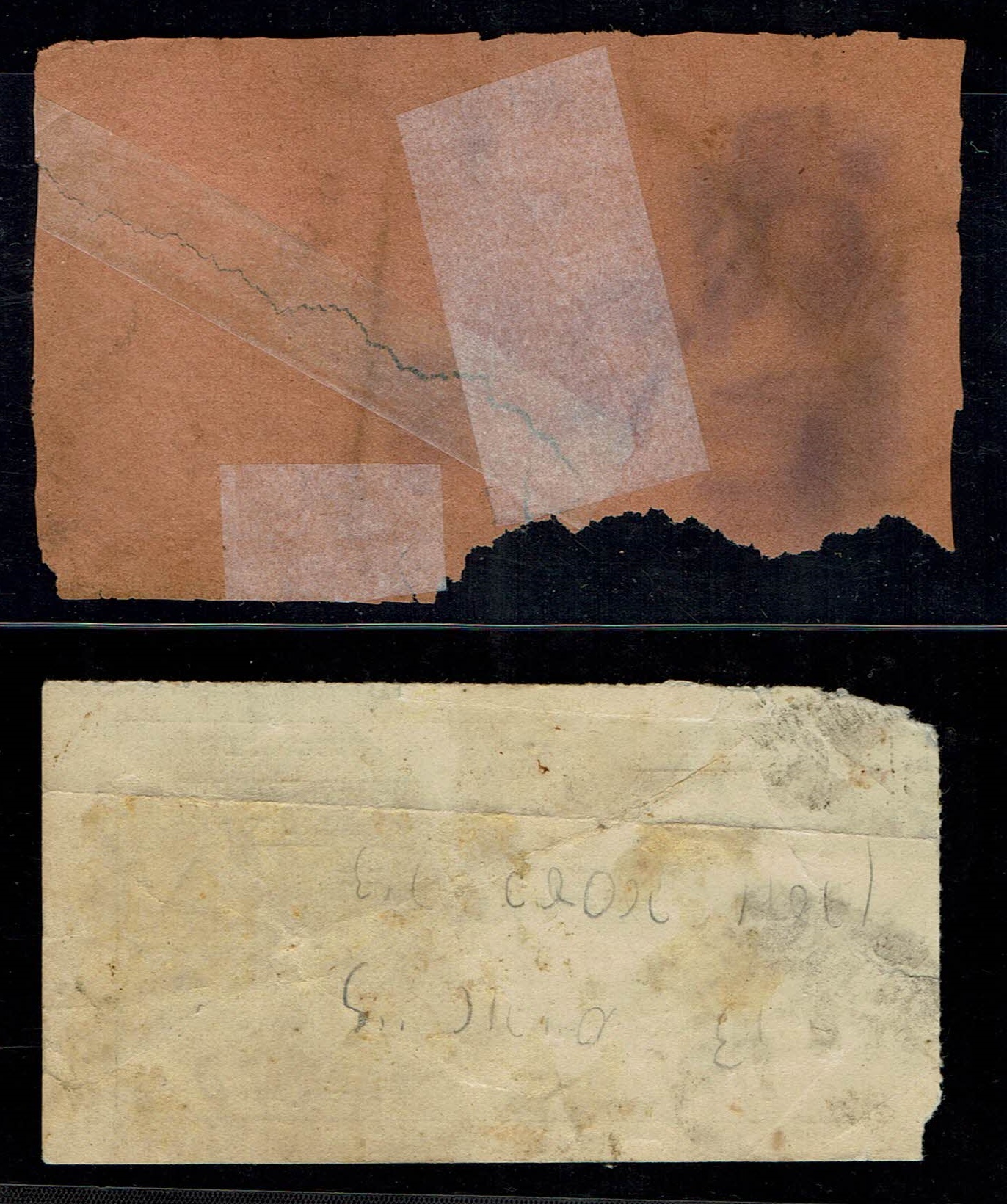
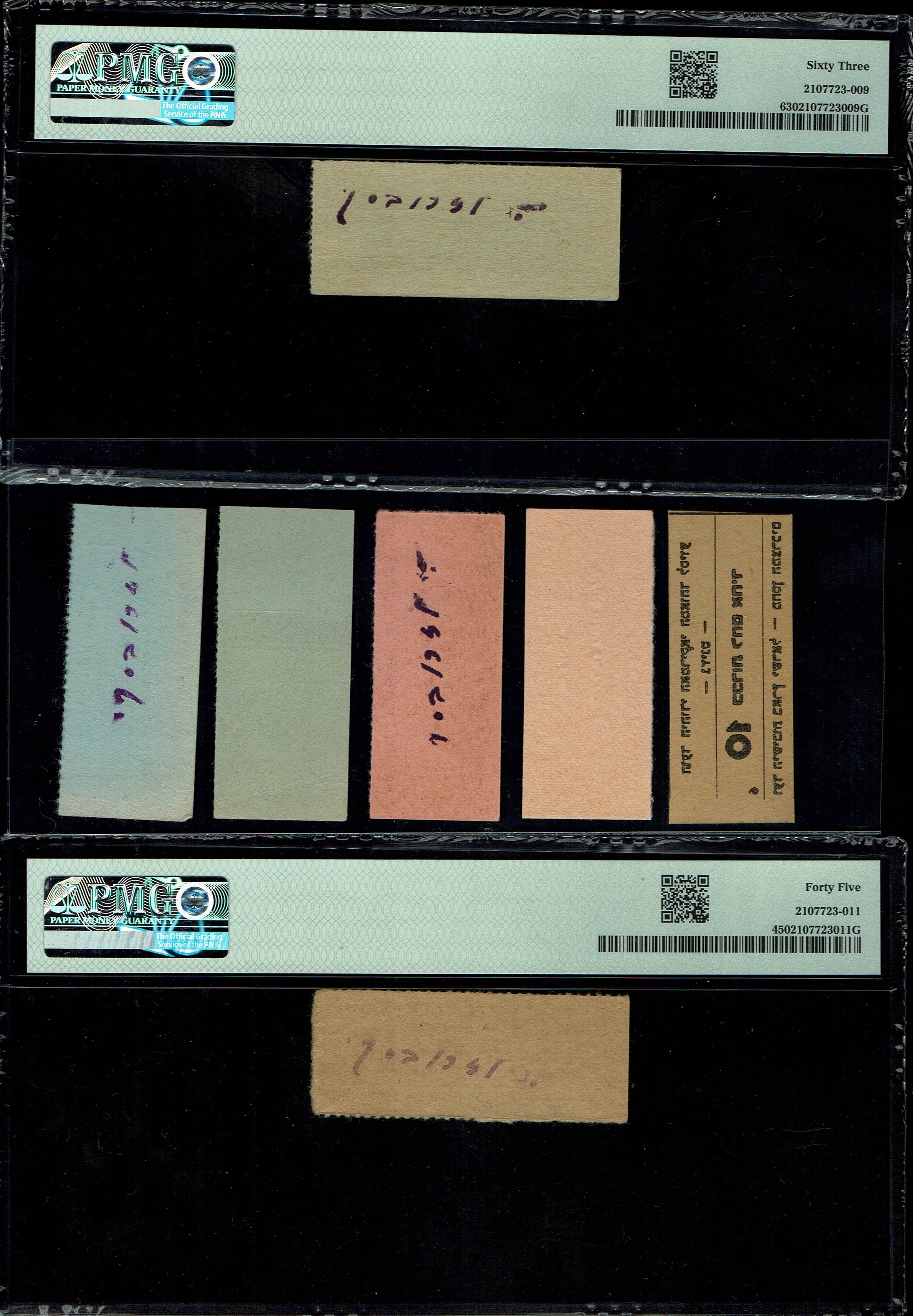
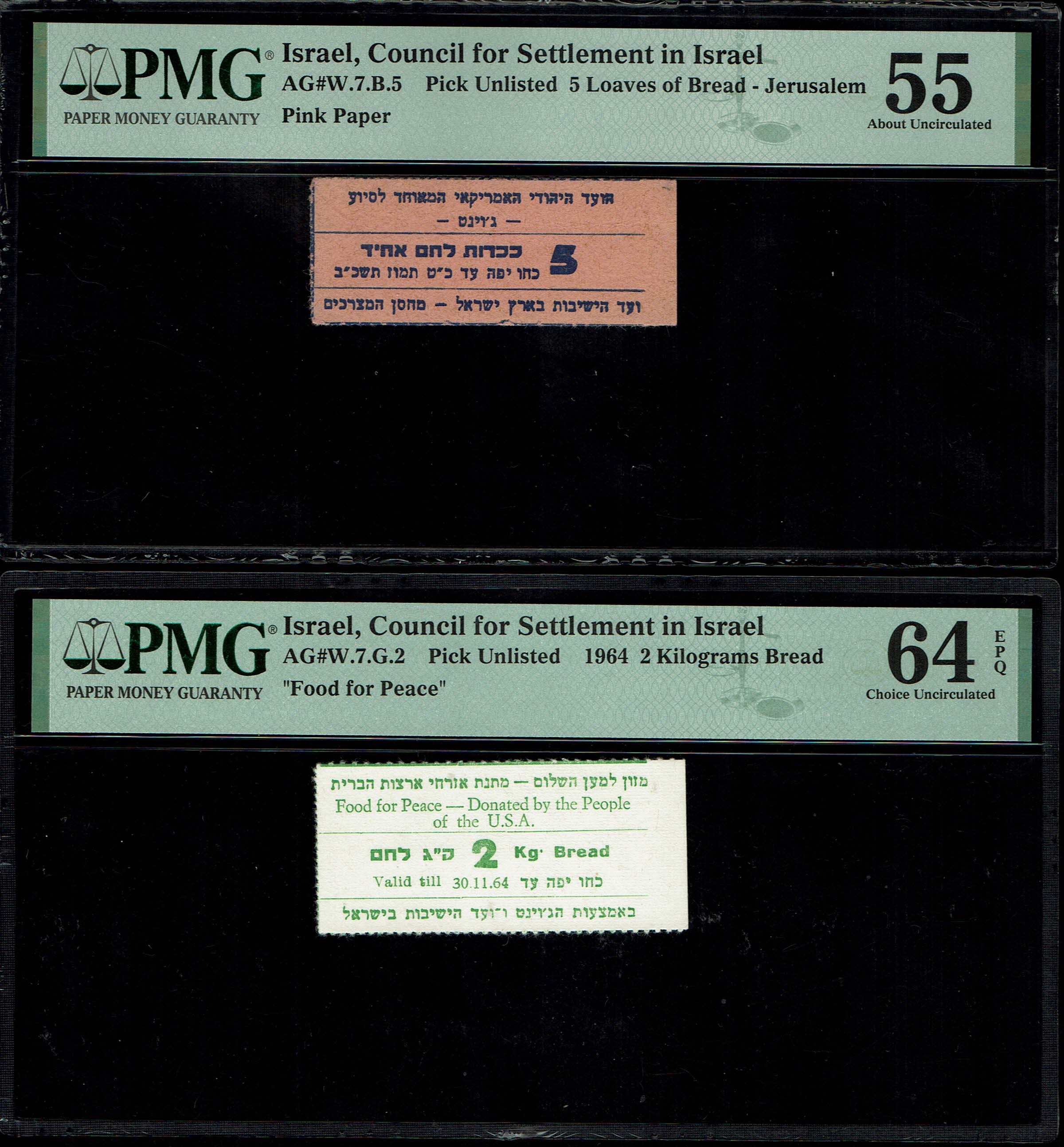
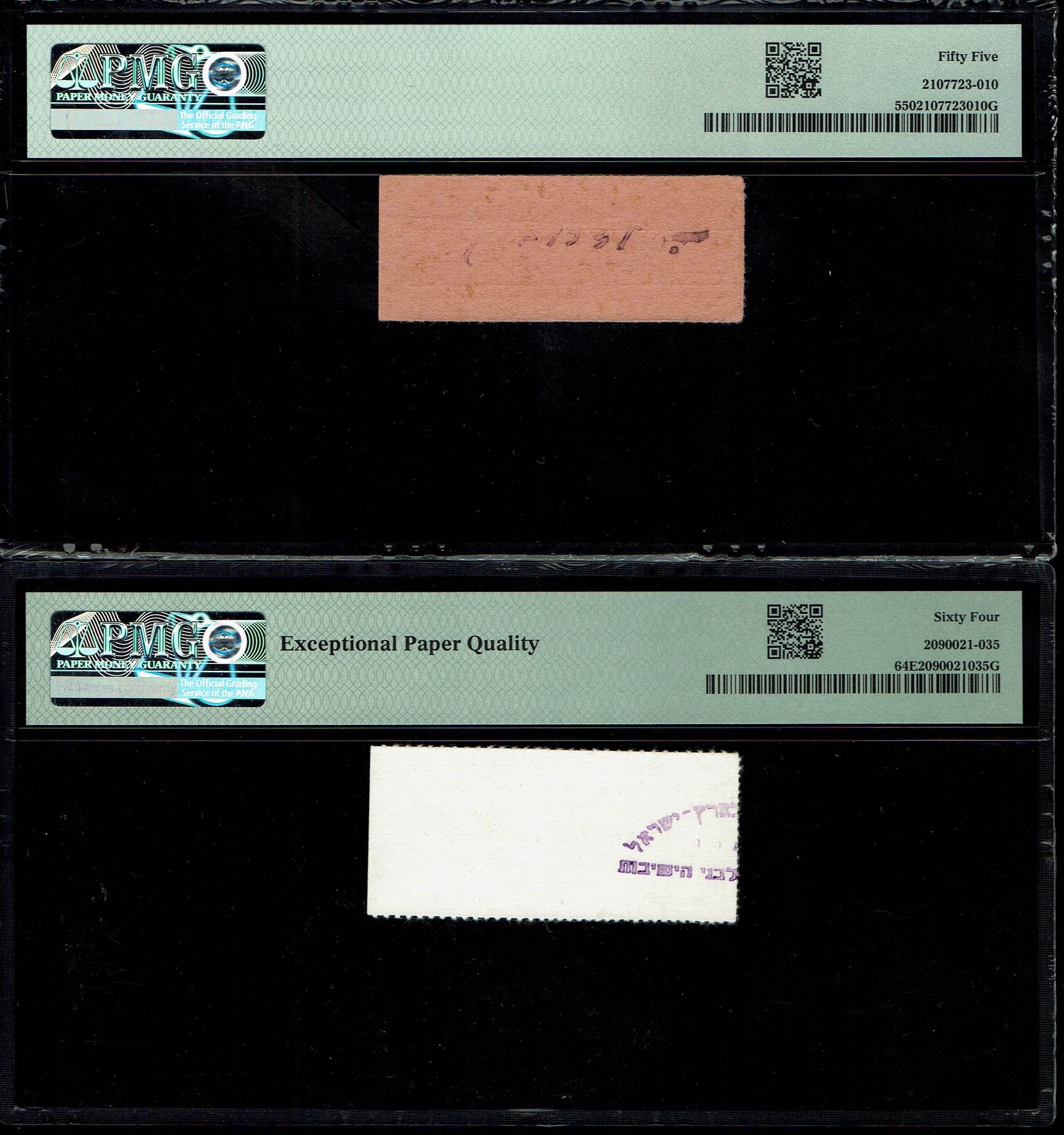
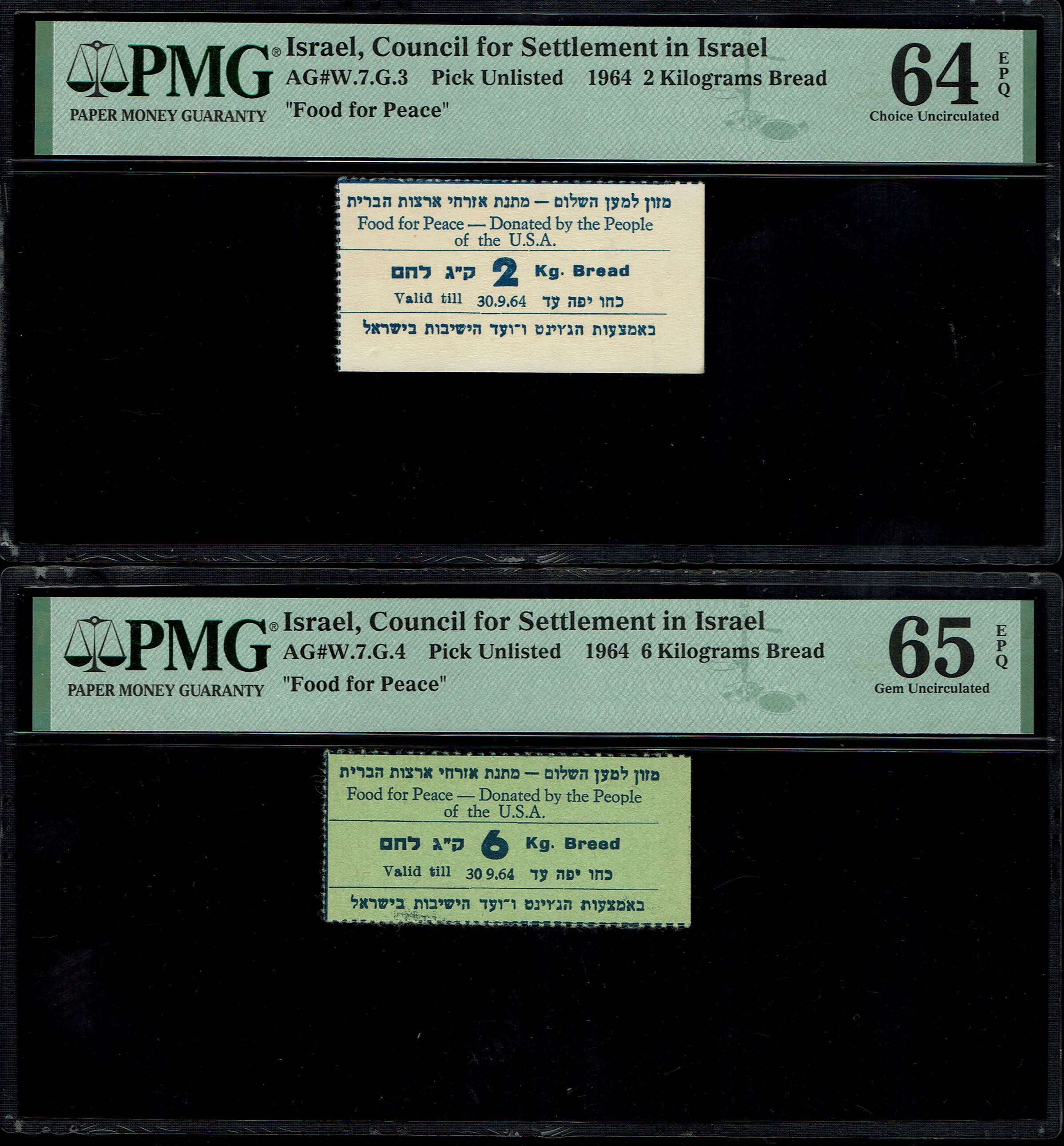
Paper Money Tokens - Palestine / Eretz Israel - Lot of 72 Paper Money Tokens in Subject of Charities The items are graded for rarity according to the catalog “Catalog of Paper Payments Tokens in Israel” by Alexander Golberg. R - 6 to 10 known pieces RR - 3 to 5 known pieces RRR - 1 to 2 known pieces Item details: General Committee of Jerusalem - One rotel of potatoes (RRR) Beit Tebil – Bread for the Hungry, Jerusalem Religious Council under the Community Committee "Knesset Yisrael", Jerusalem - Rotel of matzah (R), Ounce of meat (R) Committee of Yeshivot in Eretz Israel, Jerusalem - 2 loaves of grain bread (R), 2 loaves of standard bread (R), 2 loaves of white bread (R), 2 loaves of standard bread (R), 6 loaves of white bread (R), 5 loaves of standard bread (R), 10 loaves of standard bread, 10 loaves of standard bread (R), 5 loaves of standard bread (R), 1 package of noodles (R), 2 kg bread (R), 2 kg bread (R), 6 kg bread (R), 6 kg bread (R) – variations exist between versions with identical values. General Committee "Knesset Yisrael", Jerusalem - Half rotel of matzah (RR) Committee of the Western Community, Jerusalem - Matzah for three persons (not listed in catalog, very rare) Shemitta Committee under the Eda HaCharedit, Jerusalem - 1 carton of bananas Matzah Committee under the Yemenite Community Council, Jerusalem - Half rotel of matzot (RRR) Meah Shearim Society Committee, Jerusalem - 1 can of water Seal of the Meah Shearim Society, Holy City of Jerusalem - 169-120 (RRR) Sephardic Community Committee - Eight ounces of matzah, green color (RR), orange color (not listed in catalog, very rare) "Yad La’Achim" Society of the Sephardic Community in Eretz Israel, Jerusalem - Kimcha DePischa 500 mil, 1 pound, 2 pounds, 3 pounds "Ozer Lechem La’Aniyim" Charity Society, Jerusalem - 1 loaf of bread, 2 loaves of bread "Sha’arei Chesed" Charity Society, Jerusalem - 2 challahs, 1 loaf of bread, 2 loaves of bread Kollel Shomrei HaChomot, Jerusalem - 2 tins of meat, ¼ liter olive oil for Passover, 1 liter olive oil for Passover Donation of the Great Minister, Commander of the Fourth Army, Jamal Pasha, Jerusalem - 6 kg wheat "Notzer Chesed", Jerusalem - 1 chicken (R), 1 tray of eggs, 3 trays of eggs, 2 chickens, fruits/vegetables Neturei Karta, Jerusalem - ½ mil (R), 1 mil (R), 2 mil (R), 5 mil (R), 10 mil (R), 50 mil (R), 100 mil (not listed in catalog, very rare), 1 piece sugar (tsuker), 1 piece sugar (tsuker) Poalei Agudat Israel, Jerusalem - 4 loaves of bread (RR) Command of the Rabbinical Authorities, Jerusalem - 15, 30 grush Talmud Torah and Yeshivat Etz Chaim, Jerusalem - One full portion, 1 grush (R) Flour Distribution for Orphans by the Hilfscommission, 1915 - Rotel of flour (serial no. 1), kilo of potatoes (RR), four cups (RR) General Committee "Knesset Yisrael", Jerusalem - One grush and a quarter Menachmiya - Pharmacy 5 mil (R), Pharmacy 10 mil (R), Slaughtering 5 mil (R) Amamit Sick Fund, Nes Ziona Branch - 10 M.E. (R) Ramat HaSharon Clinic - 5 mil (R), 10 mil (R), 20 mil (R) Bikur Cholim and Linat Tzedek, Tel Aviv - 20 mil (R), 50 mil (R) Rabbi (Rav) M. & M. Kollel Hungary, Jerusalem, 1912 (5673) - Thirty francs (not listed in catalog, very rare) Kollel Poland-Warsaw, Jerusalem - One rotel of sugar (not listed in catalog, very rare) Throughout the periods - from the Ottoman rule, through the British Mandate, and up to the early years of the State of Israel - a wide variety of means of payment developed in the Land of Israel, many of which served as substitutes for actual money. Due to a chronic shortage of small change, and in order to facilitate trade and daily transactions, various institutions, cooperatives, factories, and private businesses issued value tokens, payment vouchers, deposit certificates, promissory notes, and trade coupons, which functioned in practice as alternative currency. These forms of payment were often redeemable for cash or goods and services - sometimes only within a specific community or organization - and became an essential part of the evolving local economy. The use of such instruments reflected the spirit of initiative and economic independence that characterized the Jewish community in Palestine, and the aspiration to establish a self-sustained Hebrew financial system even before the birth of the State of Israel and its national currency.
 Israel
 הביטחון 6, פתח תקווה.
