


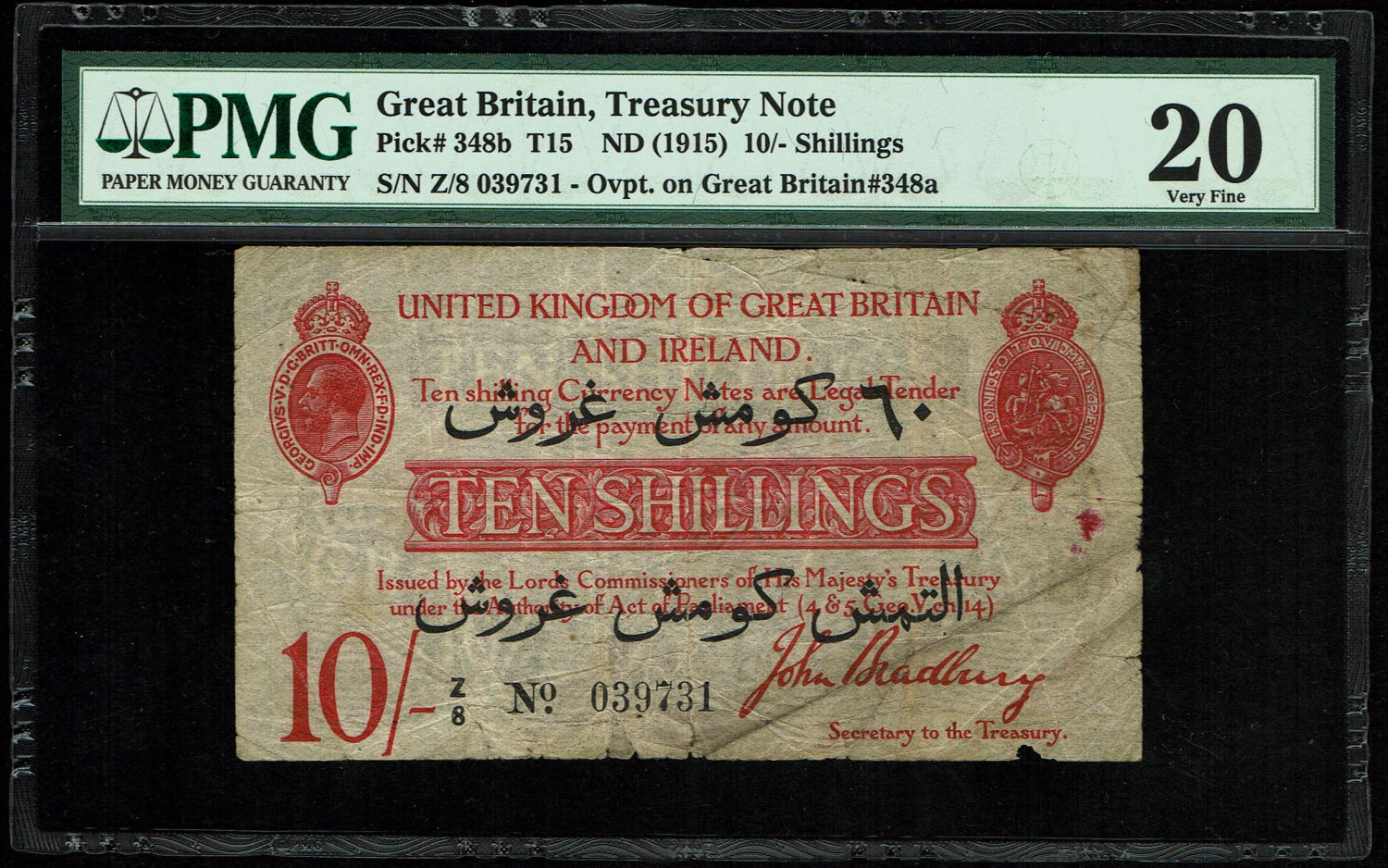
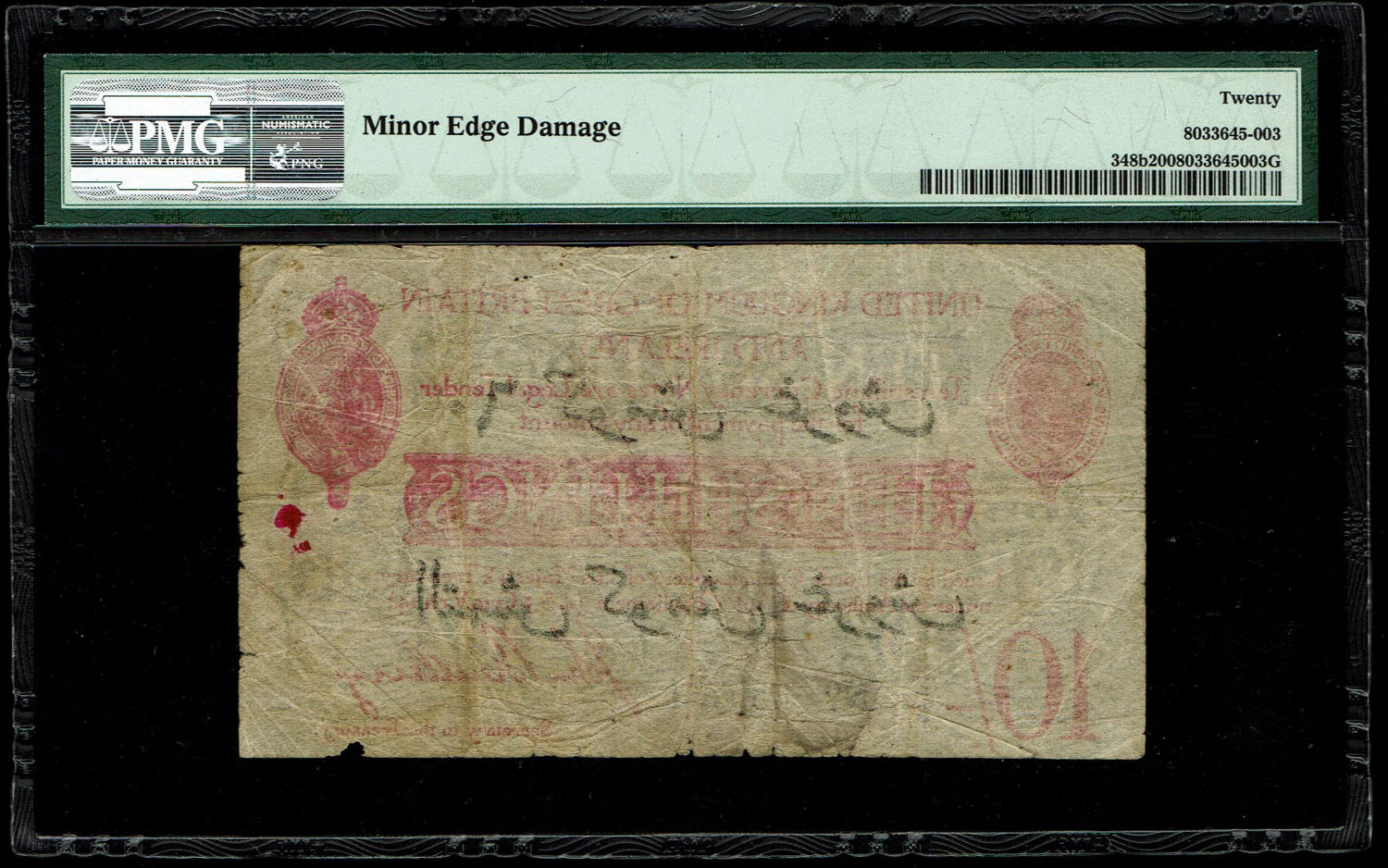
Palestine - The Bradbury Note - MIddle east version Up until the First World War, gold sovereigns and half sovereigns had circulated as everyday currency for about a hundred years, so it was not until the 1833 Bank Charter Act, when 'Bank of England' notes became legal tender in England and Wales. On 5th August 1914 (the day after the First World War was declared), the Currency and Bank Notes Act was passed. This allowed the Treasury to issue currency notes of £1 and 10/-. These notes had full legal tender status and were convertible for gold through the Bank of England. BRADBURY - The first notes were produced to a hurried design and, because of the lack of availability of banknote paper, were printed on paper produced for postage stamps. Within days a new design was being worked on. The design was produced and the notes were printed on banknote paper. Some of these notes were overprinted in Arabic, by the Treasury, for use by the British forces in the Mediterranean Expeditionary Force (MEF) out in the Dardanelles and Gallipoli. These were emergency issue, uniface and were overprinted in Arabic script for the Dardanelles campaign. Apparently they were issued for use for the entire British MEF in the Mediterranean and the Naval fleet. The Arabic text translates as “Piastres Silver 120” in the top line and “Piastres Silver One Hundred and Twenty” in the lower line.
 Israel
 הביטחון 6, פתח תקווה.
