


Palestine - Charity Token, Beirut - 5664 (1904) - PCGS AU Details - Very Rare - Haffner CC-1
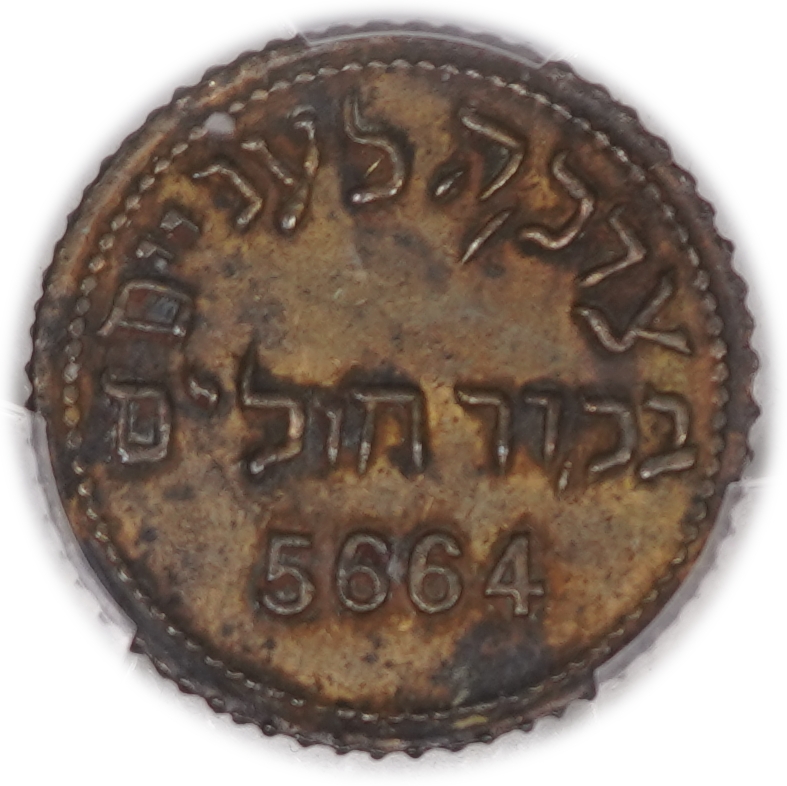
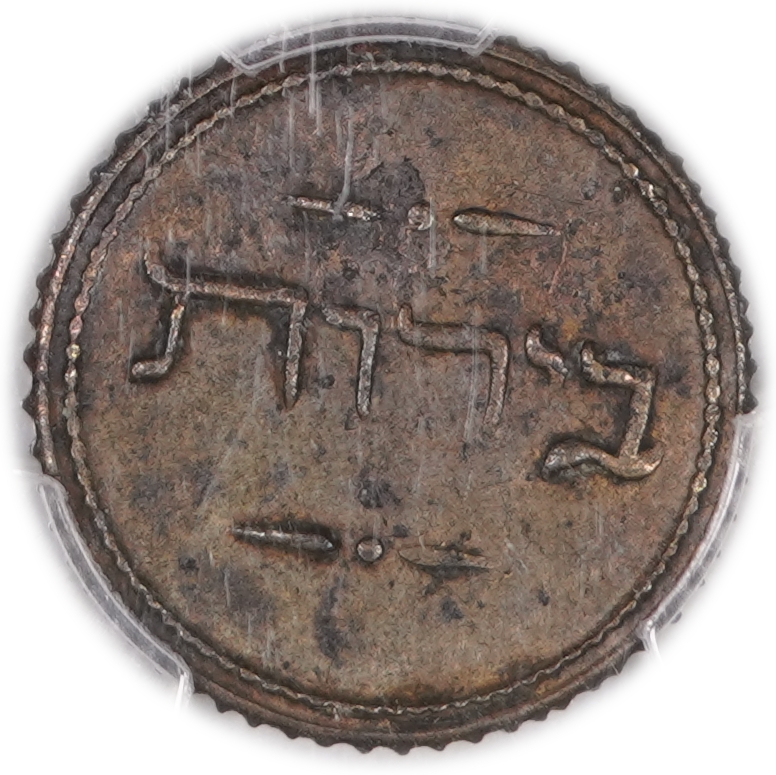
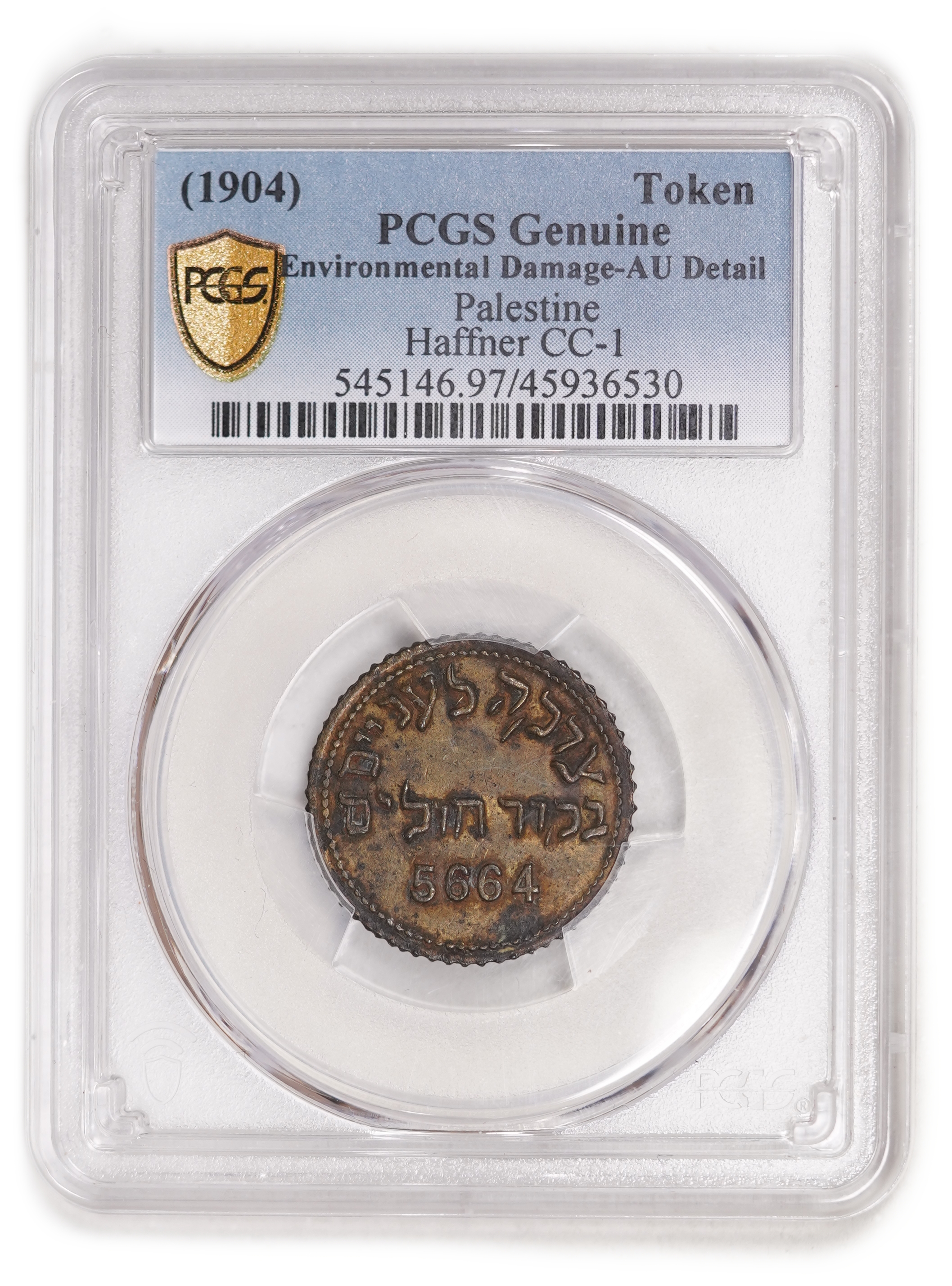
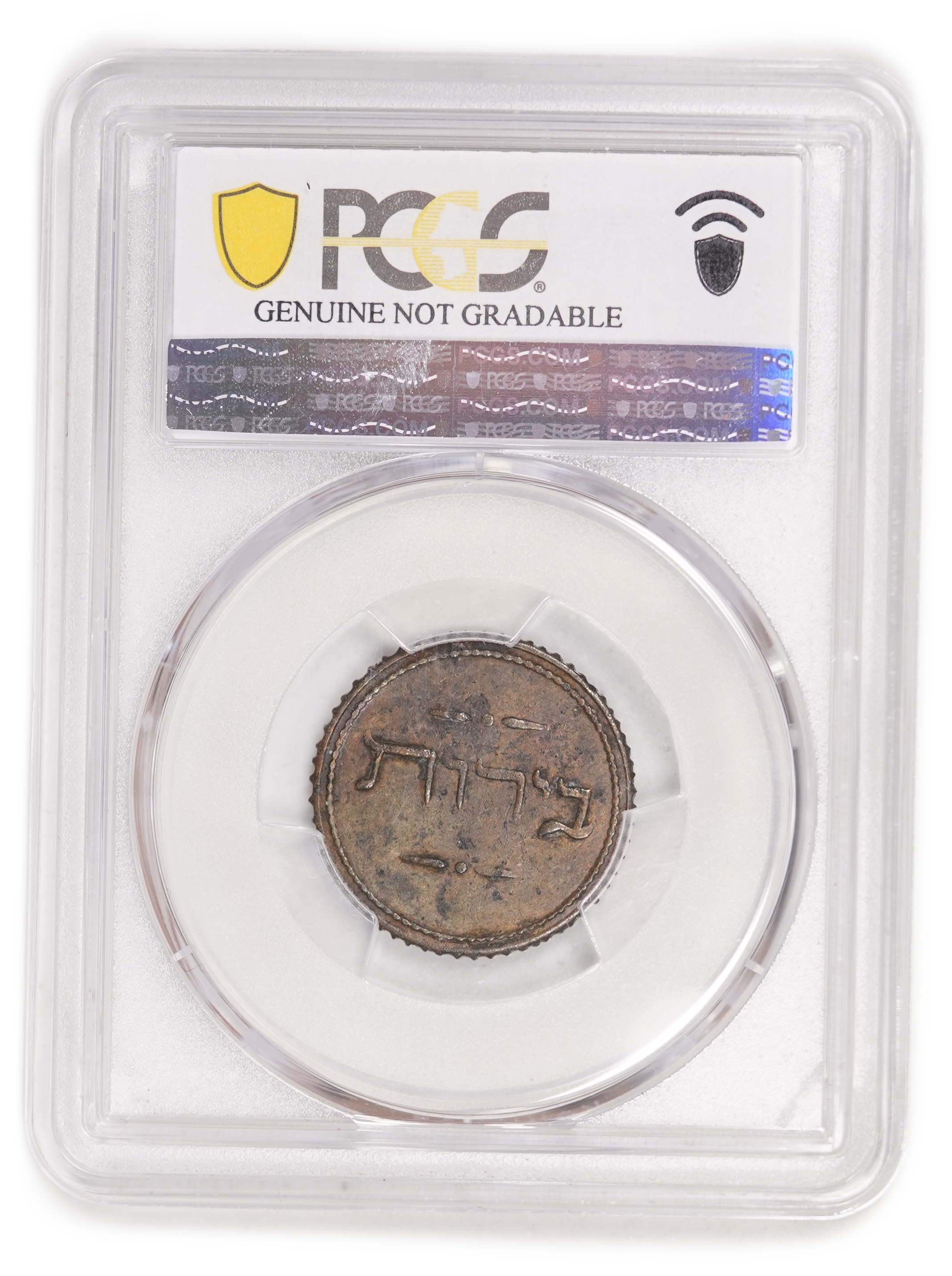
Palestine - Charity Token, Beirut - 5664 (1904) - PCGS AU Details - Very Rare - Haffner CC-1 A rare Jewish charity token made of brass, issued in Beirut during the Ottoman period in the Hebrew year 5664 (1904). Obverse: Hebrew inscription "Charity for the Poor, Bikur Holim 5664". Reverse: Hebrew inscription "Beirut", with a serrated border. Charity tokens of this type were commonly issued by Jewish communities and charitable organizations throughout the Ottoman Empire for internal institutional use in hospitals, soup kitchens and synagogues. Their purpose was to regulate charitable distributions and reduce misuse of donation funds. This Beirut token serves as rare evidence of the activities of the "Bikur Holim" institution in the city, which supported poor and sick members of the local Jewish community - a community that flourished in Beirut until the wars of the 20th century. The Hebrew inscriptions, together with the place name "Beirut", reflect the vibrant Jewish presence outside the borders of modern-day Israel, while maintaining strong cultural and commercial ties with the Jewish community in the Land of Israel. This piece is considered among the rarest known Jewish charity tokens from the Middle East in the early 20th century, with only a very limited number of surviving examples. Made of brass.
 Israel
 הביטחון 6, פתח תקווה.
