


Judaica - Gerlitz Shekel - "Shekel Israel" Token - Ritual Vessel and Flowering Branch - Late 19th Century
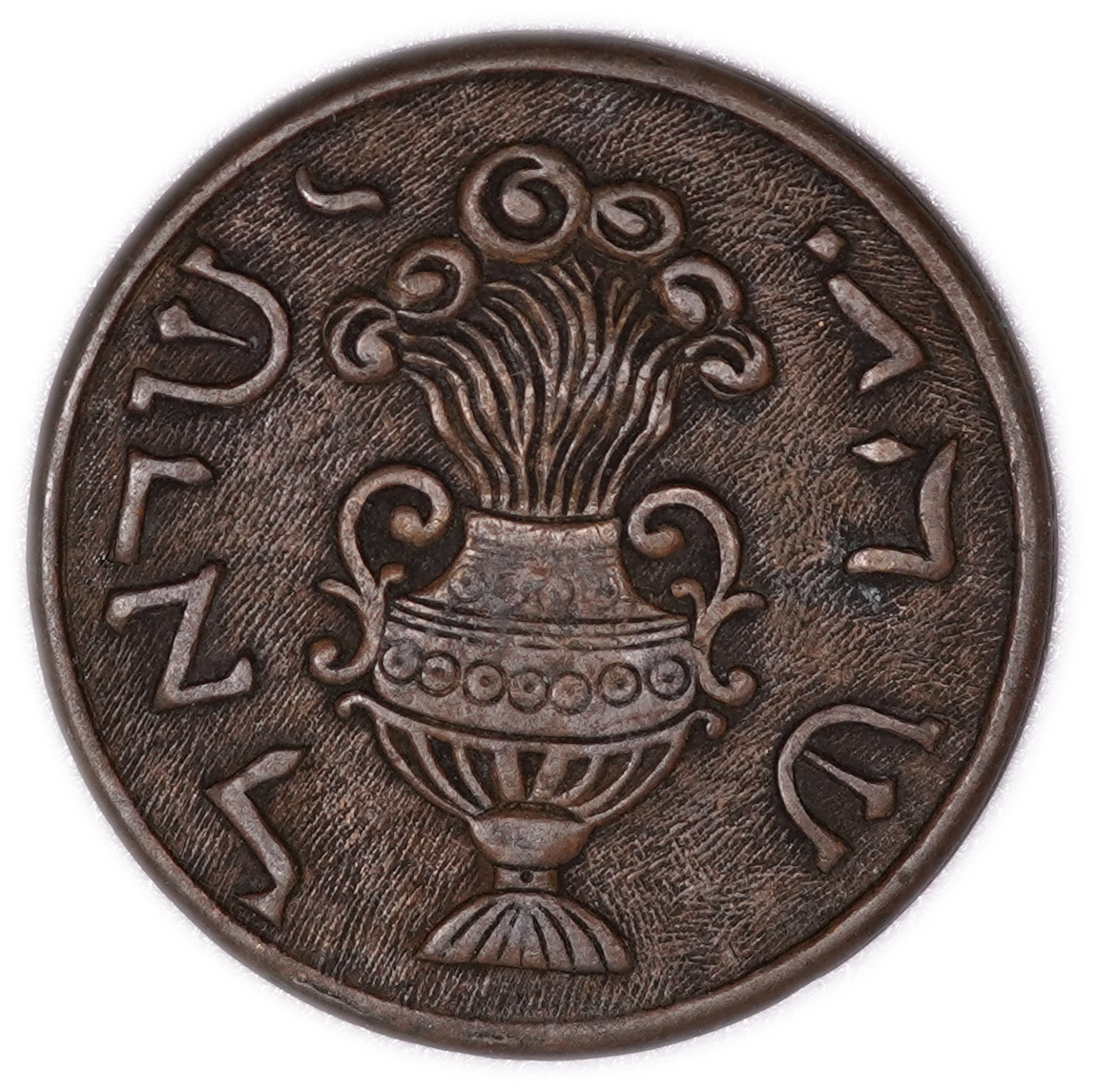
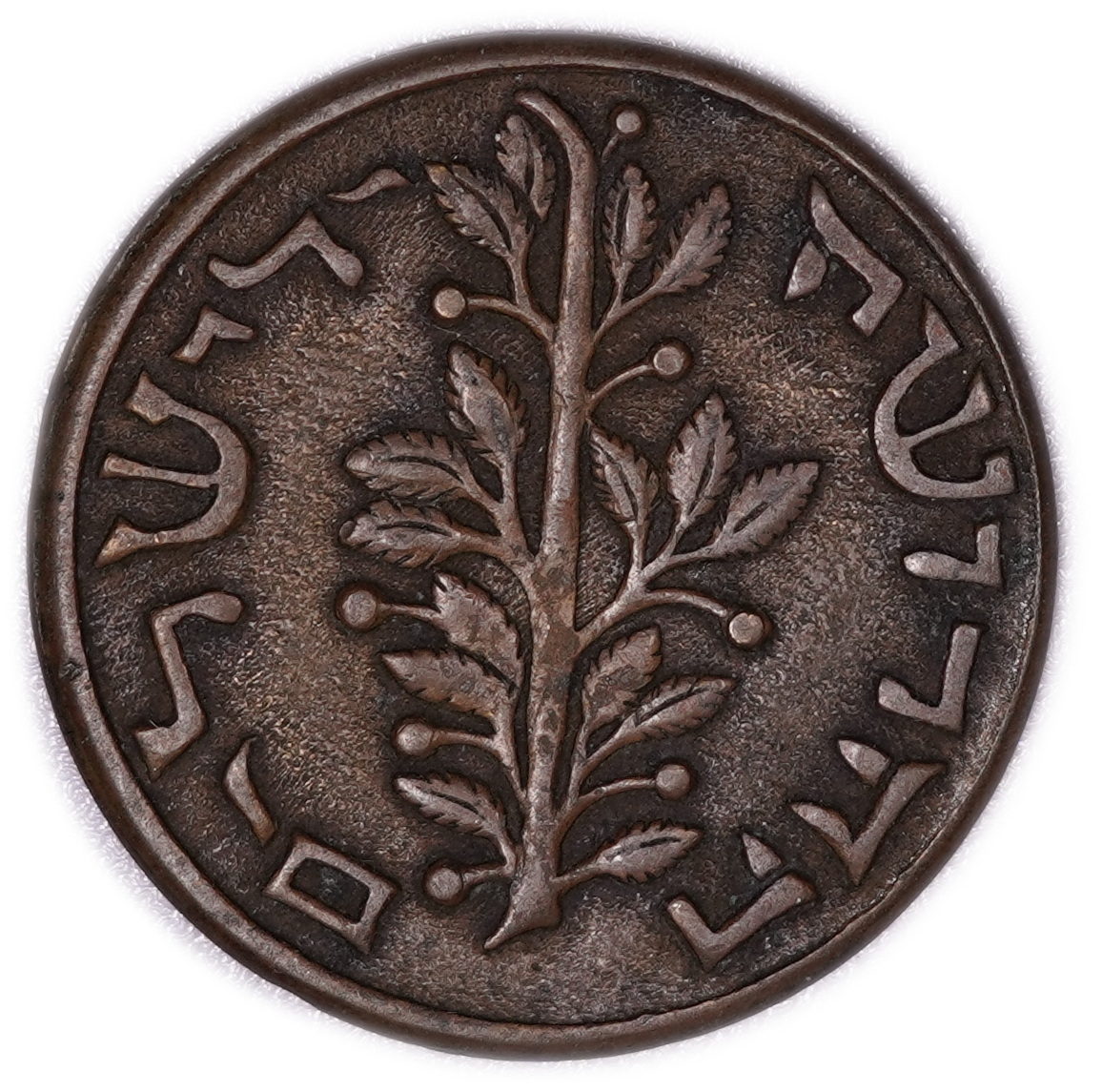
Judaica - Gerlitz Shekel - "Shekel Israel" Token - Ritual Vessel and Flowering Branch - Late 19th Century A Jewish token of the "Gerlitz Shekel" type, dating to the late 19th century. This type belongs to a long tradition of "Shekel" tokens that developed in Europe beginning in the 15th century, at a time when the precise appearance of ancient Jewish shekel coinage was not yet known in Europe. Its design is therefore a later interpretation of the ancient shekel rather than a reproduction of an actual ancient coin. The invention of the Gerlitz Shekel is traditionally associated with Georg Emmerich of Görlitz, who traveled to the Holy Land as a pilgrim in 1465. A Christian tradition subsequently connected these tokens with the "thirty pieces of silver" of the Judas Iscariot narrative. Numerous variations were produced throughout Europe over the following centuries and became familiar to both Christian and Jewish communities. Among European Jews, examples of the general type were used as commemorative pieces and amulets, as symbolic tokens for the Zecher Le-Machatzit HaShekel custom, for charity and Purim gifts to the poor, and in some instances to represent the five sela'im required for the Pidyon HaBen ceremony. Obverse: A stylized goblet or ritual vessel with flame- or plant-like ornament rising from it. Surrounded by a stylized Hebrew inscription in which the words "שקל ישראל" ("Shekel Israel") can be identified. Reverse: An upright flowering branch with leaves and fruit or buds, surrounded by a stylized Hebrew inscription. Dark copper-colored metal with a pronounced natural patina and age-related handling and wear visible in the photographs. A token rather than an official legal-tender coin.
 Israel
 הביטחון 6, פתח תקווה.
