

"Israel - Set of 3 city medals: Tiberias, Jaffa, Caesarea. 935 silver, 48 g, 45 mm. ...
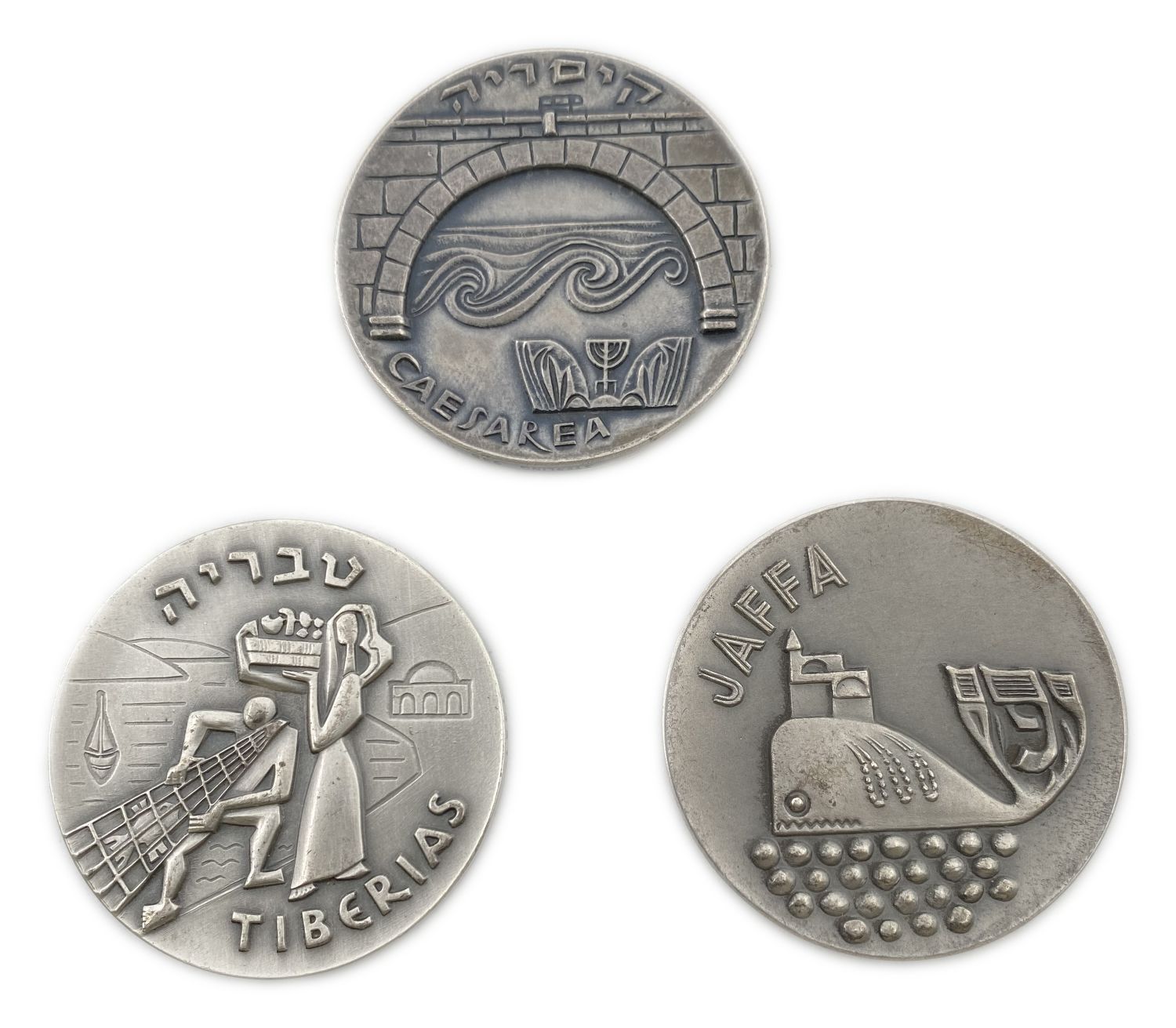
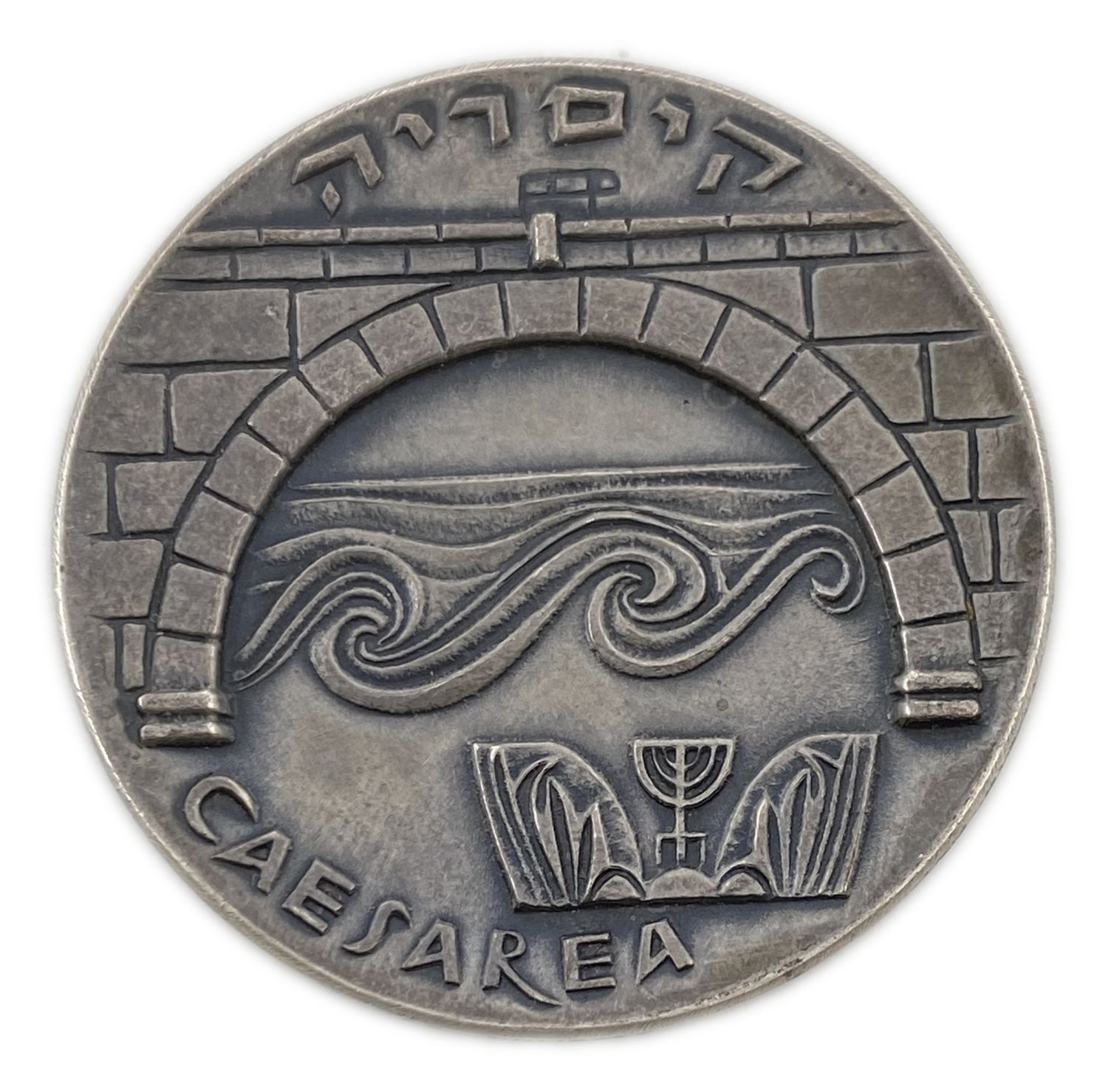
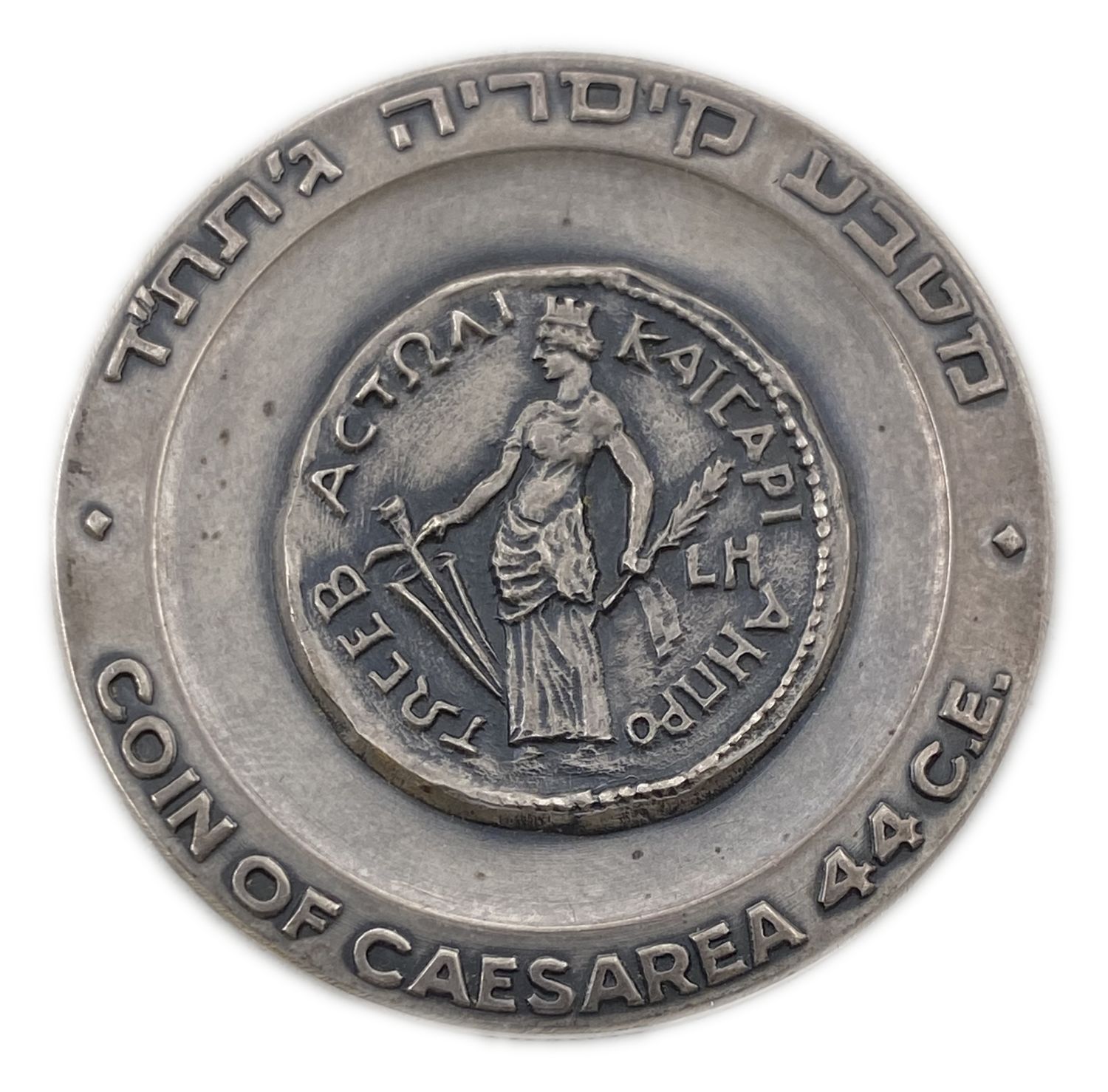
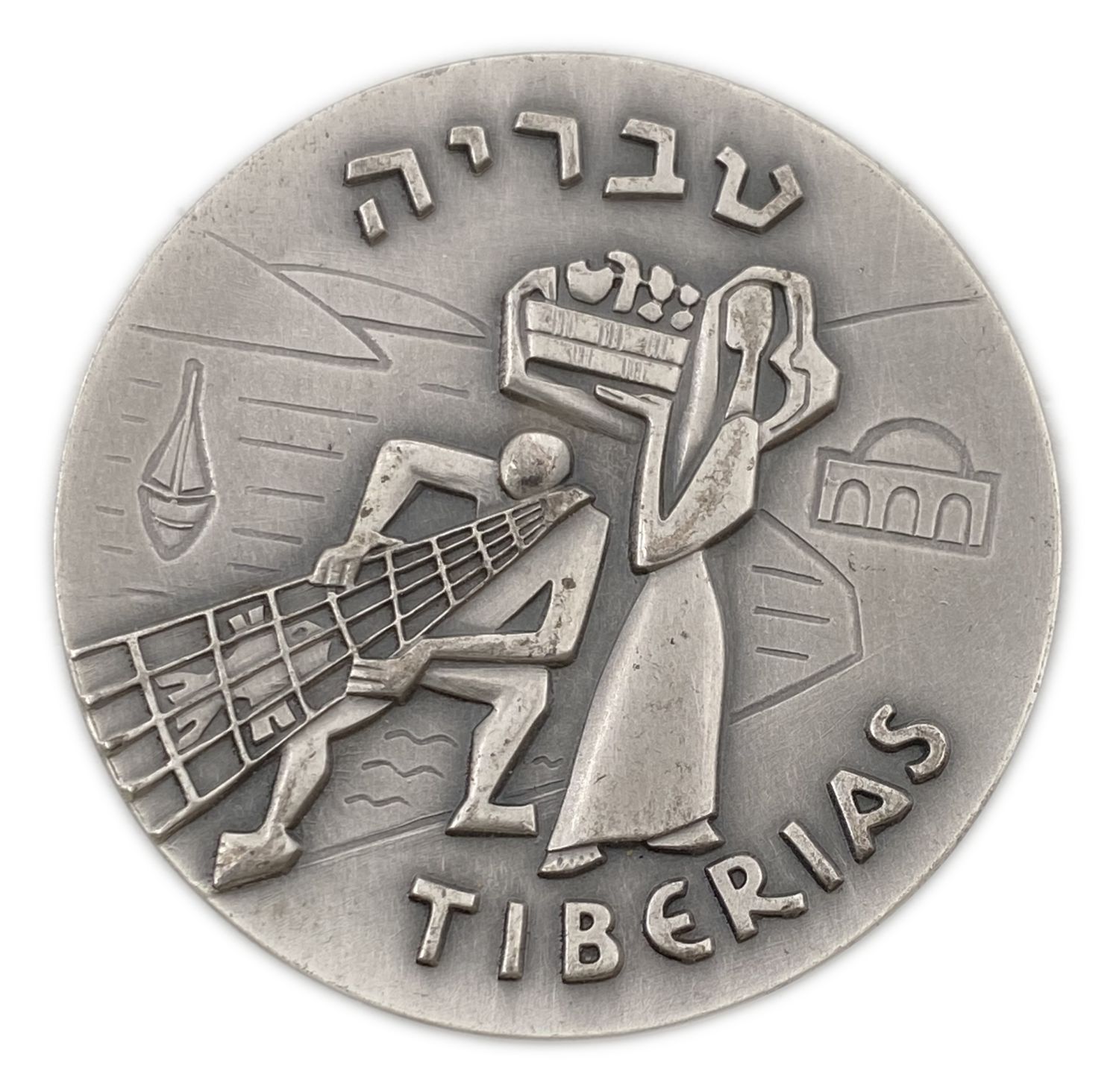
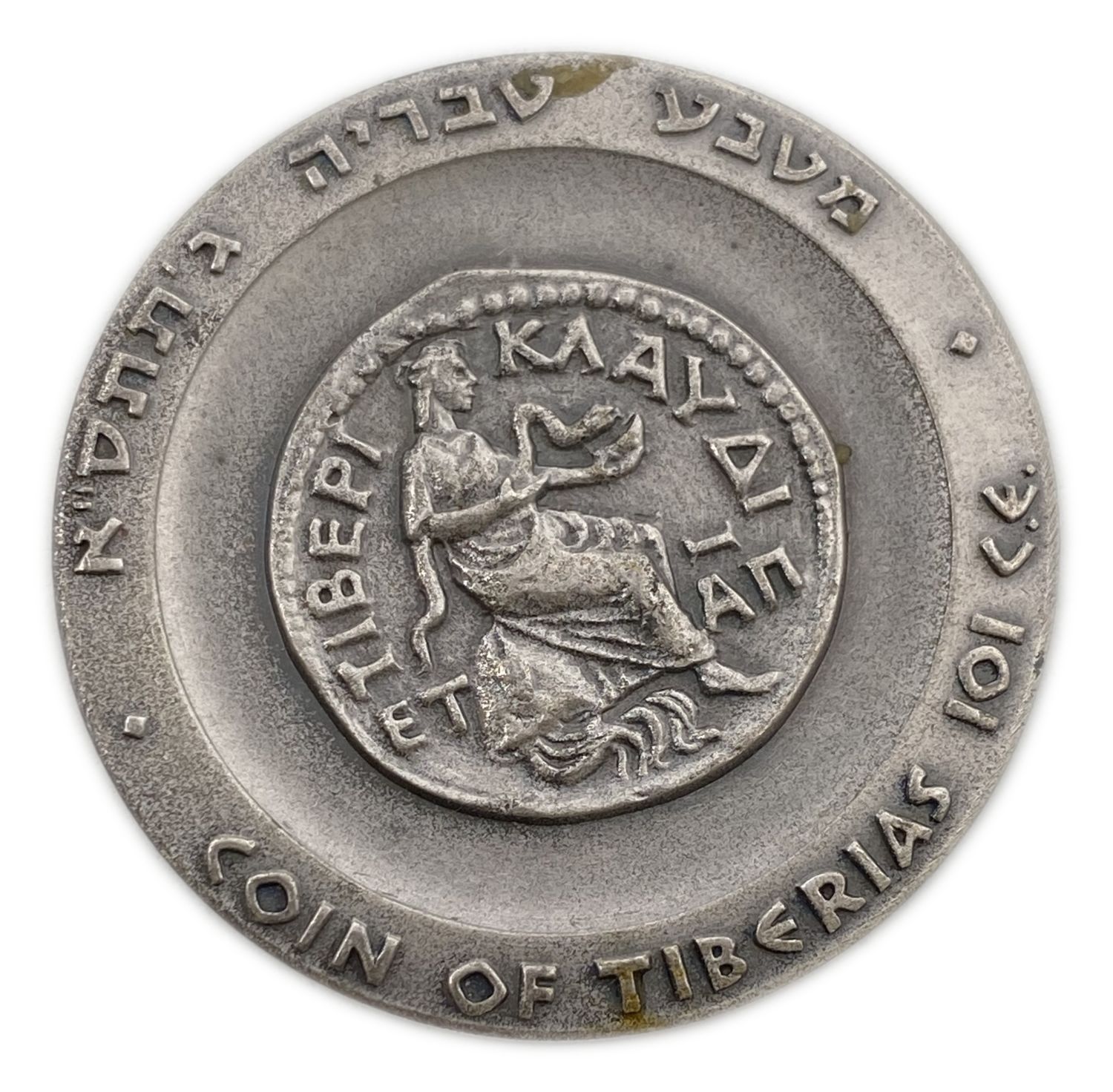
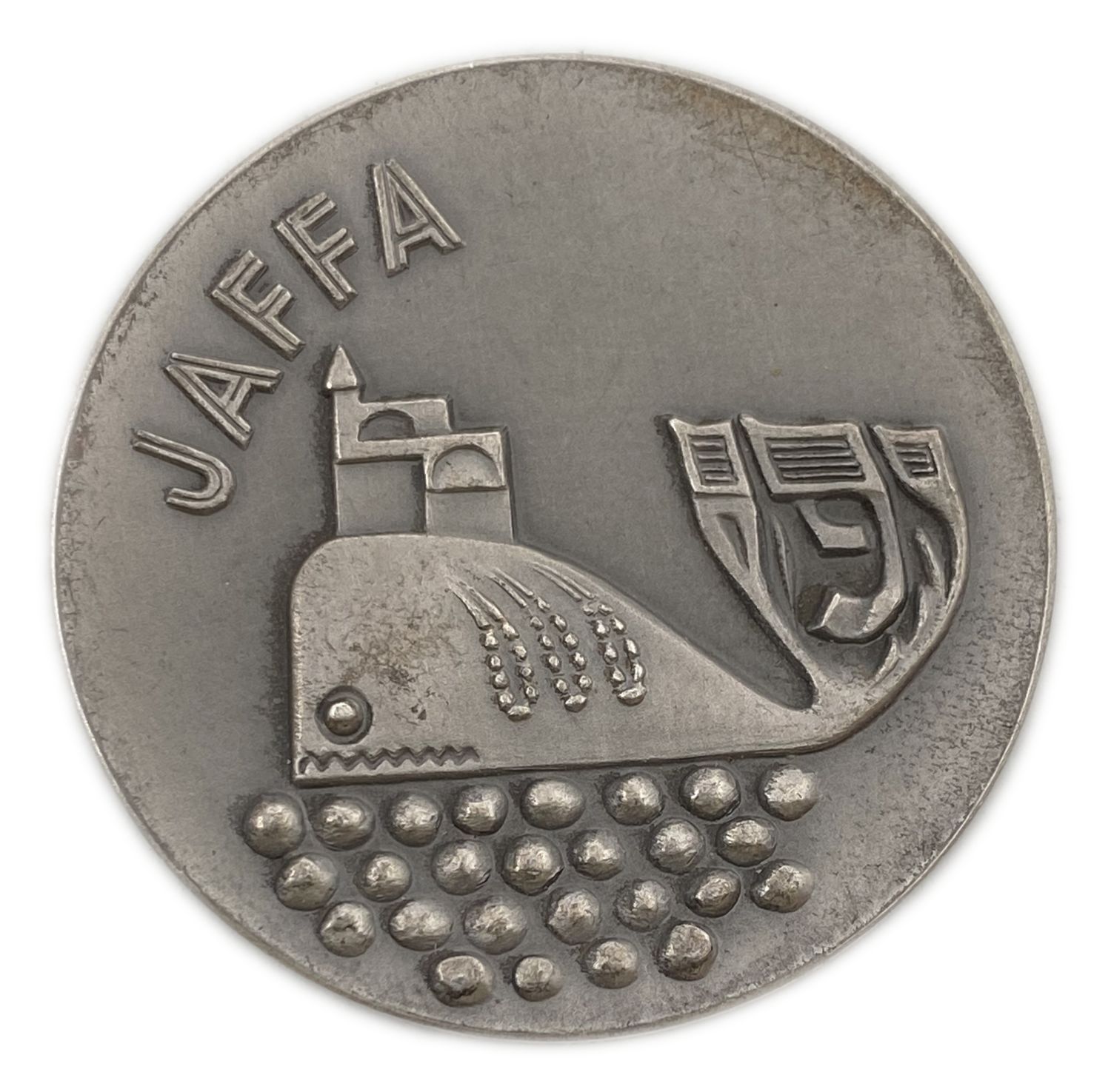
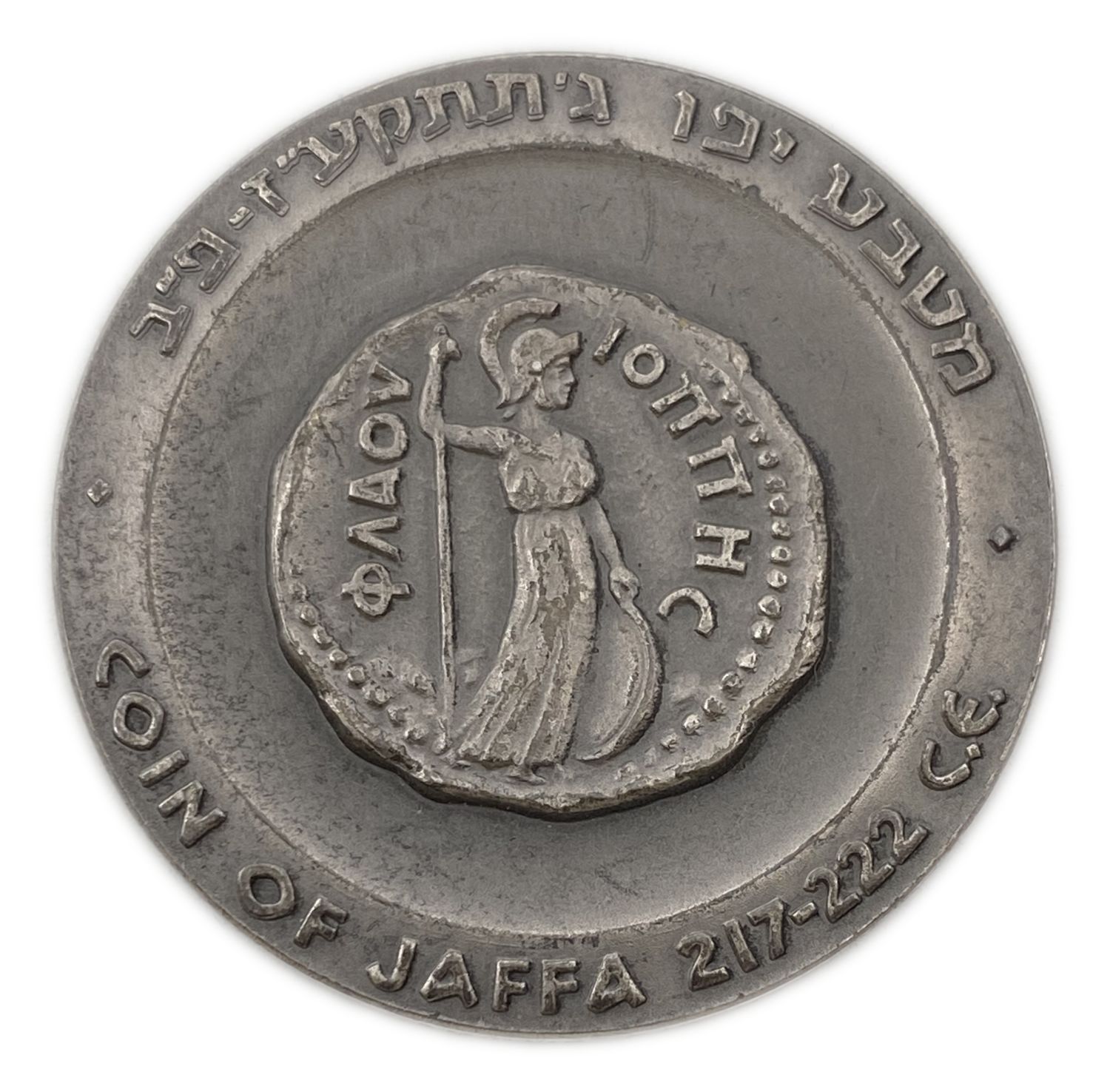
"Israel - Set of 3 city medals: Tiberias, Jaffa, Caesarea. 935 silver, 48 g, 45 mm. Weight of all medals: 144 grams. Tiberias State Medal, 5725-1965 Tiberias was founded in 19 CE on the ruins of a biblical city from the days of the tribe of Naftali. It was an important spiritual center in the Mishnaic and Talmudic periods, and the last seat of the Sanhedrin. The Mishna and the Jerusalem Talmud were completed in Tiberias and it became a focal point for the Hebrew language. After the Arab conquest in 636 CE it became the capital of the Galilee. In 1099 the Crusaders conquered it but after 87 years it fell again into Moslem hands and was destroyed. In 1 560 Suleiman the Great turned over the city to Josef Hanasi who rebuilt its walls. Tiberias became a center and sanctuary to exiles from Spain, many of whom flourished here. Obverse: A stylized representation of a fisherman and a girl. The fish and the fruit representing the source of livelihood in Tiberias and in the Ginossar Valley. Near the sea an ancient building and in the background the hills of the Galilee. The name of the city ""Tiberias"" in Hebrew above and in English below. Reverse: In the center, a replica of a coin minted in 101 CE during the reign of Trajan II. It depicts Hygieia goddess of health, who holds a bowl and serpent and is seated upon a rock whence the hot springs gush. Around Hygieia, the inscription, ""Tiberi Claudi, year 81"". On the rim, the inscription, ""Coin of Tiberias"" 3861 in Hebrew above and in English 101 CE. Jaffa State Medal, 5725-1965 Almost without exception, no conqueror overlooked Jaffa's importance as a harbor. In 701 BCE Sennacherib conquered it, Alexander the Great in 332 BCE and Jonathan the Hasmonean in 148 BCE. In the uprising against the Romans it fell two years before the destruction of Jerusalem. Moslems captured Jaffa in 636 BCE. The Crusaders held Jaffa for nearly two centuries but their control came to an end in 1268 when it was conquered by Sultan Baibars. In 1516 it was taken over by the Turkish Sultan Salim I and was under Ottoman control for 400 years. Over the generations the foreign presence changed from time to time. Jews, however, lived there nearly continuously and a permanent Jewish community was established in 1820. In 1909 the inhabitants of Jaffa established a neighboring community which became Tel Aviv. Obverse: The promontory of Jaffa in the form of Jonah's whale, carrying old-fashioned dwellings on its back. This tail is shaped into three Hebrew letters (Yafo). The name of the city, ""Jaffa"", in Hebrew above and in English below. Reverse: In the centre, a replica of a city-coin minted during the reign of Emperor Elagabalus (21 7-222 CE). Athena, the goddess of wisdom and the science of war, holding a spear in her right hand and a shield in her left hand. The inscription around Athena in Greek, ""Flavia Yoppas"" (as Jaffa was called in Hellenic times). On the rim, the inscription, ""Coin of Jaffa 217-222 CE"" in Hebrew 3977-82, in English below. Caesarea State Medal, 5725-1965 Near the end of the Second Commonwealth, Caesarea was the most beautiful city in all of Israel and many Jews were attracted to it. The great revolt against the Romans was kindled in Caesarea and Jews were among the first to be killed in the revolt. In the 2nd century BCE the Jewish community was reestablished in Caesarea and during the Mishnaic and Talmudic period it served as a focal point of attraction to Tannaim and Amoraim. The town was destroyed during the Arab conquest in 639 CE. The Crusaders who conquered Caesarea in 1102 fortified it again. The final Moslem conquest in 1265 left the city abandoned. In modern times Caesarea's glory was rediscovered by archaelogists who have unearthed a brilliant past including remnants of Jewish synagogues from the period of the 4th to 7th centuries. Obverse: A stylized impression of the city: a Roman arch with the sea beyond. Below, a capital from the 5th century synagogue found on the spot, featuring a seven-branched candelabrum between acanthus leaves. The name of the city, ""Caesarea"", in Hebrew above and in English below. Reverse: In the center, a replica of a coin minted in Caesarea by Agrippas 1 (37-44 CE). Tyche (Fortune) holding in her right hand a ship's rudder, in her left a palm branch. The inscription around Tyche in Greek, ""Caesarea, close to the harbor Sebastos"", (Sebastos being the Greek for Augustus), the letter ""LH"" stand for the year 44 CE. On the rim, the inscription, ""Coin of Caesarea 44 CE"" in Hebrew, 3804 in English below."
 Israel
 הביטחון 6, פתח תקווה.
