


Israel - Liberation Medal, trial version, very rare (the only one we know of its kind), a decade for the State of ...
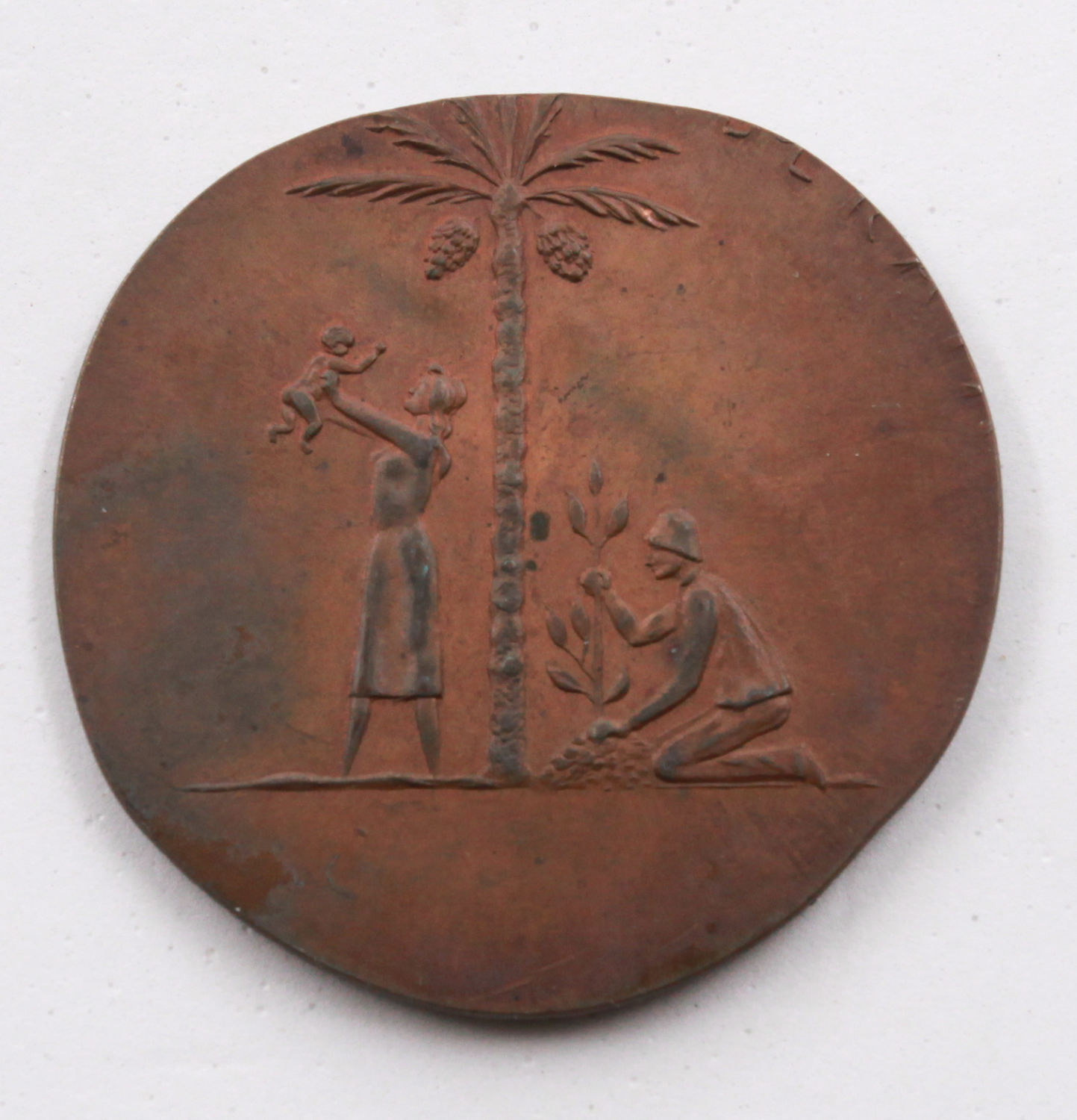
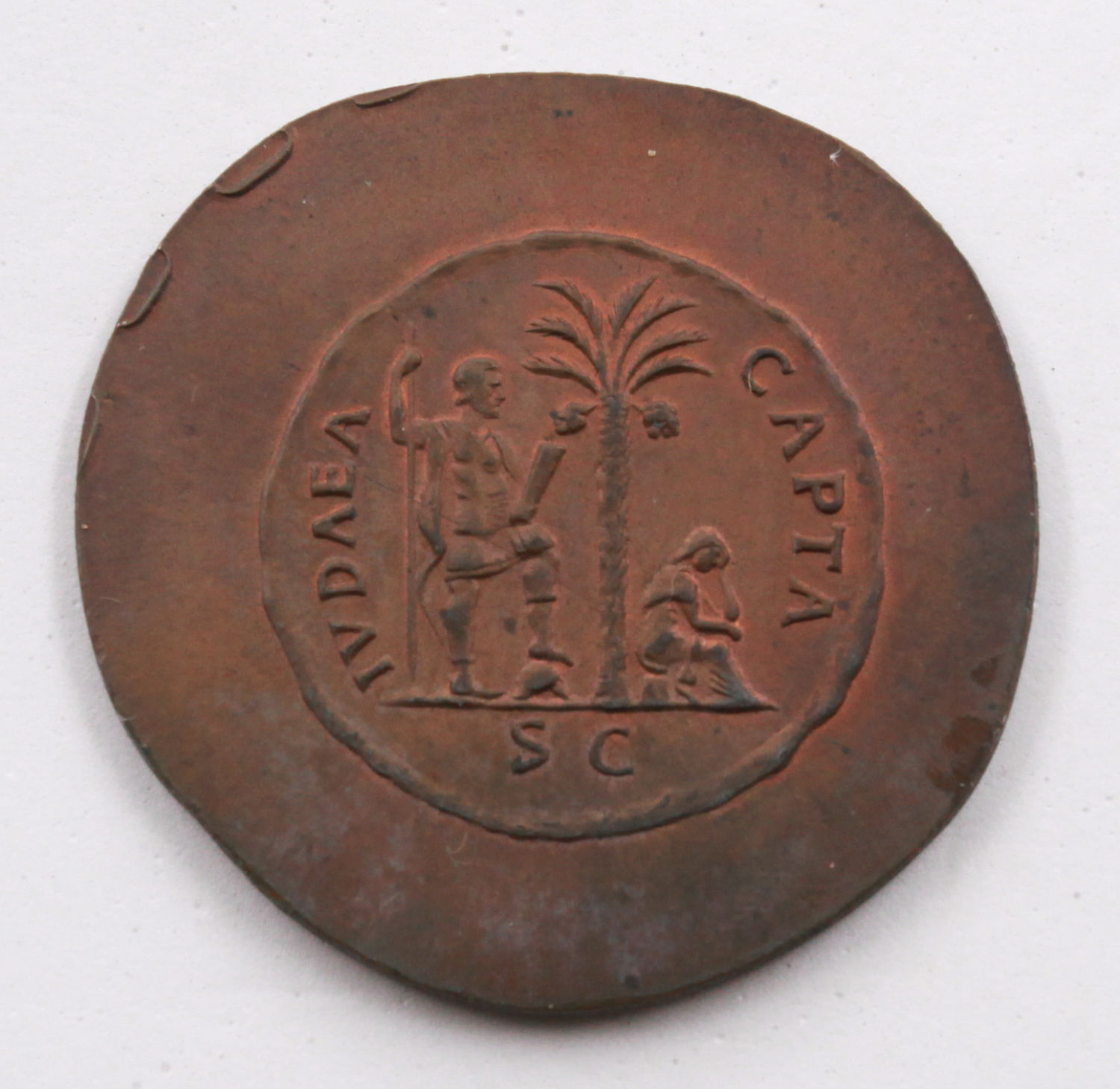
Israel - Liberation Medal, trial version, very rare (the only one we know of its kind), a decade for the State of Israel, liberated Judea 1958 -Bronze, 51.09g, 52 mm - AU-UNC The liberated Israel Medal is also known as the "Liberation Medal" is the first official medal minted in the State of Israel in 1958. The first version is known as the "Freedom of Israel". The Great Revolt and the birth of a coin In 66 AD, when the province of Judah was under the conquest of the Roman Empire, what would later be called the "Great Revolt" broke out. After the initial successes of the rebels, the outstanding officer Vespasian and his son Titus were sent from Rome to suppress the revolt. After five years of fighting, in 70 AD, the revolt was suppressed with the conquest of Jerusalem and the destruction of the Temple. Titus celebrated the Roman victory by holding a victory parade in Rome. The parade was immortalized in relief on the Titus Gate in Rome. In addition, to mark his victory, Vespasian minted the "Judea Capta" coin. The coin "Judea Capta" became the first in a series of coins, all with similar motifs. The series has been issued for almost 26 years. The basic design shows on one side of the coin a palm tree (Eretz Yisrael, which was attributed to the Judean region) with a submissive female figure at its foot, symbolizing the captive Judah. Above it rises the figure of the victor, sometimes the emperor himself, sometimes a simple soldier or the goddess of victory Victory. Some time after the establishment of the state, Mr. Leo Kadman, chairman of the Israeli Numismatic Society, suggested to the Minister of Education and Culture, David Remez, that on the occasion of renewed independence a medal be issued based on Roman coins commemorating the destruction of the Second Temple. Celebrations of the Decade Leo Kadman renewed his proposal and even increased his workload and submitted a sketch to an expert designer. Based on this idea, the designer Uta and Elish formulated the proposed design. The second variation of the Roman currency. Face: In the center, as a symbol of "liberated Israel" - a farmer planting a tree and a woman happily lifting her child. Both stand in the shade of a palm tree with seven spoons and two clusters of fruit. Reverse: Displays a transcript of the Roman coin minted by Vespasian in 71 CE. On the left Vespasian is seen as the conductor and on the right - a mourning Hebrew woman sitting under a palm tree, with ten spoons and two clusters of fruit, symbolizing Judas. The inscription "IVDAEA CAPTA" (Captive Judea) appears on the coin. The letters "SC" are acronyms for the words "Senatus Consultum" (in the Synth order).
 Israel
 הביטחון 6, פתח תקווה.
