


Israel - Ariel Sharon , State Medal 2014 - Gold 585, 10g, 24mm - Mintage 180 Eighth in the "Prime ...
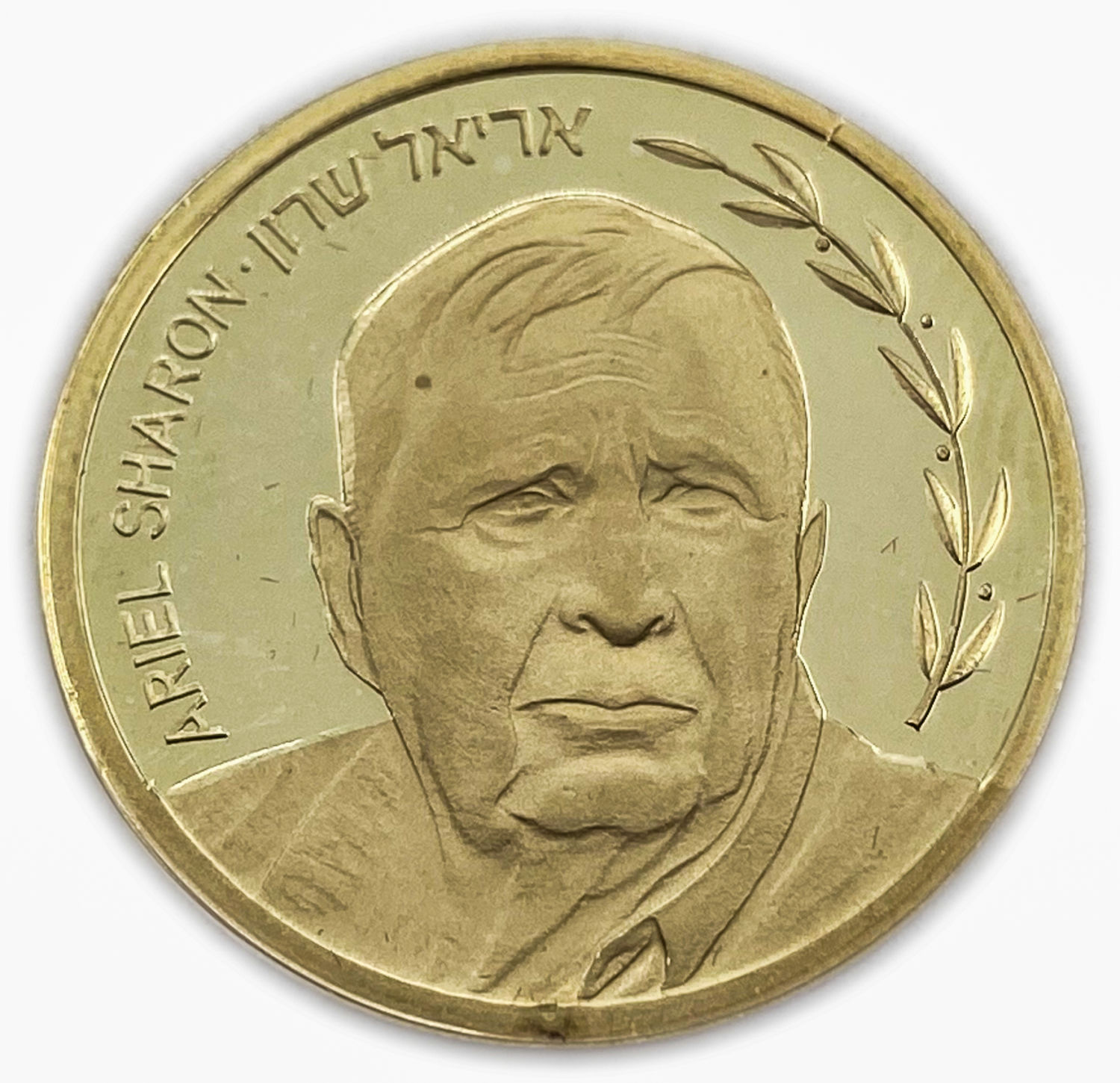
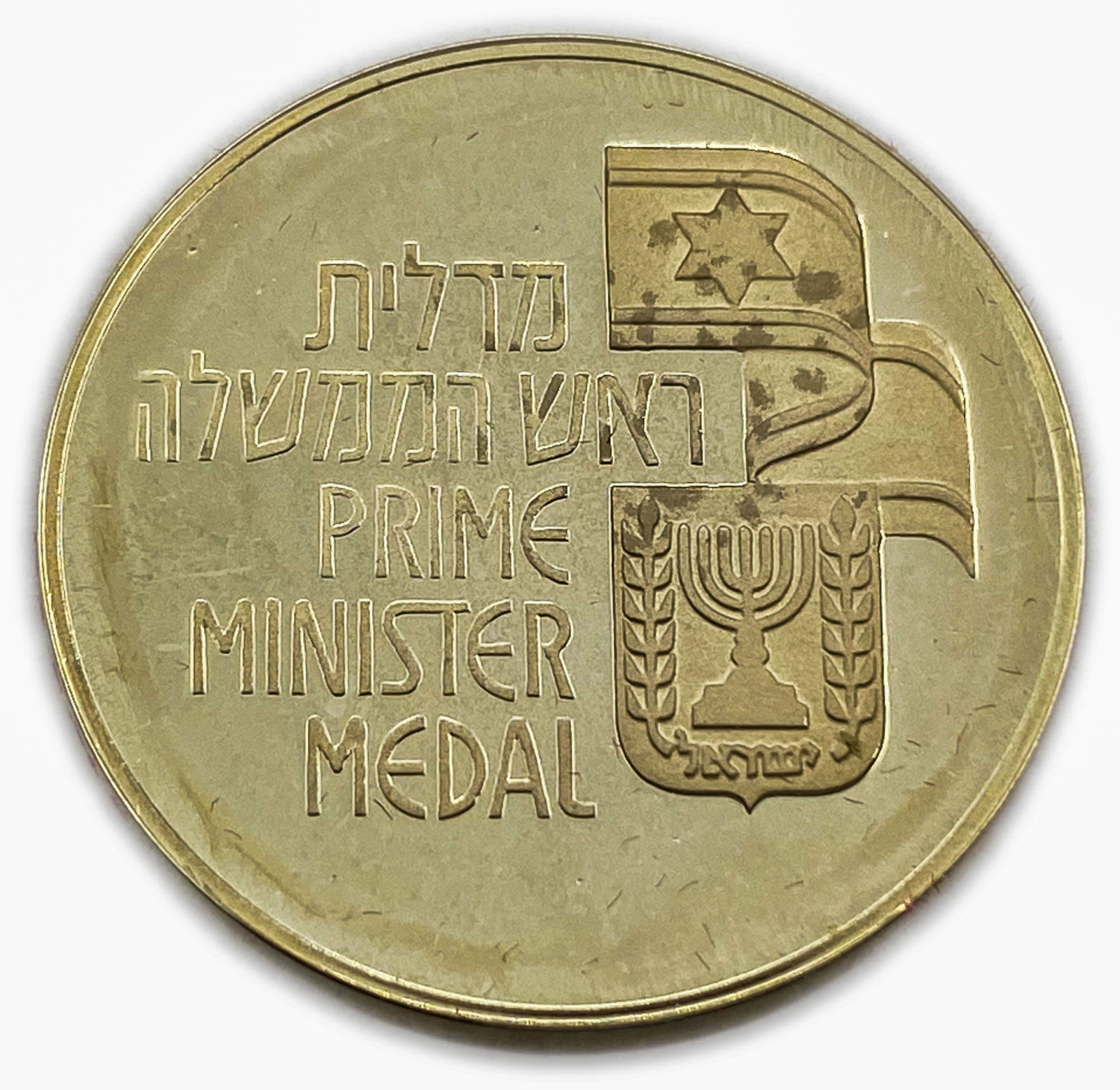
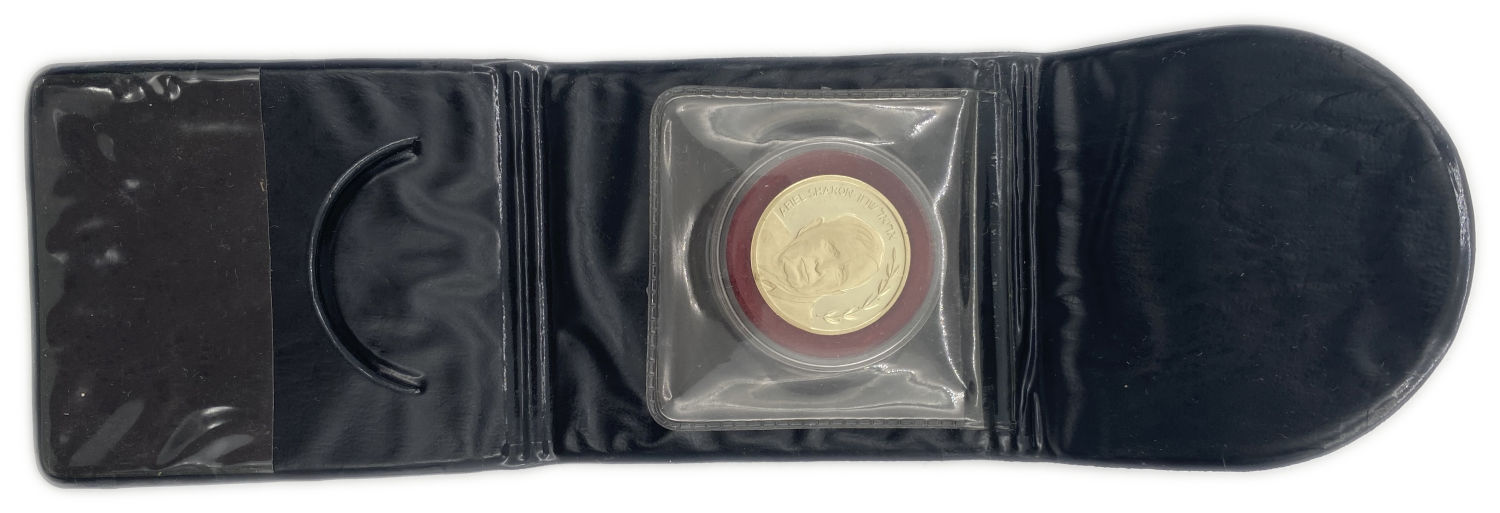
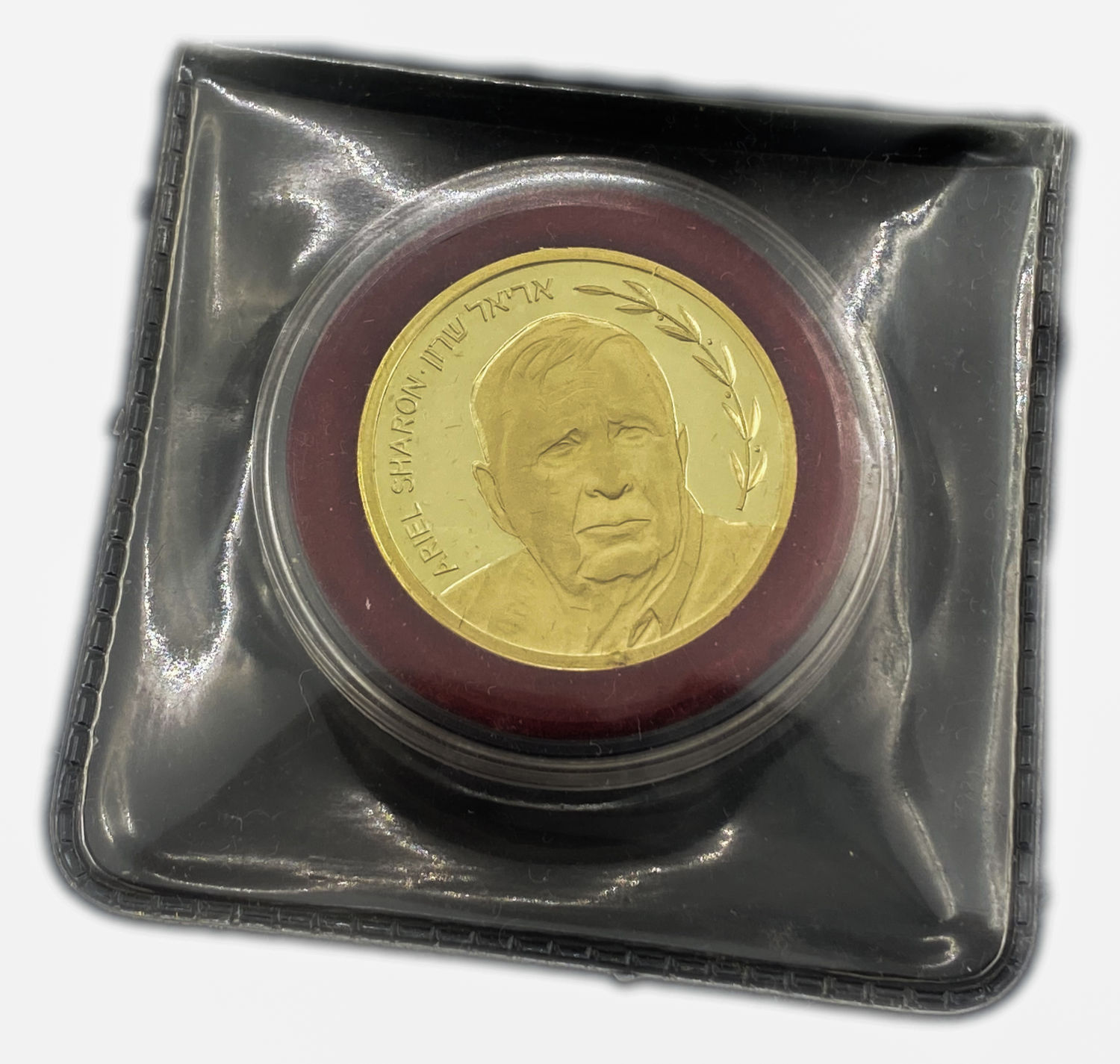
Israel - Ariel Sharon , State Medal 2014 - Gold 585, 10g, 24mm - Mintage 180 Eighth in the "Prime Ministers of Israel" Series Ariel Sharon was born in the village of Kfar Malal and joined the Hagana, the pre-state Jewish army, at the age of 14. He was severely wounded in the War of Independence in May 1948, while commanding a platoon in the Alexandroni Brigade that spearheaded the Battle of Latrun, aimed at opening the road to Jerusalem and breaking the siege on the city. Sharon was founder and commander of commando Unit 101. Although the special forces unit was only in existence for five months, and numbered no more than 50 combat soldiers, it represented a dramatic milestone in the IDF’s capabilities and achievements. In 1954, Sharon was put in charge of the Paratroopers Battalion, which grew into a brigade under his command, and was responsible for all the army’s reprisal attacks. During the Suez Campaign in 1956, Paratrooper Battalion 890 parachuted into Sinai near the Mitla Pass, where the rest of the brigade met up with it after advancing more than 200 kilometers, capturing Egyptian positions along the way. In 1966, Sharon was promoted to the rank of Major General. In the Six Day War, Division 38 under his command fought a brilliant battle, ultimately breaking through the main line of Egyptian fortifications in Sinai. After the war, Sharon was assigned the post of Commander of Sinai. In December, 1969, he was appointed head of the IDF’s Southern Command. One of the most difficult tasks he was charged with was eradicating terror in the Gaza Strip. After seven months of intense effort, quiet was installed in Gaza, and lasted for the next ten years. In July, 1973, Sharon retired from the army and entered politics, founding the Likud party. Called back to serve in the Yom Kippur War, he commanded a division of reservists that crossed the Suez Canal during the night of October 15-16, blazing the trail to victory in the war. In 1977, Sharon was elected to the Knesset, representing the Shlomtzion party he had formed, and was named Minister of Agriculture and Head of the Ministerial Committee for Settlement in Menachem Begin’s first government. In this capacity, he established over one hundred settlements in the Golan Heights, the Galilee, Judea and Samaria, the Gaza region, the Negev, and the Arava. In August, 1981, he was appointed Minister of Defense in Begin’s second government. A year later, Israel launched Operation Peace for the Galilee. Within a week, IDF forces reached the Beirut-Damascus road, expelling from Israel’s northern border the terrorists and the Syrian army units giving them protection, thereby removing the threat of missile attacks on the north of the country. Some 15,000 terrorists and Syrian troops were driven out of Beirut. However, in February, 1983, Sharon was forced to resign as Defense Minister in the wake of the massacre of Muslims by the Christian Phalangists in the Sabra and Shatila neighborhoods of Beirut. In the following years, Sharon served as Minister for Trade and Industry, Minister of Housing and Construction, and Minister of National Infrastructure. In 1998, he was appointed Foreign Minister. In February, 2001, he won election for Prime Minister by a wide margin and became the eleventh Prime Minister of the State of Israel. As head of the government, he oversaw the fight against rampant terrorism, Operation Defensive Shield in the West Bank, and the construction of the security fence. After another overwhelming victory in the 2003 elections, he initiated the plan for disengagement from the Gaza Strip. Sharon was extremely popular and well-liked by the Israeli public. Under his leadership, terror was curbed, the economy thrived, and Israel enjoyed international prestige. On January 4, 2006, Sharon suffered a stroke and never recovered. He passed away on January 11, 2014, and is buried on a hill near his home on Shikmim Farm. Obverse: Portrait of Ariel Sharon, around the border to the right, an olive branch, to the left, "Ariel Sharon" in English and Hebrew. Reverse: To the left, the words "Prime Minister Medal" in English and Hebrew, to the right, the Israel State Emblem and above it, the Flag of Israel.
 Israel
 הביטחון 6, פתח תקווה.
