


Israel - 3 medals. 1. Expecting the Messiah, Love of the World - State Medal, 1986 - 999 silver ...
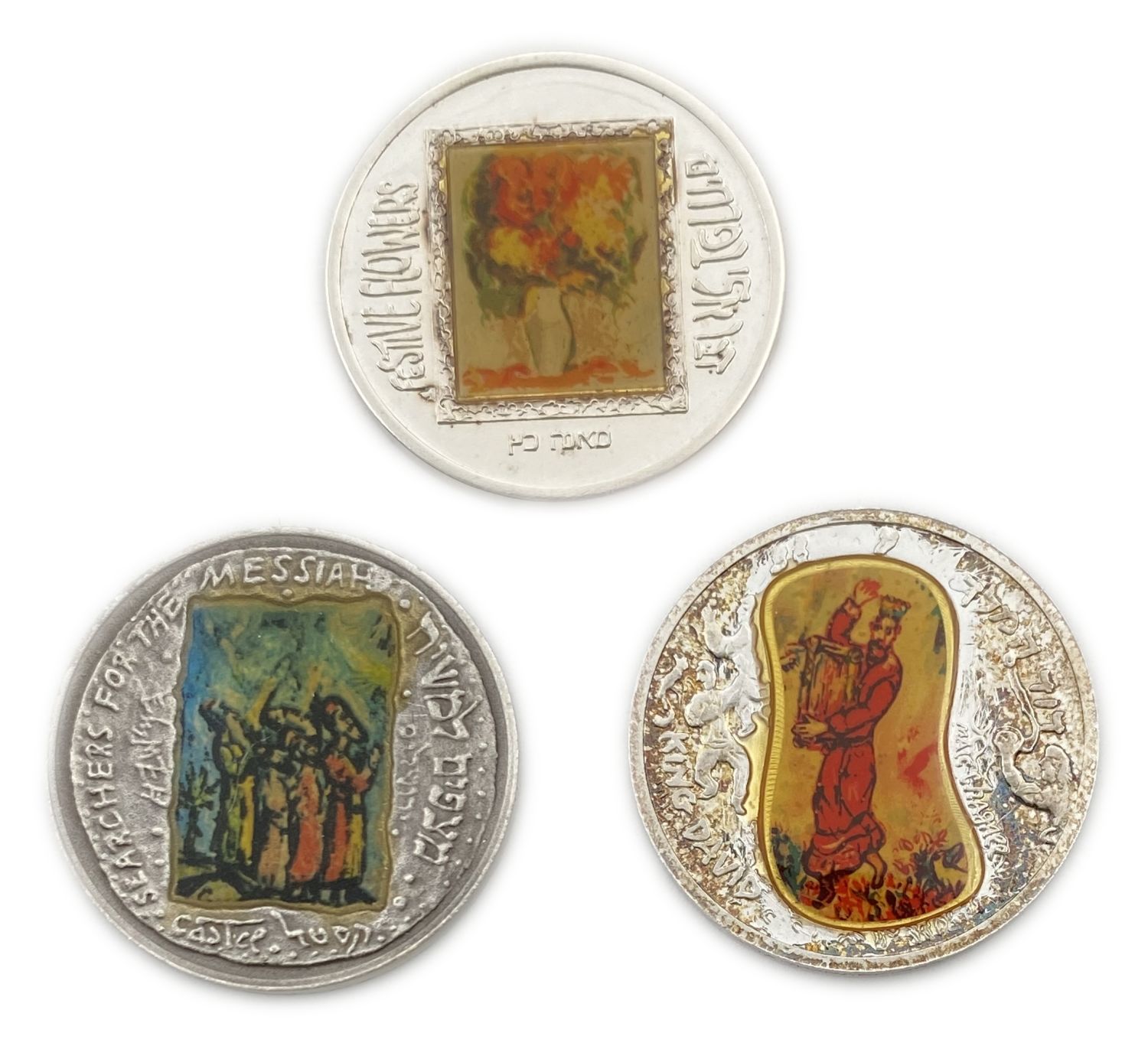
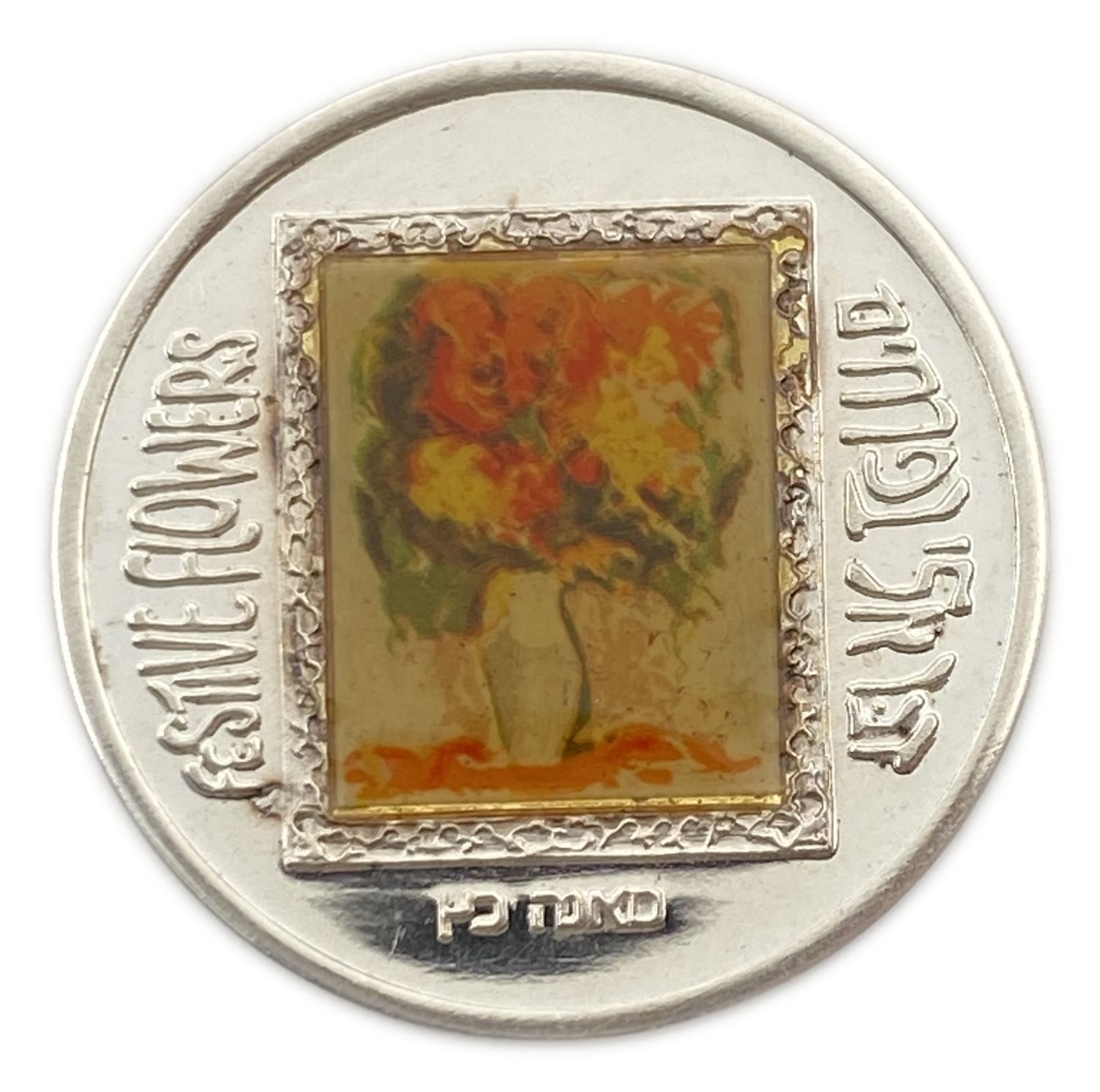
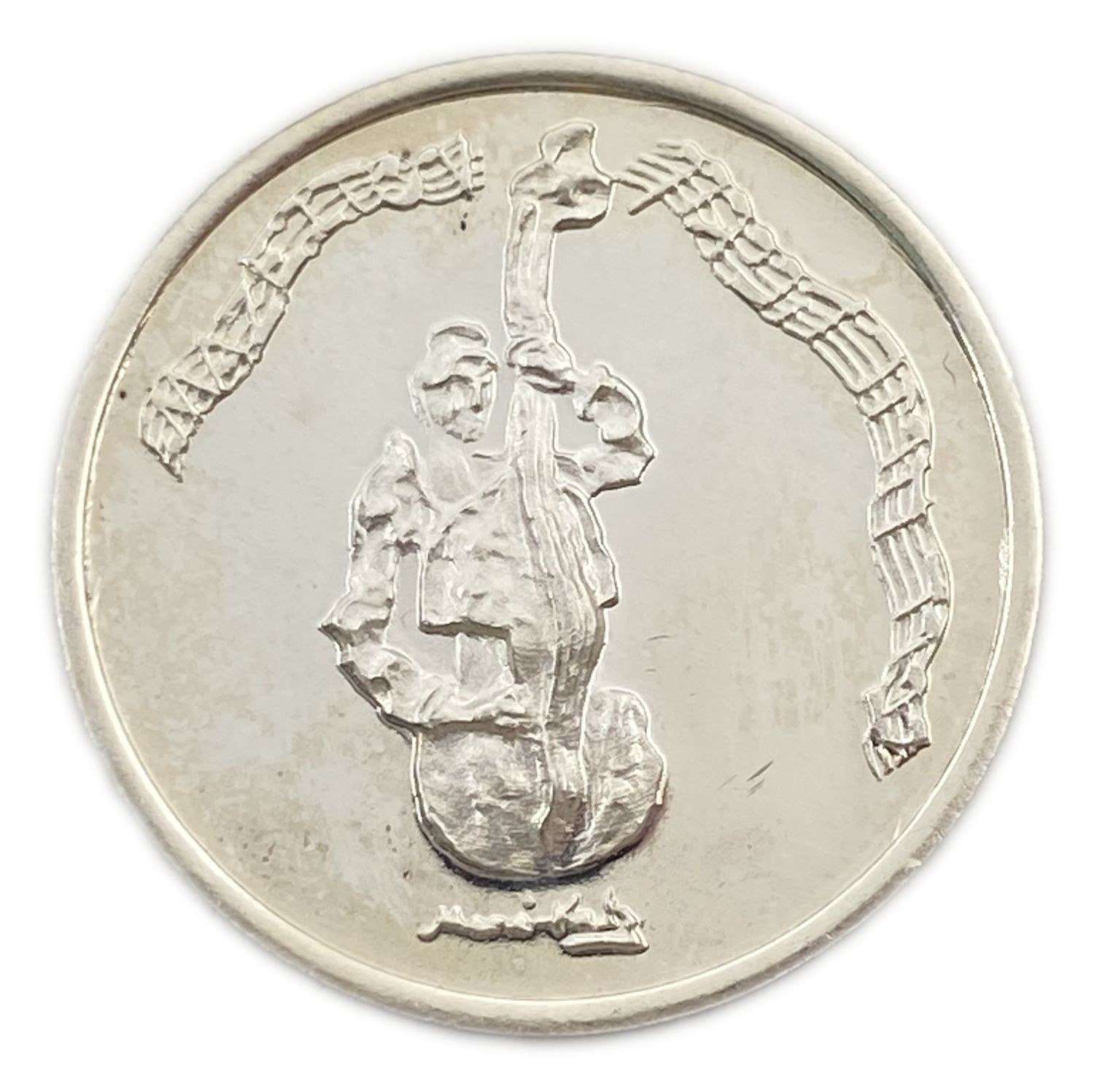
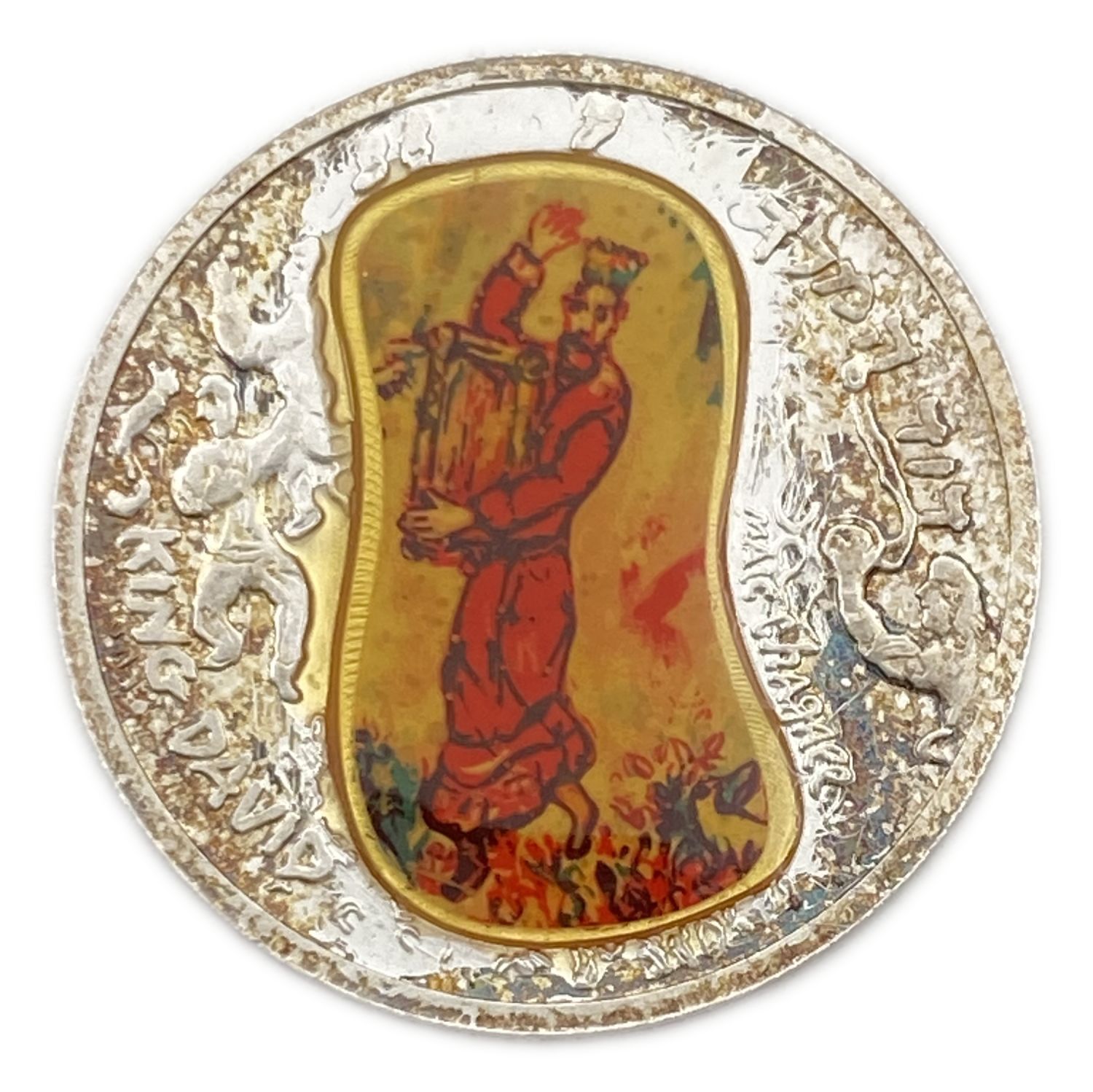
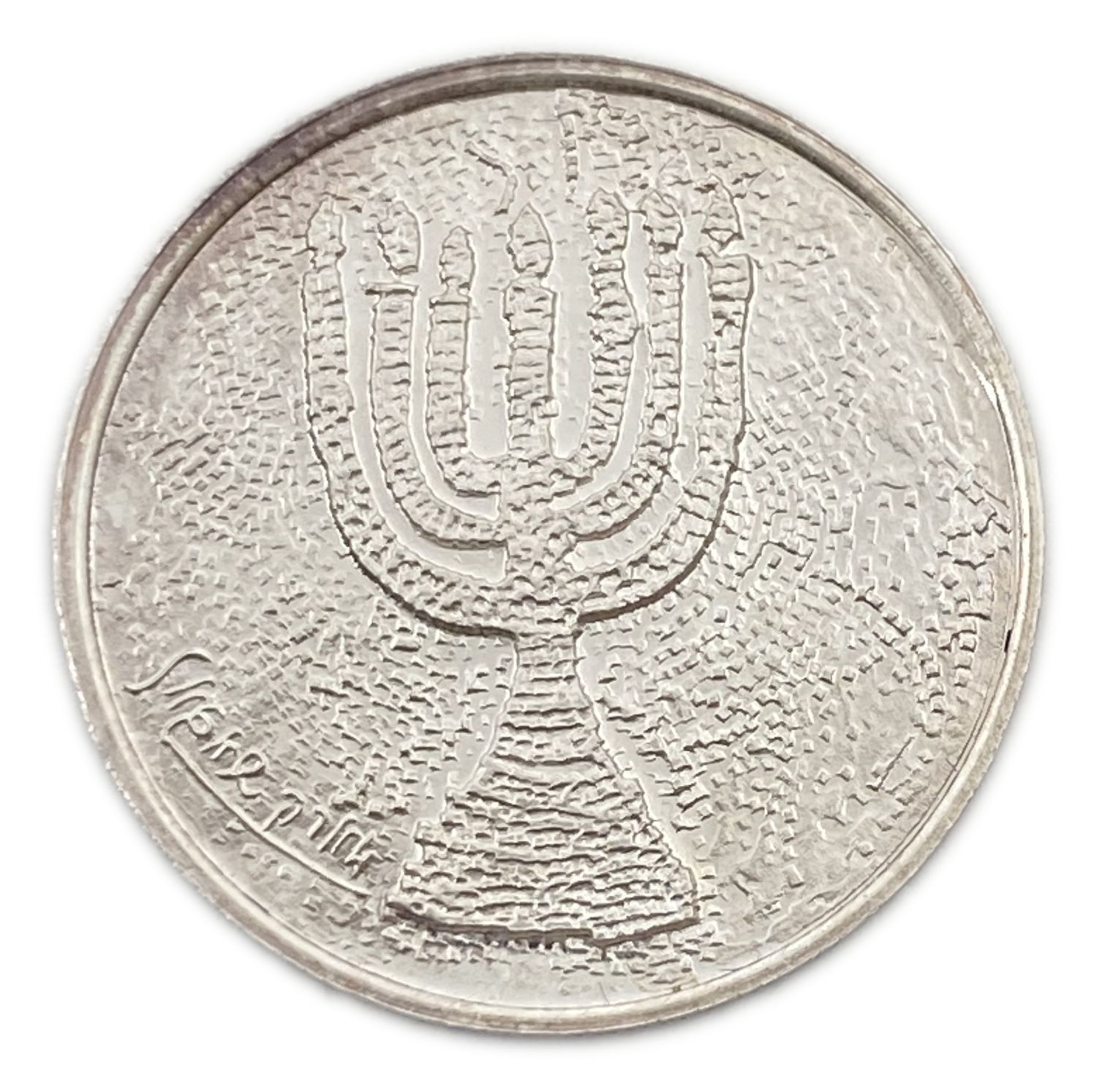
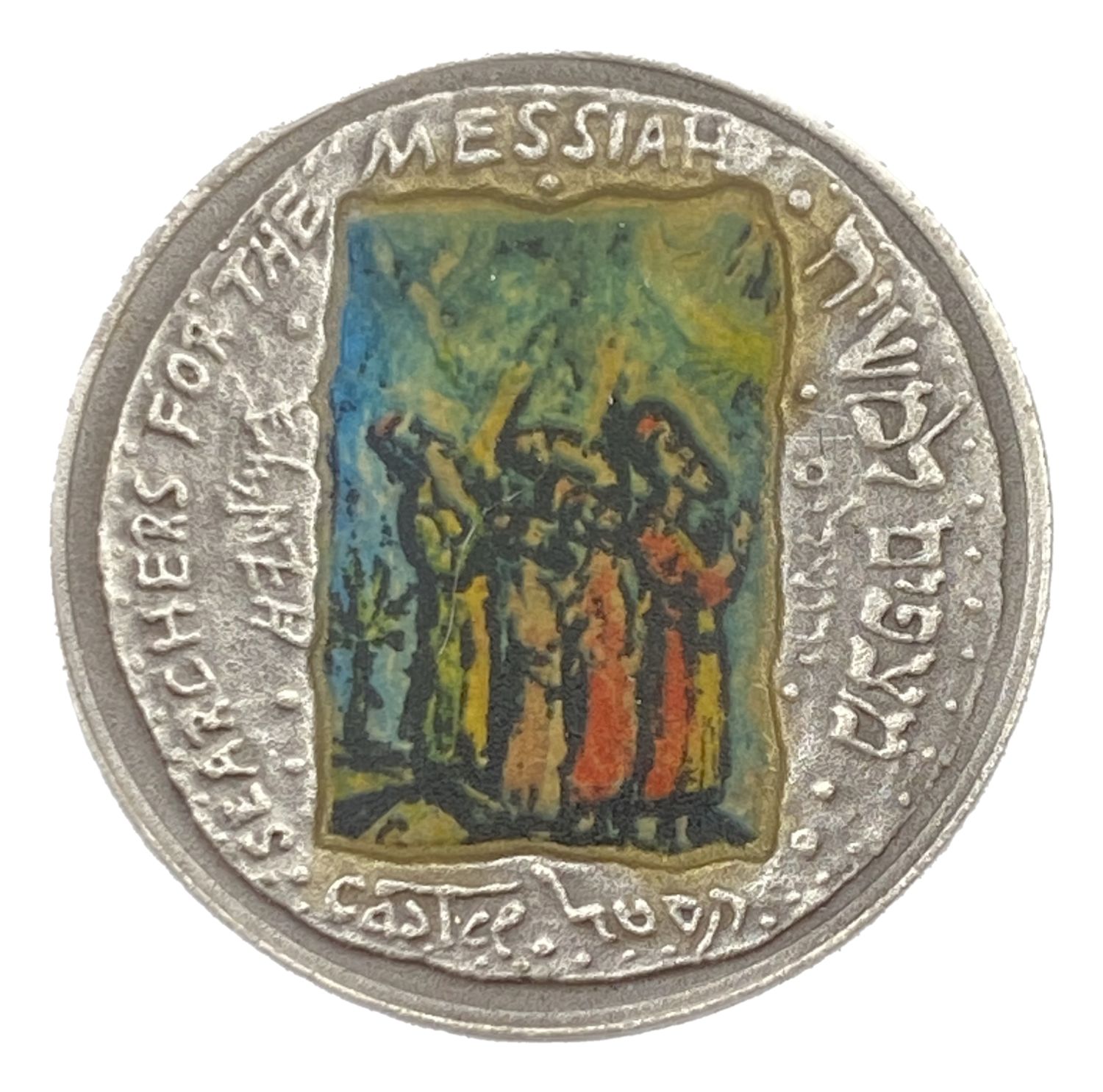
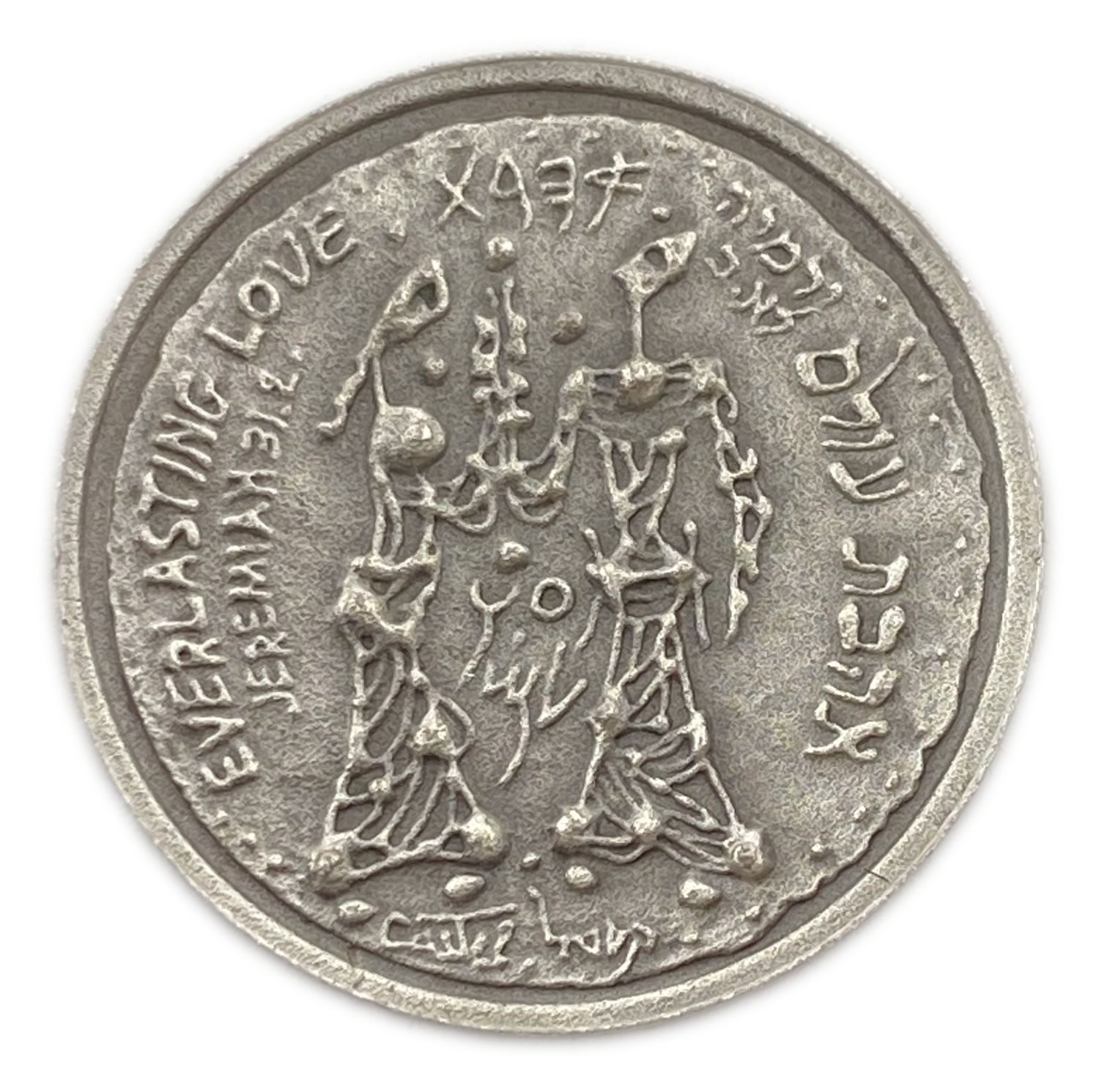
Israel - 3 medals. 1. Expecting the Messiah, Love of the World - State Medal, 1986 - 999 silver, 10 g, 26 mm. 2. "Marc Chagall - King David" - State Medal - 999 silver, 10 g, 26 mm. 3. Flowers - State Medal - 999 silver, 10 g, 26 mm. Total silver weight = 30 grams. A: Moshe Castel's inspiration for his mystical painting called "Searchers for the Messiah" is based on an incident from the life of the "Ari", one of the best known mystics from Safed. The painting depicts the "Ari" and his followers reaching out with their arms towards the outstretched arm of the Messiah. The other major idea expressed by Castel, that of "Everlasting Love", is seen in the forms of a man and a woman with arms interlaced in a gesture of mutual giving and radiating eternal love between them. Obverse: "Searchers for the Messiah", Original lithograph in 15 colors. Each lithograph is signed by the artist in Hebrew and English with the letter "C". The word "Jerusalem" in Hebrew and in ancient Hebrew writing. Reverse: Likenesses of a man and a woman with forever interlaced arms. The words "Everlasting Love" (Jeremian 31:2) in Hebrew, English and ancient Hebrew writing. The artist's signature in Hebrew and English. B: After King David established Jerusalem as his capital, he and the people of Israel together brought the Holy Ark into the city. Their joy was so great that they all came to join the procession and accompany the Holy Ark with harps and tambourines. Throughout the years of the long exile, this procession became a symbol of the Jewish people's ardent longing for the return to Jerusalem. Chagall portrays David and the dancing procession of Chassidim and pioneers in the Land of Israel, in perfect harmony, in his work "The Entry into Jerusalem" which he created for a mural tapestry for the Knesset. Past present and future of the people of Israel blend together and the picture overflows with joy. The Chagall State Medal, struck in 22k and 18k gold, features a detail of Chagall's splendid work, King David dancing with his harp, on a colorful lithograph. The medal reverse is graced with a Menorah, the seven-branched candelabrum, a detail from a mosaic that Chagall also created for the Knesset. Face: Color lithograph of King David playing his harp and dancing, a detail from Chagall's mural tapestry "The Entry into Jerusalem" created for the Knesset. Around the lithograph are other figures taken from the tapestry and inscription "King David" in English and Hebrew. Common Reverse of the Series: Menorah, the seven-branched candelabrum, a detail from the mosaic Chagall created for the Knesset, and his signature. C: The sculpture "The Double-Bass Player" is one of the series of 'Jewish Musicians" by Mane-Katz, who began sculpting at age 46 in plaster, and later moved to bronze. The painting "Vase of Flowers" is among the favorite subjects of Mane-Katz's paintings. In strong, dramatic colors, the artist depicts giant flowers which fill nearly the entire canvas. Mane-Katz was born in the Ukraine in 1894. Until age 16 he learned in a "heder" and yeshiva in his birthplace. Later, he studied in the Vilna School of Art and in the art academy in Kiev. In 1913 he spent a year in Paris, and returned there in 1921. During World War II he lived in the United States. His favorite theme is the Hasidic world. He visited Israel frequently and died in Tel Aviv in 1962. Obverse: Colored, framed lithograph "Vase of Flowers". The words "FESTIVE FLOWERS" in English and "speak to me with flowers" in Hebrew. The artist's name in Hebrew Reverse: Relief of the sculpture "The Double-Bass Player at a Jewish Wedding". In Hebrew, the words "the tune returns" and in English, "Mazel Tov", arranged as notes on a staff. The artist's signature
 Israel
 הביטחון 6, פתח תקווה.
