

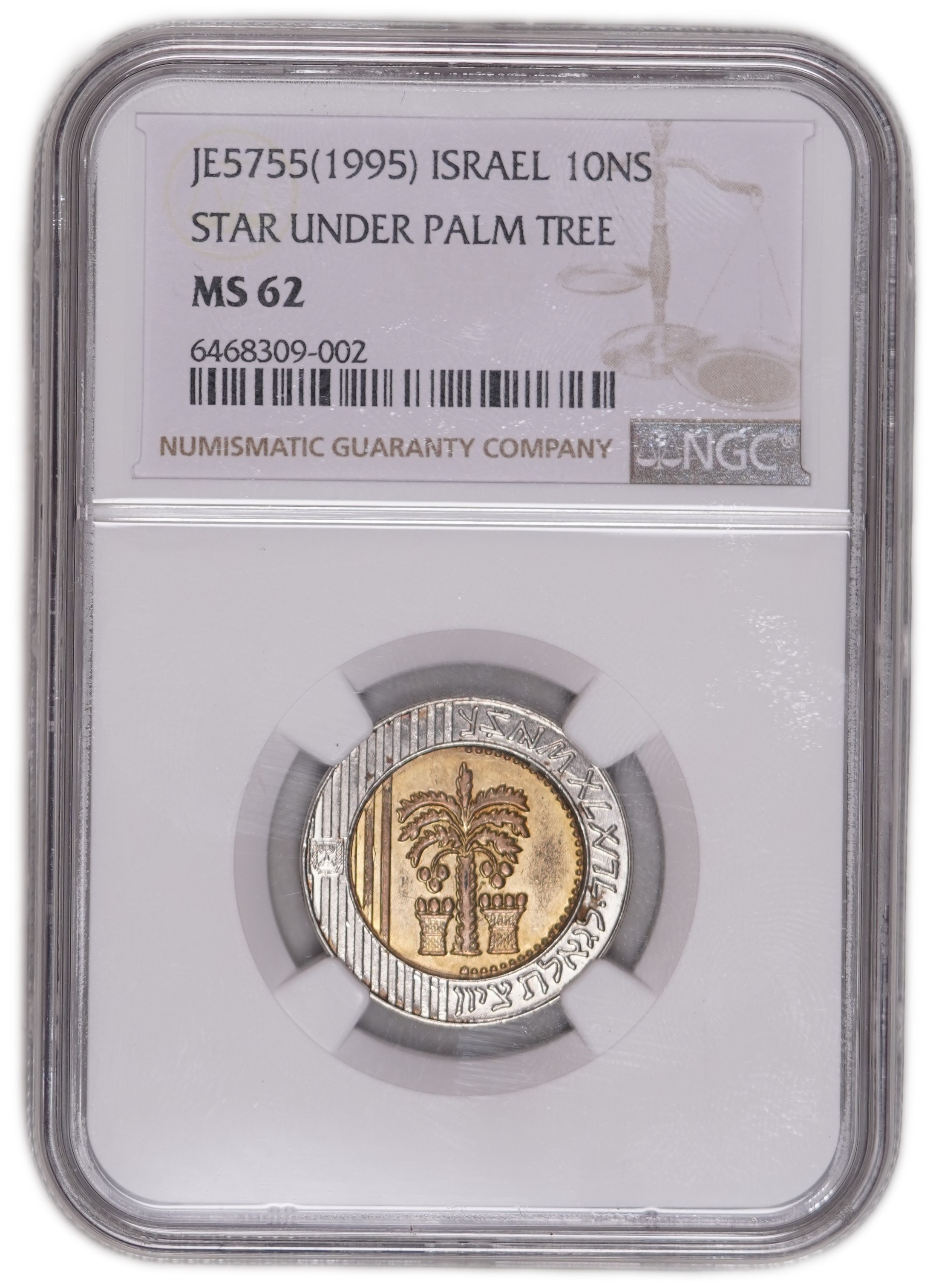
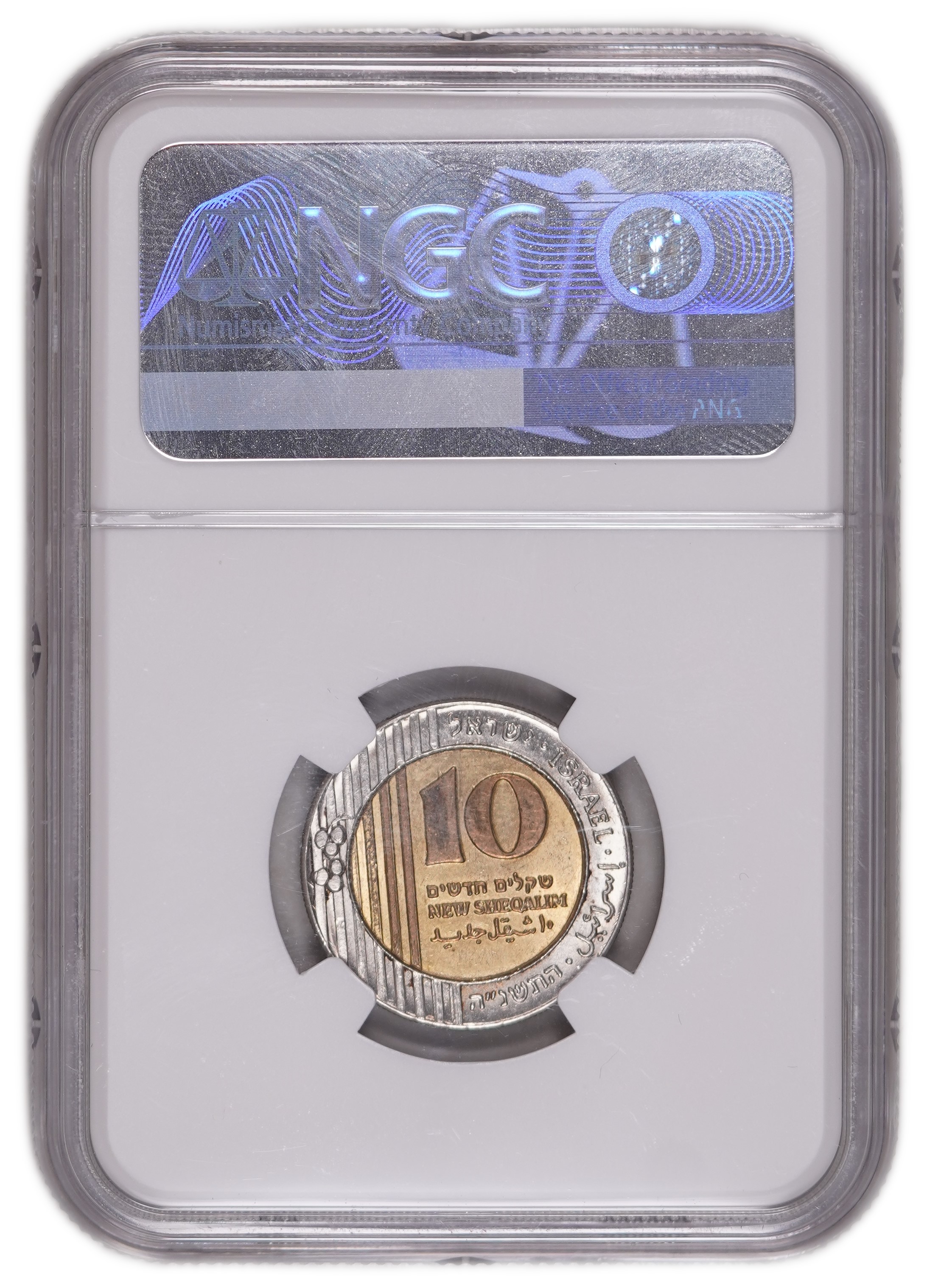
Israel - 10 New Sheqalim 1995, Star / Star of David Variety - Rare - NGC MS 62
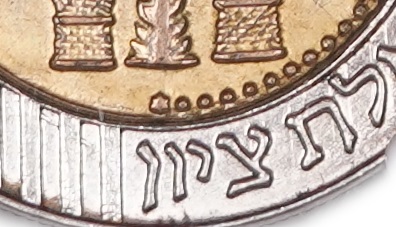
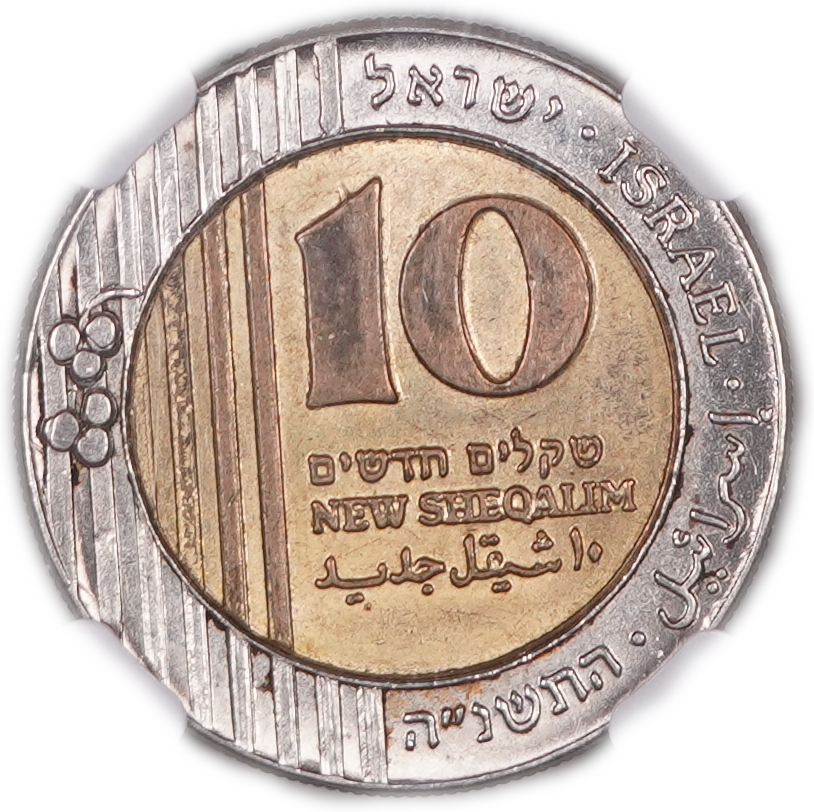
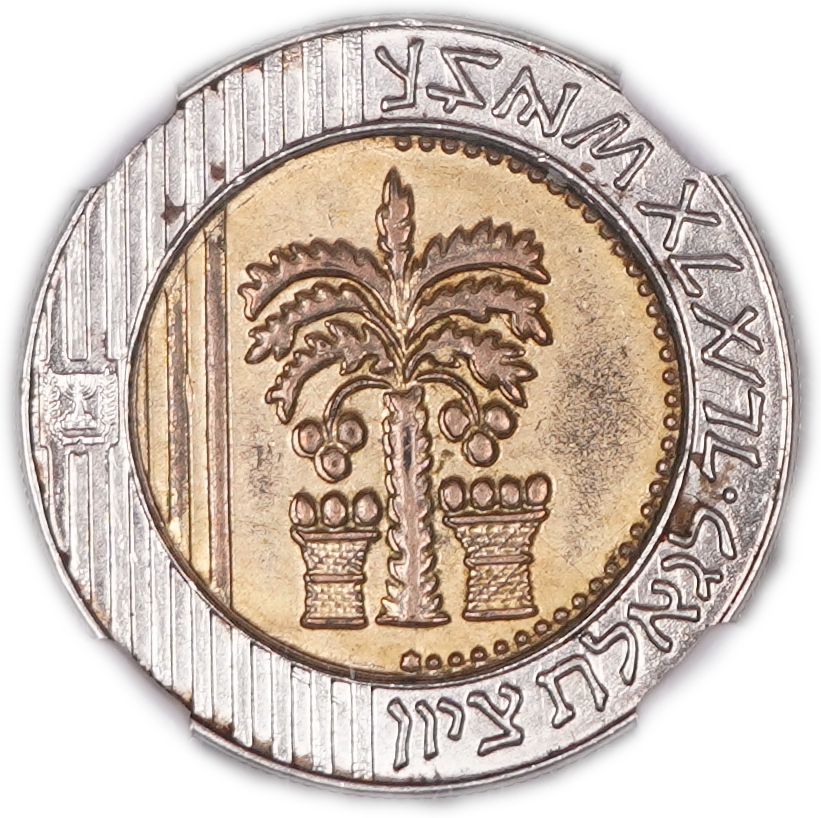
Israel - 10 New Sheqalim 1995, Star / Star of David Variety - Rare - NGC MS 62 A 1995 Israeli 10 New Sheqalim coin, rare “Star” variety, certified by NGC as MS 62. This unusual variety features a star / Star of David, similar to the double-thick coin included in the “Medicine in Israel” coin series. The variety was reportedly discovered by chance in 1998, about three years after the 10 New Sheqalim coins had entered circulation. The error is believed to have originated at the mint in the Netherlands, where regular-thickness blanks were apparently struck with a design intended for another issue. As a result, coins with the star entered circulation as regular coins. No official report of this issue was received by the Bank of Israel, and the exact number struck is unknown. Today, only a few dozen examples are believed to be known, out of 28,224,000 coins issued for circulation that year. Obverse: At the center appears the denomination “10 New Sheqalim” in Hebrew, Arabic and English, together with the Hebrew year of issue. The word “Israel” appears in Hebrew, Arabic and English, alongside a cluster of dates and partial vertical grooving on the left side of the coin. Reverse: At the center appears a fruit-bearing palm tree, with two woven baskets filled with dates at its base. Also shown are the State emblem and the inscription “לגאלת ציון” in both modern Hebrew script and ancient Hebrew script. A beaded border appears around part of the inner circle, with partial vertical grooving on the left side. The design is based on an ancient Jewish coin from 69 CE, the fourth year of the Jewish revolt against Rome before the destruction of the Second Temple.
 Israel
 הביטחון 6, פתח תקווה.
