

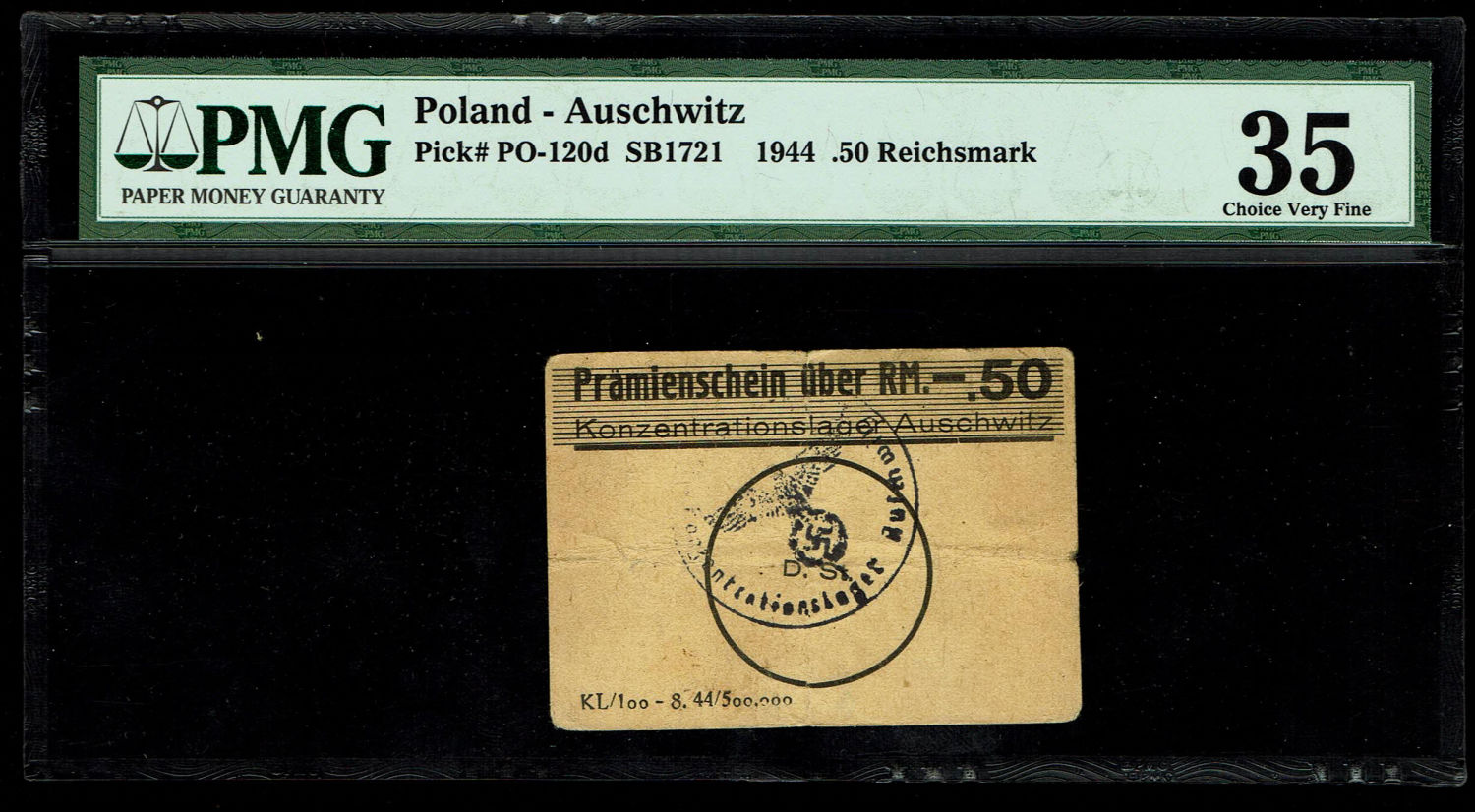
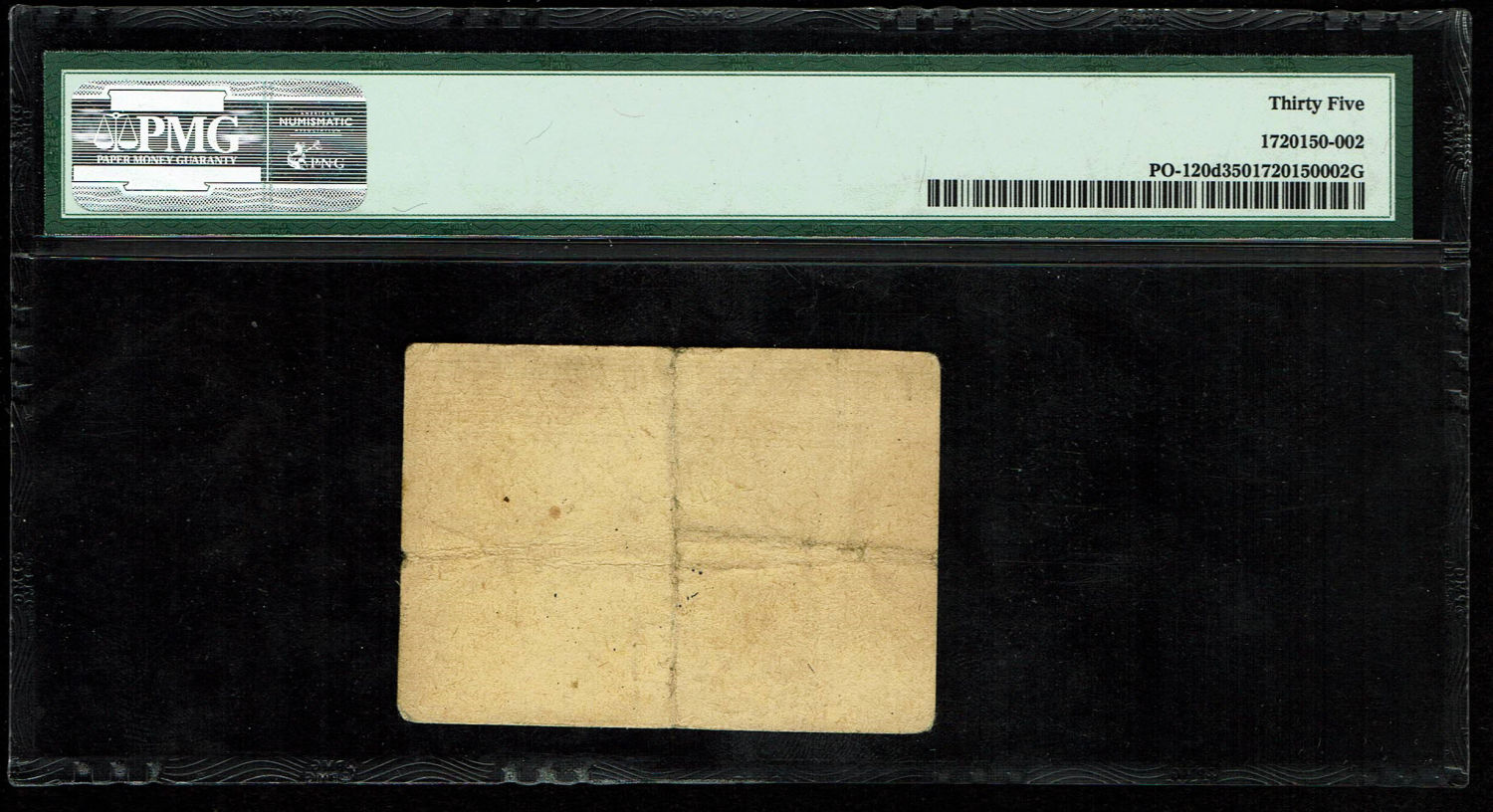
Holocaust concentration camps money - Poland - 0.5 Reichsmark 1944 - Auschwitz - PMG 35
Holocaust concentration camps money - Poland - 0.5 Reichsmark 1944 - Auschwitz - PMG 35 The concentration and extermination camp Auschwitz (from German: Auschwitz) in southern Poland was the largest of the extermination camps established by Nazi Germany in World War II, where approximately one million and two hundred thousand people were murdered, including approximately one million and one hundred thousand Jews (91%), more than at any other site during the war. It was the extermination camp that operated for the longest time (from June 1940 to January 1945) of all the extermination camps, and where the industrialization of mass murder reached its peak. At its peak, Auschwitz was a complex that included 45 camps that covered 40 square kilometers. There were three main camps in Auschwitz: Auschwitz I, which was the initial concentration camp and served as an administrative center for the camp system, where approximately 75,000 Polish intellectuals and approximately 15,000 Soviet prisoners of war were murdered; Auschwitz II (Birkenau) camp, where the majority of the extermination of the Jews took place, and where approximately one million and one hundred thousand Jews and approximately 22,000 Gypsies were murdered. Auschwitz III (Monowitz) camp, which operated as a labor camp for the IGE Farben company. Beyond these three camps, about forty secondary camps operated around Auschwitz, where Jews were enslaved in hard labor. The entrance gate to the Auschwitz I concentration camp, above which was emblazoned the inscription "Work sets you free", as well as the railway tracks leading to the entrance to the Auschwitz II extermination camp in Yarkenau, were etched in the memory of many as a central symbol of the Holocaust and the extermination of the Jews. The term "Auschwitz" has become synonymous with the Holocaust, and a symbol of human evil and cruelty, torture and suffering. In August 1944, the Sonderkommandos managed to smuggle out of Auschwitz four photographs taken inside the extermination camp, which exclusively describe the burning of the bodies. In 1979, Auschwitz was declared a World Heritage Site by UNESCO.
 Israel
 הביטחון 6, פתח תקווה.
