


Holocaust and Camp Banknotes - Poland - Łódź Ghetto - 50 Pfennig, 1940 - Ink and Punch Hole Cancelled, Very Rare ...
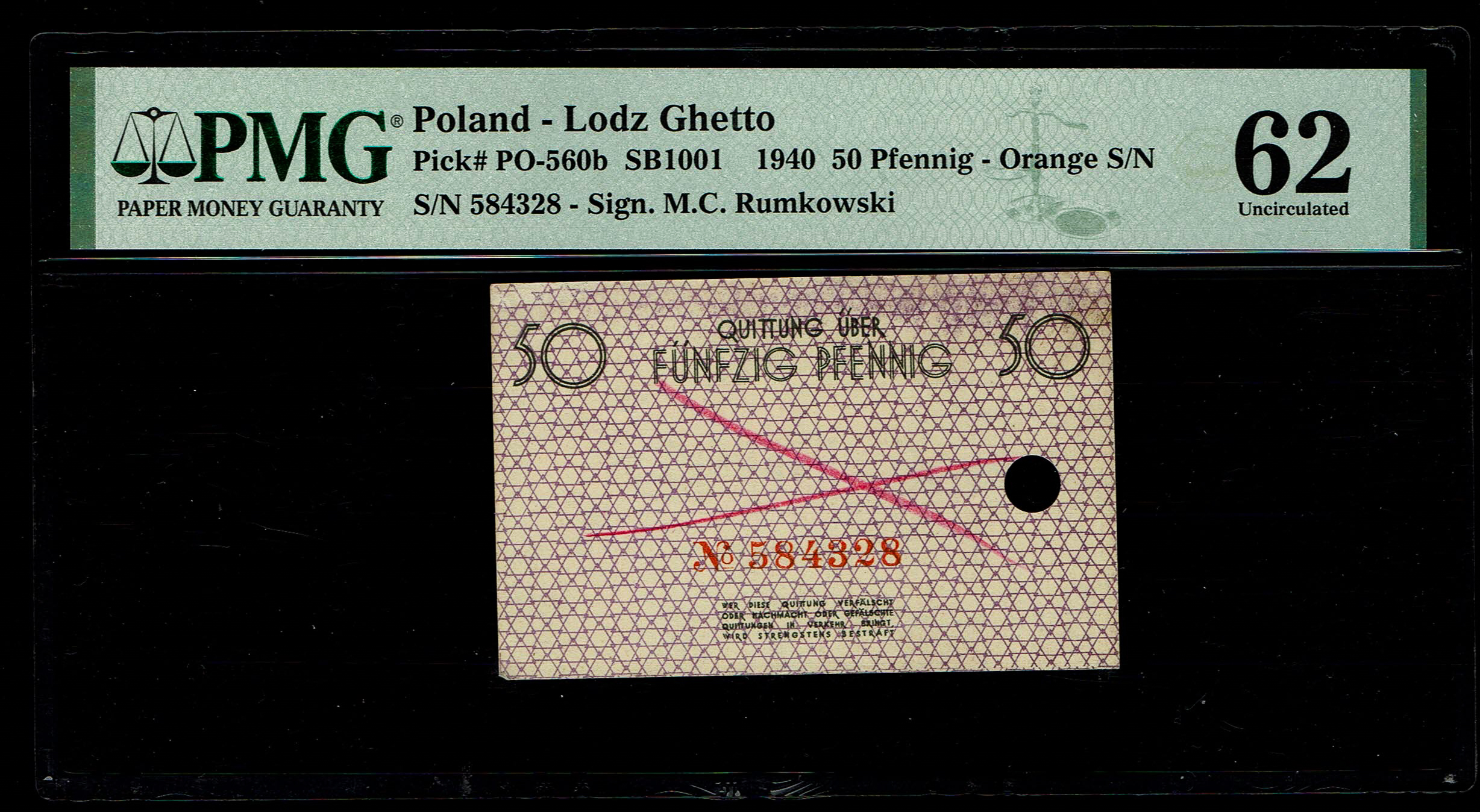
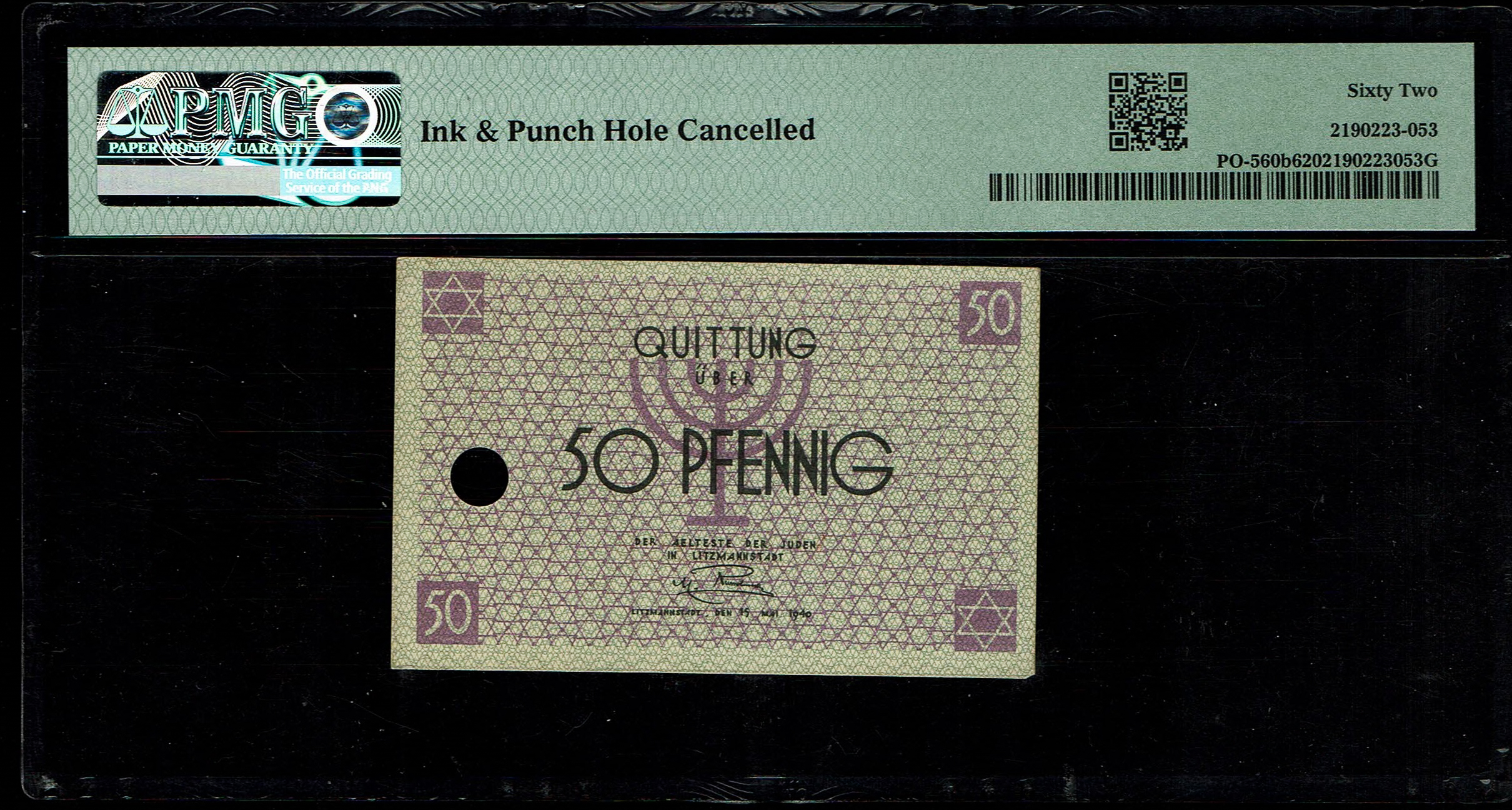
Holocaust and Camp Banknotes - Poland - Łódź Ghetto - 50 Pfennig, 1940 - Ink and Punch Hole Cancelled, Very Rare Variety - PMG 62 Uncirculated A 50 Pfennig ghetto scrip note, issued in May 1940 in the Łódź Ghetto in occupied Poland. During the German occupation, the city was renamed Litzmannstadt and annexed to Nazi Germany. Following the sealing of the ghetto, ordinary currency was confiscated and replaced by an internal monetary system valid only within the ghetto. The note bears the printed signature of Mordechai Chaim Rumkowski, head of the Jewish Council in the Łódź Ghetto. Obverse: The denomination 50 appears in the upper corners, together with the inscription: "QUITTUNG ÜBER FÜNFZIG PFENNIG" (Receipt for Fifty Pfennig) The orange serial number 584328 appears at the center, with an inscription referring to the Elder of the Jews in Litzmannstadt below. The note is cancelled by red ink lines and a circular punch hole. Reverse: The denomination: "50 PFENNIG" appears at the center, accompanied by a menorah, Stars of David and geometric patterns. The cancellation punch is also visible on this side. Significance and rarity of the cancellation The note was officially invalidated by two separate methods: red ink cancellation lines and a circular punch hole. The PMG label specifically states: Ink & Punch Hole Cancelled These measures were intended to permanently remove the note from use and prevent it from returning to circulation, most likely as part of an internal treasury or accounting procedure within the ghetto. Once cancelled, the note no longer served a monetary function and was generally not intended for long-term preservation. Many such notes would have been discarded, destroyed or lost. As a result, surviving cancelled examples are considerably less frequently encountered than ordinary uncancelled notes. The note is graded PMG 62 Uncirculated. The numerical grade refers to the preservation of the paper, while the official cancellation is recorded separately on the grading label. This combination of a formally cancelled note with an Uncirculated state of preservation gives the item particular historical and collecting significance.
 Israel
 הביטחון 6, פתח תקווה.
