


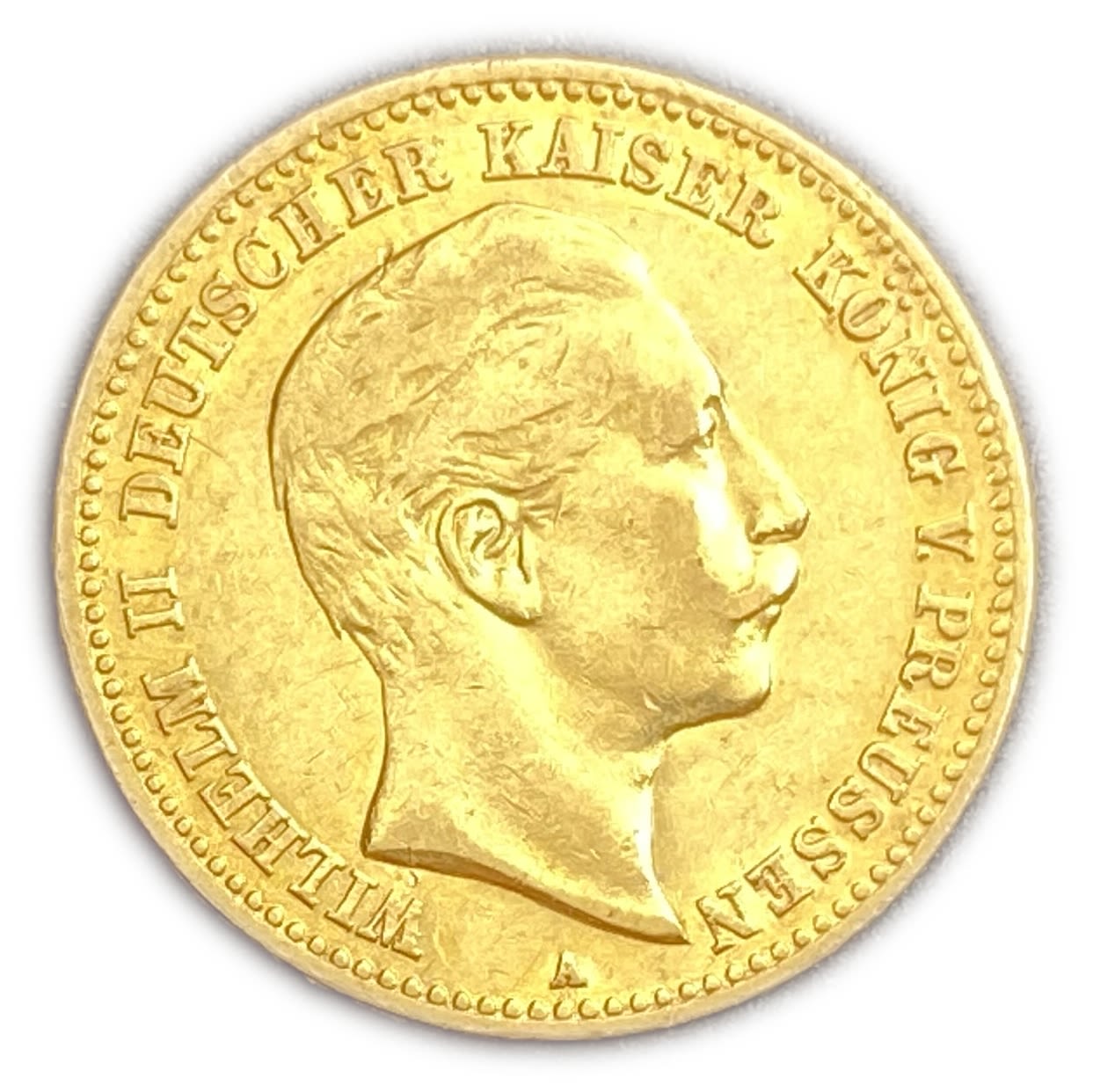
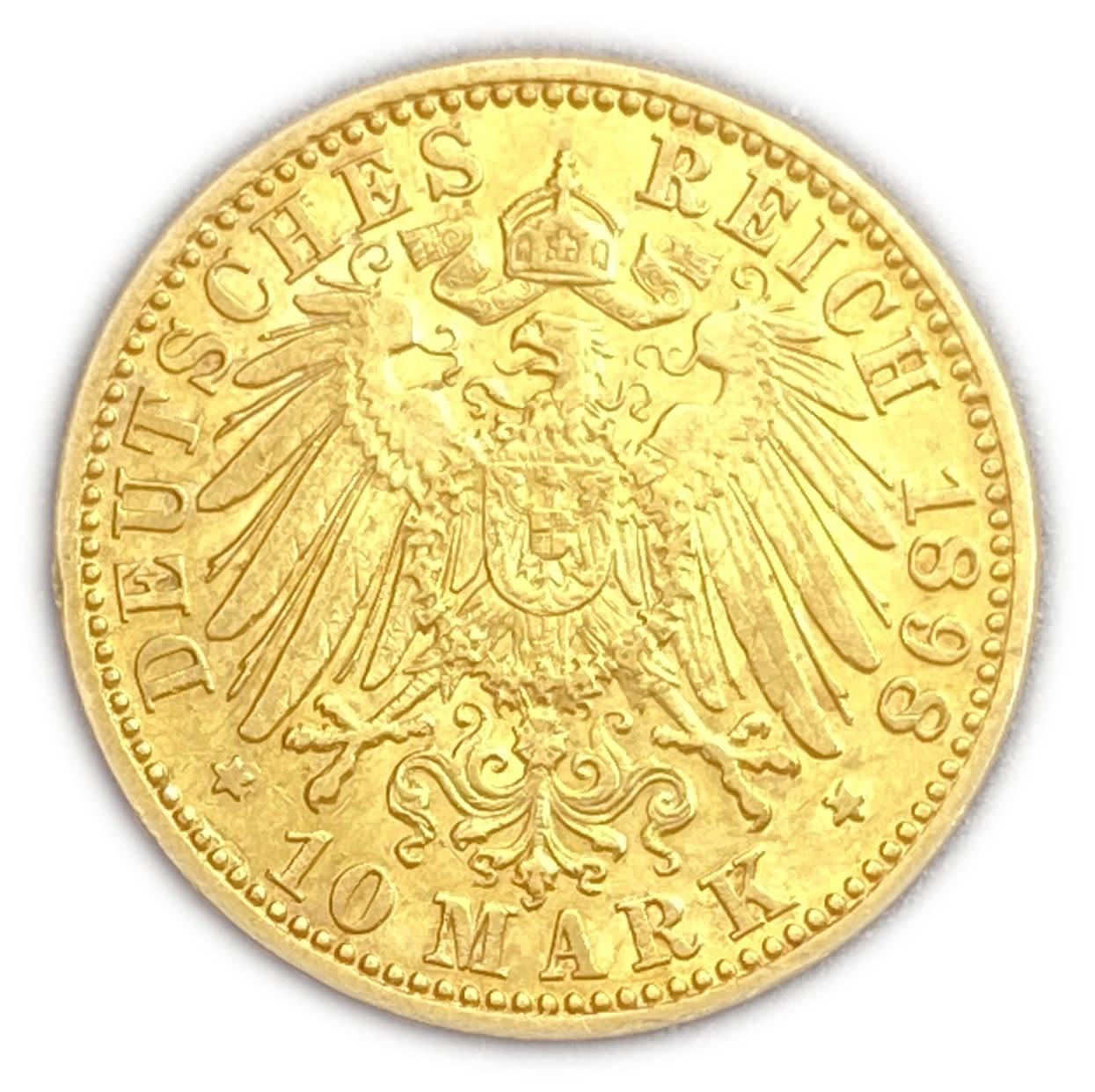
Germany - 10 Mark 1898 - Gold 900, 3.98 g, 19.5 mm Goldmark (German: Goldmark, literally: gold ...
Germany - 10 Mark 1898 - Gold 900, 3.98 g, 19.5 mm Goldmark (German: Goldmark, literally: gold mark, mark: ℳ) was usually just "mark", was the currency of the German Empire from 1873 until the outbreak of World War I in August 1914. The word "gold" included in the name of the coin indicates that it was supported by gold by standard Gold is worth about 2,790 marks per kilogram of gold in the cellars of the Reichsbank. During and after the war, since it was no longer high in gold, it was called "Papiermark" ("paper Mark"). One mark is divided into 100 pfennig. Coins with values of less than one mark were minted in a uniform design for the whole empire, coins of one mark or more were minted in a local design, with on one side the imperial eagle, the emperor's emblem and on the other the portrait of the local monarch or city emblem. The German mark was the legal tender in Germany from June 1948, in West Germany, and from 1990, with the unification of Germany, until the entry of the euro currency into circulation in 2002. The Deutsch Mark replaced the Reichsmark, which operated in Germany from the 1920s until 1948.
 Israel
 הביטחון 6, פתח תקווה.
